Raimondi Launches TTC 70 Telecrawler Crane Engineered by Terex
Equipment

Raimondi Launches TTC 70 Telecrawler Crane Engineered by Terex

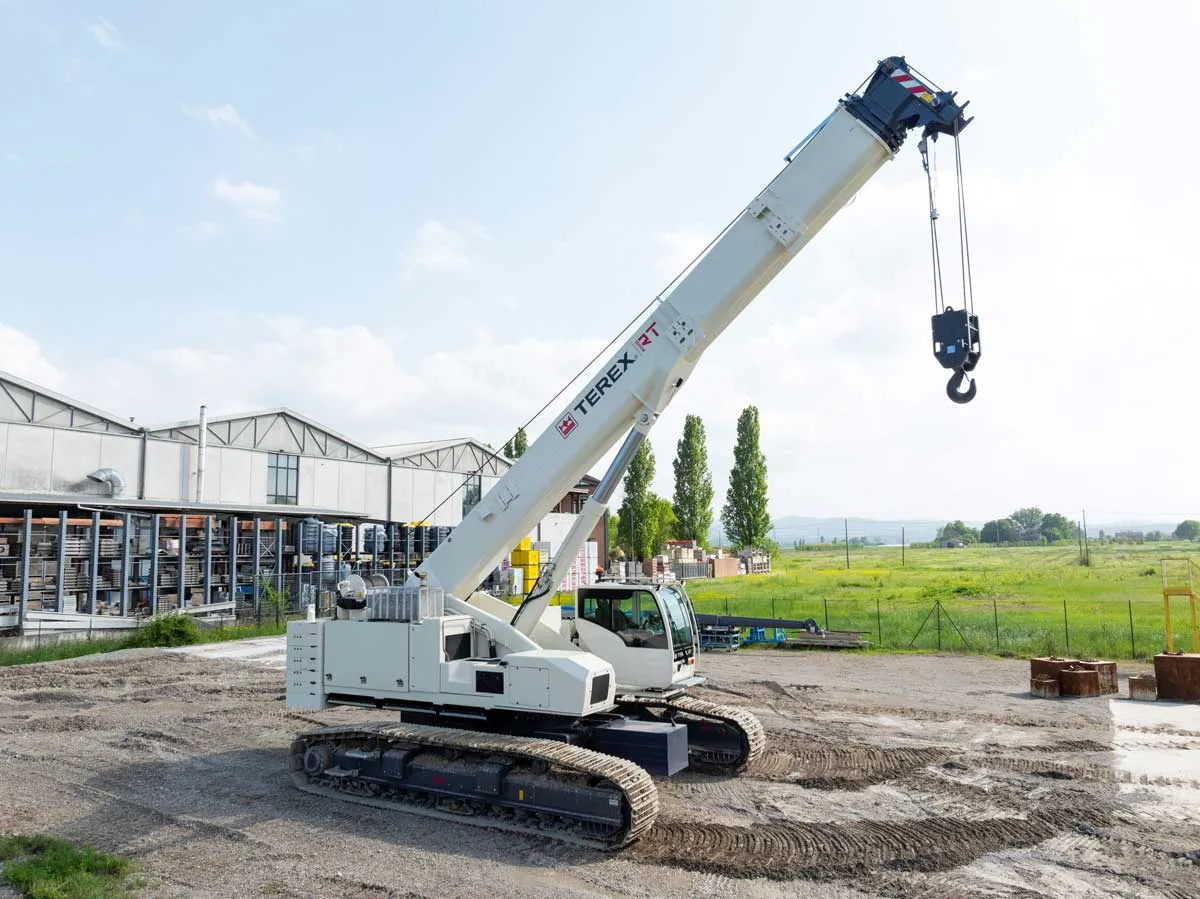
Raimondi Group has expanded its lifting equipment portfolio with the launch of its first telecrawler crane line, marking Terex Rough Terrain Cranes’ return to the crawler crane segment. Terex Rough Terrain Cranes is now a business division of Raimondi following the acquisition of key Terex lifting brands.

The new telecrawler range debuts with the TTC 70, designed, engineered and manufactured at the group’s rough terrain headquarters in Crespellano, Bologna. The company said the model will serve as the foundation of a renewed crawler category, with additional telecrawler models planned in the near future.

“The unveiling of the TTC 70 marks a pivotal moment for Raimondi as we continue to evolve into a fully integrated, multi-segment lifting solutions provider, meeting the evolving needs of the global lifting industry,” said Luigi Maggioni, Chief Executive Officer, Raimondi Group.

Stefania D’Apoli, Global Sales Director, Terex Rough Terrain division, said the re-entry into the crawler segment is driven by growing demand in infrastructure, energy and complex construction projects requiring mobility and performance on challenging terrain.

Mounted on crawler tracks, the TTC 70 eliminates the need for outriggers and can operate on slopes of up to four degrees. It is designed to reduce setup time, lower ground pressure and improve flexibility on uneven or low-bearing terrain while maintaining higher lifting capacities while travelling compared to wheeled rough terrain cranes.

The telecrawler offers a maximum lifting capacity of 70 tonnes and a maximum boom length of 36.8 metres. It comes with Stage V and Stage IIIA engine configurations, with power output of 168kW and 164kW respectively at 2,200 rpm.

The model also features TEOS operating system, T-Link connectivity, a dynamic hydraulic pump management system, and a redesigned cab. A remote control system allows full machine operation, including counterweight handling.

Raimondi said the TTC 70 will primarily target markets including the US, Canada and Europe, with first deliveries expected within 2026.

Raimondi Group has expanded its lifting equipment portfolio with the launch of its first telecrawler crane line, marking Terex Rough Terrain Cranes’ return to the crawler crane segment. Terex Rough Terrain Cranes is now a business division of Raimondi following the acquisition of key Terex lifting brands.The new telecrawler range debuts with the TTC 70, designed, engineered and manufactured at the group’s rough terrain headquarters in Crespellano, Bologna. The company said the model will serve as the foundation of a renewed crawler category, with additional telecrawler models planned in the near future.“The unveiling of the TTC 70 marks a pivotal moment for Raimondi as we continue to evolve into a fully integrated, multi-segment lifting solutions provider, meeting the evolving needs of the global lifting industry,” said Luigi Maggioni, Chief Executive Officer, Raimondi Group.Stefania D’Apoli, Global Sales Director, Terex Rough Terrain division, said the re-entry into the crawler segment is driven by growing demand in infrastructure, energy and complex construction projects requiring mobility and performance on challenging terrain.Mounted on crawler tracks, the TTC 70 eliminates the need for outriggers and can operate on slopes of up to four degrees. It is designed to reduce setup time, lower ground pressure and improve flexibility on uneven or low-bearing terrain while maintaining higher lifting capacities while travelling compared to wheeled rough terrain cranes.The telecrawler offers a maximum lifting capacity of 70 tonnes and a maximum boom length of 36.8 metres. It comes with Stage V and Stage IIIA engine configurations, with power output of 168kW and 164kW respectively at 2,200 rpm.The model also features TEOS operating system, T-Link connectivity, a dynamic hydraulic pump management system, and a redesigned cab. A remote control system allows full machine operation, including counterweight handling.Raimondi said the TTC 70 will primarily target markets including the US, Canada and Europe, with first deliveries expected within 2026.

Next Story
Infrastructure Transport

MMRDA Removes 1.14 lakh m of Metro Barricades

In a bid to ease congestion and improve urban mobility during monsoon, MMRDA has undertaken one of the largest coordinated barricade removal and monsoon preparedness drives across its ongoing metro and infrastructure projects.With substantial progress achieved in viaduct and structural works across multiple metro corridors, barricades from completed stretches beneath metro viaducts are being systematically removed, restoring maximum possible road space before the monsoon. Wider carriageways across key arterial roads are expected to improve traffic flow, reduce congestion, support better rainwa..

Next Story
Infrastructure Transport

Pune Division to Remove All Diamond Crossings by Year-End

The Pune railway division has announced plans to remove all 16 diamond crossings by the end of 2026 as part of a major yard remodelling project following the derailment of a Vande Bharat Express at Pune Junction on April 27. Railway authorities said the replacements aim to improve safety and streamline train operations across the busy station. The decision followed a Central Railway finding that the accident involved a non-standard diamond crossing and highlighted the need for replacement. Regular maintenance of existing crossings will continue until the replacement work is completed. Official..

Next Story
Infrastructure Urban

Goa Declares 80 Million Square Metres No Development Zone

The Goa state government has declared 80 million square metres (mn) of land a no development zone, designating the area as protected from new construction. The notification reclassifies tracts across the state under a no development category for planning and regulatory purposes. The declaration signals a formal halt to new building permits within the defined zone. Authorities indicated that maps will be issued to show broad boundaries while detailed surveys will refine precise limits. The move transfers responsibility for enforcement to local planning authorities and relevant departments, whic..

Advertisement

Subscribe to Our Newsletter

Get daily newsletters around different themes from Construction world.

STAY CONNECTED

Advertisement

Advertisement

Advertisement