Supercomputing India 2025 Tech Expo Opens In Bengaluru
Technology

Supercomputing India 2025 Tech Expo Opens In Bengaluru

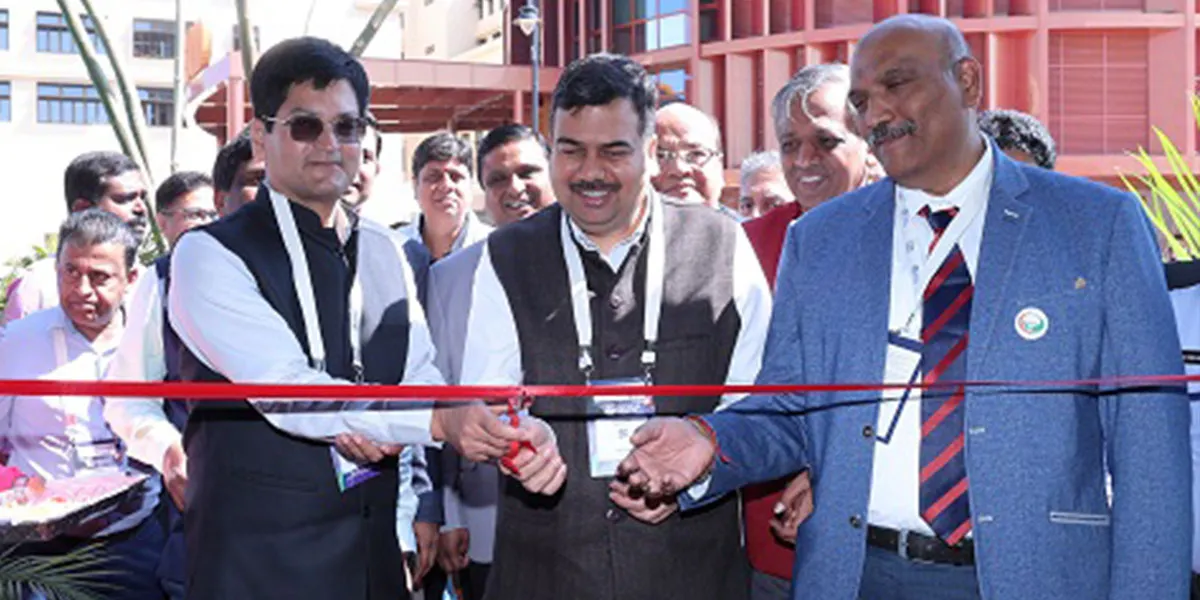
Supercomputing India 2025 gathered further momentum on its second day with the official inauguration of the Tech Expo at the Manipal Institute of Technology, Yelahanka, Bengaluru, following a strong opening day for the five-day national computing event.

The Tech Expo was inaugurated by Amitesh Kumar Sinha, Additional Secretary (E&IT), Ministry of Electronics and Information Technology (MeitY), Government of India, and Chief Executive Officer of the India Semiconductor Mission, in the presence of Sudeep Shrivastava, Joint Secretary (E&IT), MeitY. Several distinguished leaders from academia, industry and technology institutions attended the inauguration, including Anil Sahasrabudhe, Chairman of the Executive Committee at NAAC, Srikanth Chandrasekaran, Country Head of IEEE India, Debabrata Das, Director of IIIT Bangalore, and senior representatives from Aurigo Software Technologies, IIIT Bangalore and the SCI 2025 organising committee. Addressing the gathering, Sinha stressed the importance of developing indigenous capabilities in high-performance computing, artificial intelligence and quantum technologies to strengthen India’s position in the global technology landscape.

Running until December 13, 2025, the event brings together leading scientific, industrial and academic stakeholders shaping the future of computing in India. The Tech Expo features more than 180 exhibitors across two dedicated pavilions, showcasing compute hardware, chip design, sovereign technology platforms and India-led research and development initiatives. Prominent participants include VVDN, Kaynes, Dell Technologies, HPE, Intel, Fujitsu, DDN, BEL, ASRock Rack, L&T Vyoma, HCLTech and several MeitY-supported DLI startups and MSMEs, alongside academic institutions such as MIT.

The MeitY ChipIN Pavilion emerged as a key attraction, spotlighting more than 50 semiconductor and HPC startups, 15 MSMEs and 10 booths hosted by the MeitY Startup Hub. Startups working in compute infrastructure, quantum technologies, chip design, high-speed networking and cybersecurity are presenting solutions aligned with India’s self-reliance and deep-tech manufacturing goals. Additional sponsors for the event include AMD, AWS, Synopsys, Pasqal and KPTCL.

Conference sessions on Day Two featured keynote addresses by Ken Toyoda, Chief Executive Officer and Managing Director of Fujitsu Research of India, Hiroshi Horii, Head of IBM Quantum Japan, and Cullen Bash, Vice President and Deputy Director at HPE USA. Key programme highlights included the ChipIN Conclave, sessions on Women in Technology across HPC, AI and quantum domains, the PARAM Shavak User Meet, and a series of workshops and panel discussions designed to strengthen collaboration between academia, startups and global HPC ecosystems.

Supercomputing India 2025 continues to support the objectives of the National Supercomputing Mission by accelerating the development of indigenous systems, advanced artificial intelligence, quantum research and semiconductor design. With high-performance computing playing a critical role in areas such as climate modelling, healthcare, space exploration, defence and energy systems, the event marks a significant milestone in India’s emergence as a global deep-tech leader.

Supercomputing India 2025 gathered further momentum on its second day with the official inauguration of the Tech Expo at the Manipal Institute of Technology, Yelahanka, Bengaluru, following a strong opening day for the five-day national computing event. The Tech Expo was inaugurated by Amitesh Kumar Sinha, Additional Secretary (E&IT), Ministry of Electronics and Information Technology (MeitY), Government of India, and Chief Executive Officer of the India Semiconductor Mission, in the presence of Sudeep Shrivastava, Joint Secretary (E&IT), MeitY. Several distinguished leaders from academia, industry and technology institutions attended the inauguration, including Anil Sahasrabudhe, Chairman of the Executive Committee at NAAC, Srikanth Chandrasekaran, Country Head of IEEE India, Debabrata Das, Director of IIIT Bangalore, and senior representatives from Aurigo Software Technologies, IIIT Bangalore and the SCI 2025 organising committee. Addressing the gathering, Sinha stressed the importance of developing indigenous capabilities in high-performance computing, artificial intelligence and quantum technologies to strengthen India’s position in the global technology landscape. Running until December 13, 2025, the event brings together leading scientific, industrial and academic stakeholders shaping the future of computing in India. The Tech Expo features more than 180 exhibitors across two dedicated pavilions, showcasing compute hardware, chip design, sovereign technology platforms and India-led research and development initiatives. Prominent participants include VVDN, Kaynes, Dell Technologies, HPE, Intel, Fujitsu, DDN, BEL, ASRock Rack, L&T Vyoma, HCLTech and several MeitY-supported DLI startups and MSMEs, alongside academic institutions such as MIT. The MeitY ChipIN Pavilion emerged as a key attraction, spotlighting more than 50 semiconductor and HPC startups, 15 MSMEs and 10 booths hosted by the MeitY Startup Hub. Startups working in compute infrastructure, quantum technologies, chip design, high-speed networking and cybersecurity are presenting solutions aligned with India’s self-reliance and deep-tech manufacturing goals. Additional sponsors for the event include AMD, AWS, Synopsys, Pasqal and KPTCL. Conference sessions on Day Two featured keynote addresses by Ken Toyoda, Chief Executive Officer and Managing Director of Fujitsu Research of India, Hiroshi Horii, Head of IBM Quantum Japan, and Cullen Bash, Vice President and Deputy Director at HPE USA. Key programme highlights included the ChipIN Conclave, sessions on Women in Technology across HPC, AI and quantum domains, the PARAM Shavak User Meet, and a series of workshops and panel discussions designed to strengthen collaboration between academia, startups and global HPC ecosystems. Supercomputing India 2025 continues to support the objectives of the National Supercomputing Mission by accelerating the development of indigenous systems, advanced artificial intelligence, quantum research and semiconductor design. With high-performance computing playing a critical role in areas such as climate modelling, healthcare, space exploration, defence and energy systems, the event marks a significant milestone in India’s emergence as a global deep-tech leader.

Next Story
Infrastructure Urban

Powerplay Rolls Out Procurement-Linked Credit for Contractors

Powerplay has announced the launch of Powerplay Credit, a project-linked working capital solution aimed at easing cash flow pressures faced by contractors during active construction execution. The solution has gone live across key markets in South India, with a wider national rollout planned for 2026.The launch comes amid rising activity in India’s construction sector across infrastructure, housing, industrial corridors, renewable energy and urban redevelopment. Contractors executing large corporate and government projects often face extended payment cycles, stage-based billing and delayed r..

Next Story
Infrastructure Urban

Jyoti Structures Commissions Galvanisation at Second Nashik Unit

Jyoti Structures has commissioned galvanisation operations at its second tower manufacturing unit in Nashik, strengthening its in-house capabilities across critical stages of power transmission infrastructure production. The listed Engineering, Procurement and Construction (EPC) company operates globally and has delivered projects for customers across more than 50 countries.The second Nashik unit, with an annual manufacturing capacity of 36,000 metric tonnes, has become operational following the completion of installation, testing and readiness of the new galvanising facilities. With this deve..

Next Story
Infrastructure Energy

Rosatom Connects First Kursk NPP-2 Unit to National Grid

Rosatom has launched the first power unit of the Kursk Nuclear Power Plant-2 (Kursk NPP-2) into Russia’s Unified Energy System, marking a key milestone in the country’s nuclear energy programme. The initial grid connection took place at the end of the year, bringing a new source of low-carbon electricity online for the Kursk region and the broader Central Energy System.The newly commissioned unit is the first implementation of the VVER-TOI reactor design, which incorporates advanced safety and performance features. With an installed capacity of 1,250 MW, it is the most powerful nuclear pow..

Advertisement

Subscribe to Our Newsletter

Get daily newsletters around different themes from Construction world.

STAY CONNECTED

Advertisement

Advertisement

Advertisement

Advertisement

Open In App