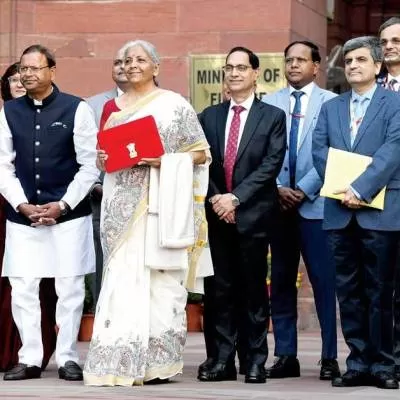





Cabinet Clears Rs One Trillion Urban Challenge Fund
ECONOMY & POLICY

Cabinet Clears Rs One Trillion Urban Challenge Fund

Cabinet has cleared an Urban Challenge Fund worth Rs one trillion (tn) aimed at market-led urban development across the country. The fund is intended to support innovative projects that can attract private capital and scale proven solutions in housing, mobility and urban services. The Ministry will administer the programme through a competitive challenge mechanism and will invite proposals from public agencies, private firms and joint ventures. Selection criteria will emphasise sustainability, scalability and demonstrable returns to ensure replicable outcomes.

The Urban Challenge Fund is designed to provide catalytic financing including grants, subordinated debt and credit guarantees to reduce risk for investors. It will employ a contestable selection process and technical appraisal to prioritise projects that demonstrate financial viability and social impact. The fund will also enable blended finance structures to mobilise additional capital from institutional investors and multilateral partners. A range of instruments will be available including grants, mezzanine finance and minority equity to align incentives.

The central allocation will be complemented by contributions from state governments and urban local bodies, and by co-investment from private partners to leverage resources. Officials indicated that the structure aims to convert seed capital into significantly larger investment flows through leverage and demonstration effects. Priority areas include affordable housing, mass transit, water and sanitation, urban regeneration and climate resilient infrastructure. The implementation timeline envisages early pilot rounds followed by scaled deployment over several years under an independent steering committee.

Officials expect the initiative to accelerate market participation in urban renewal and to create employment through construction and services while improving urban liveability. Implementation will follow a phased rollout with governance arrangements, monitoring protocols and a call for proposals to be issued shortly. The scheme is intended to harness market discipline while ensuring public interest outcomes and measurable urban transformation. Stakeholders will track progress closely.

Cabinet has cleared an Urban Challenge Fund worth Rs one trillion (tn) aimed at market-led urban development across the country. The fund is intended to support innovative projects that can attract private capital and scale proven solutions in housing, mobility and urban services. The Ministry will administer the programme through a competitive challenge mechanism and will invite proposals from public agencies, private firms and joint ventures. Selection criteria will emphasise sustainability, scalability and demonstrable returns to ensure replicable outcomes. The Urban Challenge Fund is designed to provide catalytic financing including grants, subordinated debt and credit guarantees to reduce risk for investors. It will employ a contestable selection process and technical appraisal to prioritise projects that demonstrate financial viability and social impact. The fund will also enable blended finance structures to mobilise additional capital from institutional investors and multilateral partners. A range of instruments will be available including grants, mezzanine finance and minority equity to align incentives. The central allocation will be complemented by contributions from state governments and urban local bodies, and by co-investment from private partners to leverage resources. Officials indicated that the structure aims to convert seed capital into significantly larger investment flows through leverage and demonstration effects. Priority areas include affordable housing, mass transit, water and sanitation, urban regeneration and climate resilient infrastructure. The implementation timeline envisages early pilot rounds followed by scaled deployment over several years under an independent steering committee. Officials expect the initiative to accelerate market participation in urban renewal and to create employment through construction and services while improving urban liveability. Implementation will follow a phased rollout with governance arrangements, monitoring protocols and a call for proposals to be issued shortly. The scheme is intended to harness market discipline while ensuring public interest outcomes and measurable urban transformation. Stakeholders will track progress closely.

Next Story
Technology

AI-Enabled Workflows Lift Profitability and Productivity

Organisations modernising frontline workflows with artificial intelligence, automation and real-time data are reporting stronger financial performance, higher productivity and improved employee engagement, according to a global study by Zebra Technologies and Oxford Economics.The research covered 1,000 senior leaders across retail, manufacturing, transportation and logistics in the US, Mexico, the UK, Germany, India, Japan, Australia and New Zealand.In transportation and logistics, 54 per cent of companies that improved picking and packing operations reported faster operational performance, wh..

Next Story
Real Estate

India Leads Global AI Readiness but Implementation Lags

Indian companies lead global averages across all eight artificial intelligence readiness indicators tracked by JLL, but only 19 per cent have started making changes to their workplaces, according to the JLL 2026 Future of Work Survey.The study found that 77 per cent of Indian business leaders expect AI to change their office requirements, creating a 58-percentage-point gap between awareness and implementation. The survey covered more than 2,200 CEOs, CFOs and real estate leaders across 21 countries during the first quarter of 2026.Despite concerns over automation, 58 per cent of Indian leaders..

Next Story
Equipment

Three WOLFF Cranes Build Riyadh Cable-Stayed Bridges

Three WOLFF 180 B luffing jib cranes are supporting the construction of two cable-stayed bridges alongside the existing Wadi Laban Bridge in Riyadh, Saudi Arabia. The project is being developed for the Royal Commission for Riyadh City and executed by the ICRC joint venture comprising IC Ictas and Al Rashid Trading & Contracting Company.The cranes are handling lifting operations including formwork, reinforcement, concrete placement, work platforms, surveying equipment and other construction materials. Each crane is fitted with a 40 m jib, reaches a hook height of 157 m and offers a maximum ..

Advertisement

Subscribe to Our Newsletter

Get daily newsletters around different themes from Construction world.

STAY CONNECTED

Advertisement

Advertisement

Advertisement