




CAQM Invokes GRAP Stage I Across Delhi NCR
ECONOMY & POLICY

CAQM Invokes GRAP Stage I Across Delhi NCR

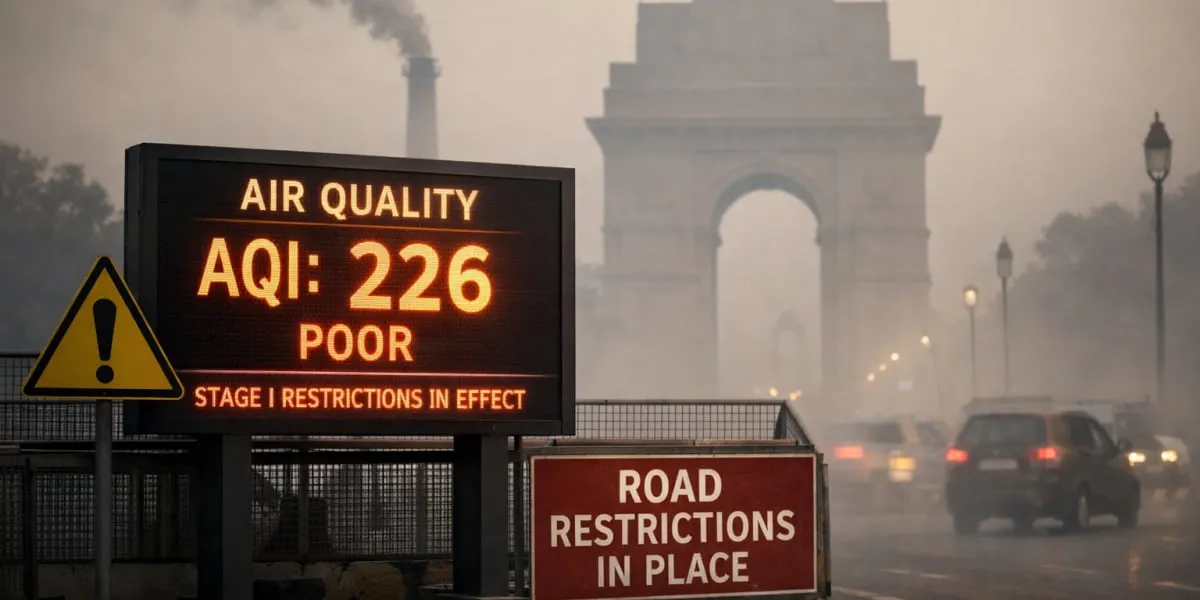
The Commission for Air Quality Management in National Capital Region and Adjoining Areas (CAQM) invoked Stage I of the Graded Response Action Plan across the National Capital Region (NCR) after Delhi recorded a daily average air quality index (AQI) of 226, placing it in the Poor category, according to the Central Pollution Control Board (CPCB) bulletin. The CAQM Sub?Committee on GRAP convened to assess the prevailing scenario and reviewed measurements and control measures. It noted an increasing trend in Delhi's air quality owing to unfavourable meteorological conditions.

Forecasts provided by the India Meteorological Department (IMD) and the Indian Institute of Tropical Meteorology (IITM) indicated that the AQI is likely to remain in the Poor category over the next two days, prompting the Sub?Committee to authorise immediate action. The Sub?Committee directed the implementation of all 31 actions under Stage I across the NCR to avoid further deterioration. Agencies were instructed to implement measures with immediate effect.

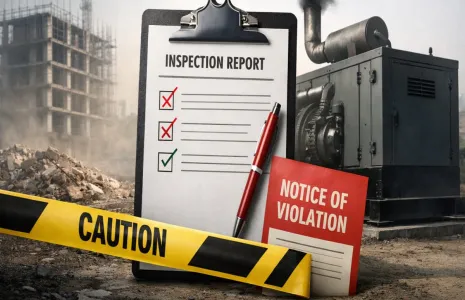
The measures cover a broad range of steps, including strict dust mitigation in construction and demolition activities, prohibition of open burning of biomass and municipal waste, intensified mechanised road sweeping and water sprinkling, and covered storage and transport of materials and waste. Traffic management steps were ordered to ensure smooth flow at congestion points, alongside stringent enforcement of pollution under control norms and penalties for visibly polluting vehicles. Industrial controls were reinforced, with directions to ensure approved fuels in brick kilns and hot mix plants, tighter emission norms for thermal power plants, and legal action against non?compliant units.

Public authorities were directed to ensure regular lifting of municipal and industrial waste, minimise power supply interruptions to discourage use of diesel generators and augment public transport by inducting additional CNG and electric buses and metro services, including differential rates to encourage off?peak travel. Information dissemination through social media, mobile applications and bulk SMS was prioritised to inform residents of pollution levels and reporting channels, with quick redressal mechanisms on apps. The Sub?Committee also urged citizens to cooperate and follow the Citizen Charter under Stage I.

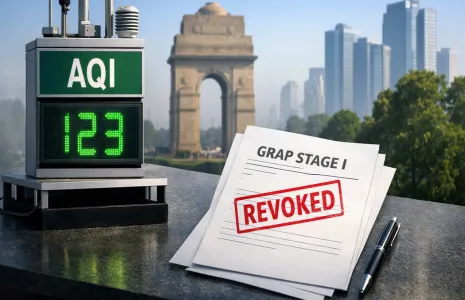
The Sub?Committee will continue to monitor air quality using CPCB data and IMD/IITM forecasts and will undertake periodic reviews to determine whether further action is warranted. Implementation, monitoring and review were assigned to pollution control boards of NCR states and the Delhi Pollution Control Committee, which were instructed to maintain strict vigilance and report progress. The full schedule of the extant GRAP is available on the Commission's official website.

The Commission for Air Quality Management in National Capital Region and Adjoining Areas (CAQM) invoked Stage I of the Graded Response Action Plan across the National Capital Region (NCR) after Delhi recorded a daily average air quality index (AQI) of 226, placing it in the Poor category, according to the Central Pollution Control Board (CPCB) bulletin. The CAQM Sub?Committee on GRAP convened to assess the prevailing scenario and reviewed measurements and control measures. It noted an increasing trend in Delhi's air quality owing to unfavourable meteorological conditions. Forecasts provided by the India Meteorological Department (IMD) and the Indian Institute of Tropical Meteorology (IITM) indicated that the AQI is likely to remain in the Poor category over the next two days, prompting the Sub?Committee to authorise immediate action. The Sub?Committee directed the implementation of all 31 actions under Stage I across the NCR to avoid further deterioration. Agencies were instructed to implement measures with immediate effect. The measures cover a broad range of steps, including strict dust mitigation in construction and demolition activities, prohibition of open burning of biomass and municipal waste, intensified mechanised road sweeping and water sprinkling, and covered storage and transport of materials and waste. Traffic management steps were ordered to ensure smooth flow at congestion points, alongside stringent enforcement of pollution under control norms and penalties for visibly polluting vehicles. Industrial controls were reinforced, with directions to ensure approved fuels in brick kilns and hot mix plants, tighter emission norms for thermal power plants, and legal action against non?compliant units. Public authorities were directed to ensure regular lifting of municipal and industrial waste, minimise power supply interruptions to discourage use of diesel generators and augment public transport by inducting additional CNG and electric buses and metro services, including differential rates to encourage off?peak travel. Information dissemination through social media, mobile applications and bulk SMS was prioritised to inform residents of pollution levels and reporting channels, with quick redressal mechanisms on apps. The Sub?Committee also urged citizens to cooperate and follow the Citizen Charter under Stage I. The Sub?Committee will continue to monitor air quality using CPCB data and IMD/IITM forecasts and will undertake periodic reviews to determine whether further action is warranted. Implementation, monitoring and review were assigned to pollution control boards of NCR states and the Delhi Pollution Control Committee, which were instructed to maintain strict vigilance and report progress. The full schedule of the extant GRAP is available on the Commission's official website.

Next Story
Equipment

MYCRANE Crosses 1,000 Customers in India

MYCRANE, the global platform for crane rental and purchase, has achieved major commercial milestones in India, reinforcing the country’s position as one of its fastest-growing strategic markets. The company has surpassed 1,000 registered customers and 1,000 crane suppliers nationwide, while completing more than 100 paid orders.The growth reflects rising adoption of digital procurement solutions across India’s construction, infrastructure, energy and industrial sectors. Equipment sourced through the platform is supporting projects across the country, with several leading contractors and EPC..

Next Story
Infrastructure Urban

AMTOE 2026 Opens Global Machine Tool Sourcing Hub

The Asian Machine Tool Online Exhibition 2026 (AMTOE 2026) has officially opened as a B2B sourcing platform connecting global buyers with verified Asian suppliers across the machine tool and manufacturing sector. The exhibition will run until 31 October 2026 through a hybrid online and offline model, offering extended sourcing and business networking opportunities.Co-organised by AsianNet and TradeAsia, the event aims to strengthen links between Asian manufacturers and international importers while improving cross-border procurement efficiency and supplier matching.Since launching in 2022, AMT..

Next Story
Infrastructure Energy

Vedanta Lifts Renewable Energy Use by Over 50%

On World Earth Day, Vedanta Limited announced that its renewable energy usage rose by over 50 per cent year on year to 3.97 billion units in FY26, helping avoid 3 million tonnes of carbon dioxide emissions.The company said its portfolio of metals, minerals, power, and oil & gas continues to support advanced manufacturing, electrification, energy transition and clean technology. Aluminium, copper and silver remain critical for applications such as mobility, power transmission, renewable infrastructure and solar photovoltaics, while iron, steel and zinc continue to support energy infrastruct..

Advertisement

Subscribe to Our Newsletter

Get daily newsletters around different themes from Construction world.

STAY CONNECTED

Advertisement

Advertisement

Advertisement














