+
Chennai Corporation Launches 40 Day Door To Door Segregation Drive
ECONOMY & POLICY

Chennai Corporation Launches 40 Day Door To Door Segregation Drive

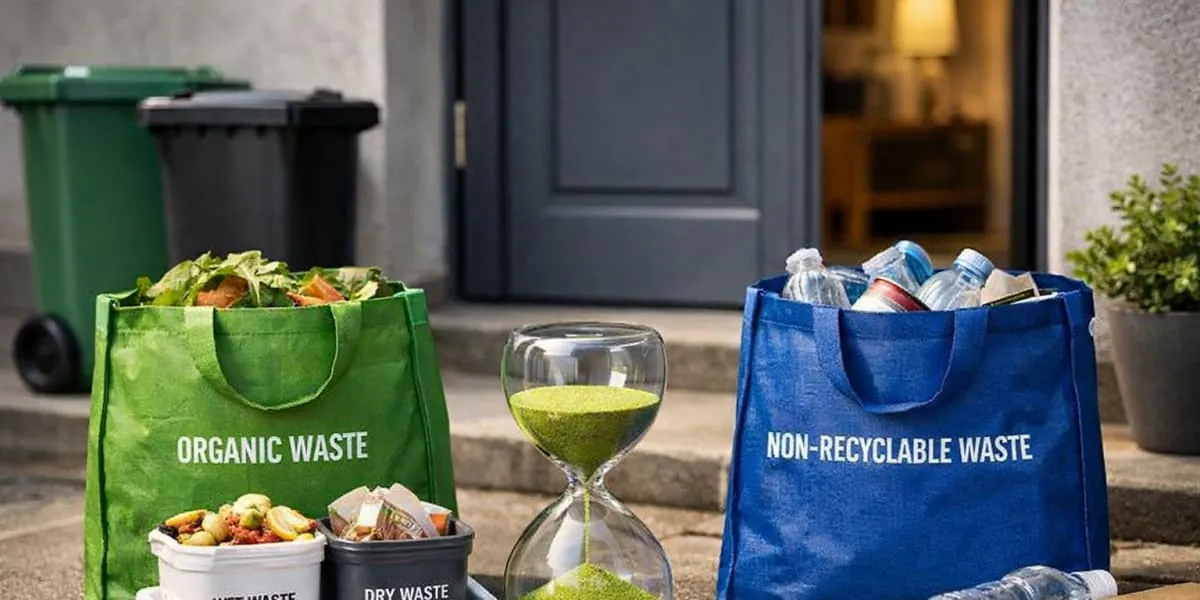
The Greater Chennai Corporation (GCC) has launched a 40-day door-to-door campaign across five zones in south Chennai to encourage households to segregate waste at source, targeting 50,000 households. The drive, titled Segregate Waste - Save Tomorrow, will see GCC officials and Urbaser Sumeet workers distribute dedicated bags for non-biodegradable waste and educate residents on daily handover of segregated refuse.

On the opening day, 5,000 households were reached, with 1,000 in each zone; the remaining 45,000 are scheduled to be covered over subsequent days. Officials said the emphasis is on biodegradable and non-biodegradable streams, which make up the bulk of household waste.

The campaign aligns with the Solid Waste Management Rules, 2026 and aims to promote segregation into biodegradable, non-biodegradable, sanitary and hazardous waste. GCC Commissioner GS Sameeran said households will be monitored during the 40-day campaign to help sustain the practice and that compliance will be assessed with penalties for non-compliance.

Officials said the household pilot follows efforts to improve segregation among bulk waste generators by appointing nodal officers and will be expanded to the city’s other two regions based on feedback. Regional Deputy Commissioner Aftab Rasool said households that consistently segregate will be recognised with awards and that the civic body will provide books to their children as incentives.

Of the 1,065 bulk waste generators in south Chennai, 615 have begun segregation; neither bulk generators nor households have been penalised so far. The campaign launched in Valasaravakkam, Alandur, Thiruvanmiyur, Perungudi and Sholinganallur will proceed through four stages — awareness, action, habit and sustained practice — before participation and collection efficiency are assessed.

Officials emphasised that behavioural change is central and that segregation should become part of every household’s daily routine. From September one, bulk waste generators will be required to segregate refuse before handing it over, with fines and enforcement measures for breaches, the commissioner said.

The Greater Chennai Corporation (GCC) has launched a 40-day door-to-door campaign across five zones in south Chennai to encourage households to segregate waste at source, targeting 50,000 households. The drive, titled Segregate Waste - Save Tomorrow, will see GCC officials and Urbaser Sumeet workers distribute dedicated bags for non-biodegradable waste and educate residents on daily handover of segregated refuse. On the opening day, 5,000 households were reached, with 1,000 in each zone; the remaining 45,000 are scheduled to be covered over subsequent days. Officials said the emphasis is on biodegradable and non-biodegradable streams, which make up the bulk of household waste. The campaign aligns with the Solid Waste Management Rules, 2026 and aims to promote segregation into biodegradable, non-biodegradable, sanitary and hazardous waste. GCC Commissioner GS Sameeran said households will be monitored during the 40-day campaign to help sustain the practice and that compliance will be assessed with penalties for non-compliance. Officials said the household pilot follows efforts to improve segregation among bulk waste generators by appointing nodal officers and will be expanded to the city’s other two regions based on feedback. Regional Deputy Commissioner Aftab Rasool said households that consistently segregate will be recognised with awards and that the civic body will provide books to their children as incentives. Of the 1,065 bulk waste generators in south Chennai, 615 have begun segregation; neither bulk generators nor households have been penalised so far. The campaign launched in Valasaravakkam, Alandur, Thiruvanmiyur, Perungudi and Sholinganallur will proceed through four stages — awareness, action, habit and sustained practice — before participation and collection efficiency are assessed. Officials emphasised that behavioural change is central and that segregation should become part of every household’s daily routine. From September one, bulk waste generators will be required to segregate refuse before handing it over, with fines and enforcement measures for breaches, the commissioner said.

Related Stories

Gold Stories

Next Story
Infrastructure Transport

Madhya Pradesh Plans Airport Every 150 Km, Airstrip Every 75 Km

The Madhya Pradesh government plans to establish an airport every 150 km, an airstrip every 75 km and a helipad every 45 km, according to the state aviation department. Airports being developed in Ujjain and Shivpuri are expected to take the state’s airport count to 10. The government stated that Madhya Pradesh currently has eight airports in eight cities. The locations named by the department include Indore, Bhopal, Jabalpur, Gwalior, Khajuraho, Rewa and Satna. The state also has more than 20 airstrips and 220 helipads, while permanent helipads are planned in all 230 Assembly constituencies..

Next Story
Infrastructure Transport

West Bengal Plans Four Airports for 2028 Completion Under UDAN

West Bengal will develop four new airports under an agreement signed between the Union Civil Aviation Ministry and the state government, with all facilities targeted for completion by 2028. Union Civil Aviation Minister K Rammohan Naidu said the airports would be located at Charra in Purulia, Kalaikunda in Paschim Medinipur, Balurghat in Dakshin Dinajpur and Hasimara in Alipurduar. The project is part of the Centre’s regional connectivity UDAN programme. The Union government has committed Rs. 290 bn for West Bengal’s aviation sector over the next decade, while the state government will pro..
Next Story
Infrastructure Transport

Mumbai Airport Bars Russian Airlines as Agent Seeks Ministry Intervention

Mumbai airport has stopped accepting cargo booked on Russian flag carrier Aeroflot, disrupting shipments and prompting the airline’s cargo sales agent, Delmos Aviation, to seek intervention from the Ministry of Civil Aviation. The restrictions also affect cargo booked on Volga-Dnepr Airlines, according to a letter submitted by Delmos Aviation to the ministry on September 30. Aeroflot operates daily flights between Moscow and Delhi and runs a winter seasonal service to Goa. Bonded cargo from Mumbai and other cities is transported by road to Delhi before being flown to Russia. The agent said t..

Advertisement

Subscribe to Our Newsletter

Get daily newsletters around different themes from Construction world.

STAY CONNECTED

Advertisement

SPECIAL OFFER
QR Code