Deccan Gold Expands Bhalukona Nickel-Copper-PGE Discovery
ECONOMY & POLICY

Deccan Gold Expands Bhalukona Nickel-Copper-PGE Discovery

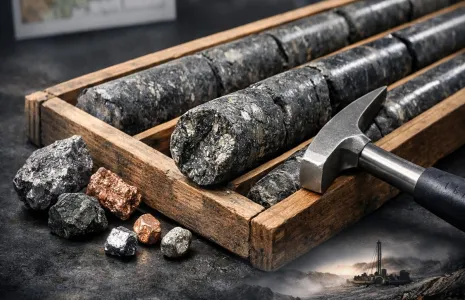
Deccan Gold Mines Limited has reported expanded drilling results from its Bhalukona Nickel-Copper-PGE Project in Chhattisgarh, signalling a significantly larger mineralised system than that announced in May. The company said assays from additional diamond drilling confirmed a broad corridor of nickel, copper and palladium mineralisation and localised platinum occurrences. The findings were described as reinforcing the project's potential to become one of India's most significant critical minerals discoveries in recent years. The company noted that exploration will continue.

Latest results identified mineralisation over a strike length of approximately 430 metres and to depths of over 200 metres, with the corridor remaining open along strike. Ongoing drilling indicated the potential for continuation across a target zone extending up to one point three kilometres. Key intersections included 15 metres grading 0.31 per cent nickel equivalent in hole BJD-02, 36 metres grading 0.23 per cent nickel equivalent in hole BJD-03, and 6 metres grading 0.39 per cent nickel equivalent in hole BJD-04, with localised high-grade zones up to 1.29 per cent.

To date, the company has completed approximately 1,500 metres of diamond drilling across nine drill holes along the approximate one point three kilometre strike, with assays from further holes pending. Microscopic studies were reported to have confirmed the presence of pentlandite, chalcocite, chalcopyrite and pyrrhotite sulphides, which were cited as key indicators of a nickel-copper sulphide system. The Bhalukona-Jamnidih Composite Licence was noted as one of the first critical minerals licences issued following government initiatives to accelerate domestic exploration.

Senior management indicated they were encouraged by the scale and continuity of mineralisation and said they were accelerating exploration to define a mineable resource and to progress mining lease applications as appropriate. The company stated that low-impact work including geophysical surveys and soil sampling would continue during the monsoon and that drilling would resume post-monsoon. It added that government and community support had been important and that, subject to continued success, the project could advance India's critical minerals ambitions.

"Join industry leaders at RAHSTA Expo, India's premier platform for roads, highways and traffic infrastructure. Register now to explore innovations, network with experts and shape the future of mobility."

Deccan Gold Mines Limited has reported expanded drilling results from its Bhalukona Nickel-Copper-PGE Project in Chhattisgarh, signalling a significantly larger mineralised system than that announced in May. The company said assays from additional diamond drilling confirmed a broad corridor of nickel, copper and palladium mineralisation and localised platinum occurrences. The findings were described as reinforcing the project's potential to become one of India's most significant critical minerals discoveries in recent years. The company noted that exploration will continue. Latest results identified mineralisation over a strike length of approximately 430 metres and to depths of over 200 metres, with the corridor remaining open along strike. Ongoing drilling indicated the potential for continuation across a target zone extending up to one point three kilometres. Key intersections included 15 metres grading 0.31 per cent nickel equivalent in hole BJD-02, 36 metres grading 0.23 per cent nickel equivalent in hole BJD-03, and 6 metres grading 0.39 per cent nickel equivalent in hole BJD-04, with localised high-grade zones up to 1.29 per cent. To date, the company has completed approximately 1,500 metres of diamond drilling across nine drill holes along the approximate one point three kilometre strike, with assays from further holes pending. Microscopic studies were reported to have confirmed the presence of pentlandite, chalcocite, chalcopyrite and pyrrhotite sulphides, which were cited as key indicators of a nickel-copper sulphide system. The Bhalukona-Jamnidih Composite Licence was noted as one of the first critical minerals licences issued following government initiatives to accelerate domestic exploration. Senior management indicated they were encouraged by the scale and continuity of mineralisation and said they were accelerating exploration to define a mineable resource and to progress mining lease applications as appropriate. The company stated that low-impact work including geophysical surveys and soil sampling would continue during the monsoon and that drilling would resume post-monsoon. It added that government and community support had been important and that, subject to continued success, the project could advance India's critical minerals ambitions.

Next Story
Infrastructure Transport

Railways To Operate Over 300 Special Trains For Rath Yatra

Union Railway Minister Ashwini Vaishnaw announced that Indian Railways (IR) will operate more than 300 special trains for the annual Jagannath Rath Yatra in Odisha and over 100 special trains during the Onam festival in Keralam. He flagged off the Nanded–Mumbai and Tanakpur–Nanded Express trains and inaugurated the extension of the Tanakpur–Pilibhit service up to Shahjahanpur via video conference from Rail Sadan in Bhubaneswar. He noted that the summer season, which concluded on 30 June, had seen a record 15,000 special trains. Vaishnaw stated that the newly launched services are intende..

Next Story
Infrastructure Transport

Vande Bharat Express To Start From Tripura Soon

Tripura Chief Minister Manik Saha said the Vande Bharat Express will commence operations from Tripura in the coming days after he flagged off the Agartala–Karimganj MEMU service at Agartala Railway Station. He recalled the rail history of the state, noting that a metre-gauge service first arrived in 1964 and that broad gauge reached Agartala in 2008 following national projects and later upgrades under the Act East policy. The event was described as a milestone for regional connectivity and the MEMU was presented as the first electric passenger train to originate from Tripura.\n\nSaha said he..

Next Story
Infrastructure Urban

MEMU Suspension Disrupts Commuters Between Vadodara And Dahod

The Vadodara–Dahod Mainline Electric Multiple Unit (MEMU) service has been temporarily suspended for 26 days after its rake was diverted to Odisha to manage the surge in passenger traffic during the annual Rath Yatra in Puri. Indian Railways redeployed several MEMU rakes from different zones to meet the additional travel demand for the festival scheduled from the seventh of July to the second of August. As a result, train numbers 69233 and 69234 operating between Vadodara and Dahod will remain cancelled for the duration. Railway authorities advised passengers to use alternative train service..

Advertisement

Subscribe to Our Newsletter

Get daily newsletters around different themes from Construction world.

STAY CONNECTED

Advertisement

Advertisement

Advertisement