+
Elevated Corridor to Shorten Chennai to Tirupati Journey
ECONOMY & POLICY

Elevated Corridor to Shorten Chennai to Tirupati Journey

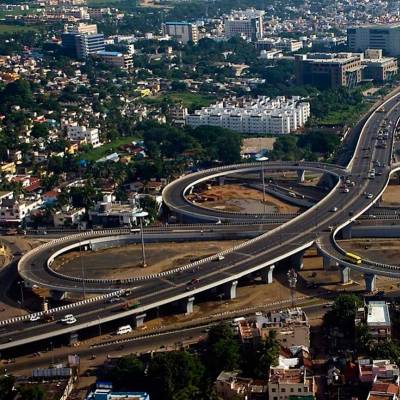
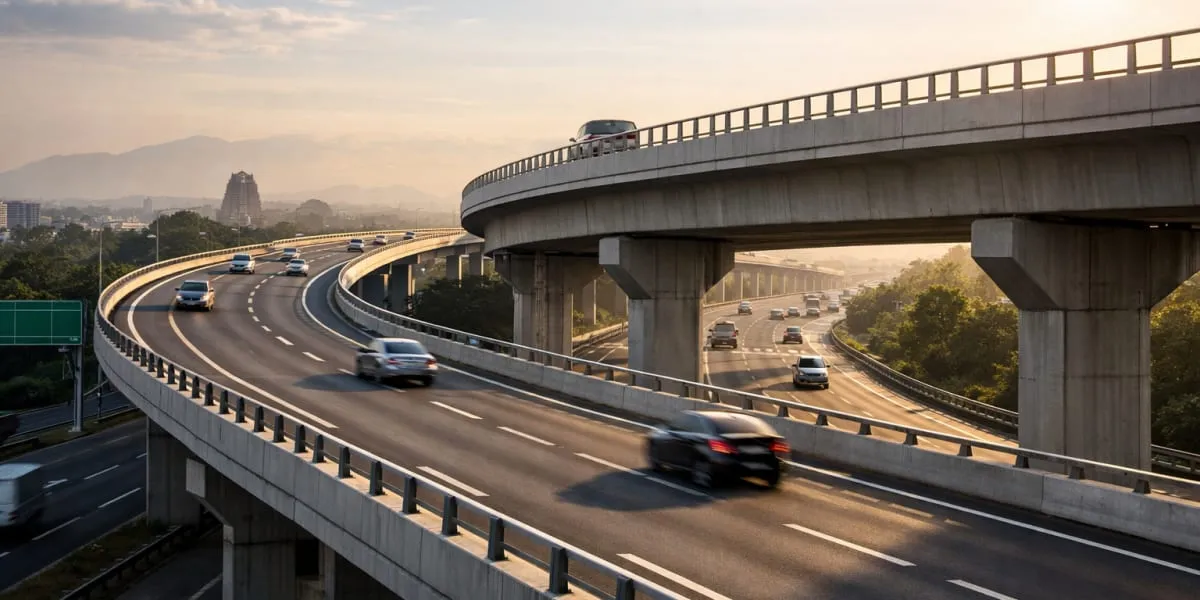
The Tamil Nadu government has announced plans for a four- to six-lane elevated corridor along the congested Padi–Thirunindravur section of the Chennai–Tiruvallur highway, the Public Works Minister Aadhav Arjun told the assembly. The 22-kilometre scheme is intended to reduce travel time along the stretch from 90 minutes to 25 minutes and to shorten the Chennai to Tirupati journey from three hours to about 90 minutes.

The section was handed to the state by the National Highways Authority of India in 2012 after local opposition stalled six-laning and land acquisition, and an earlier widening plan was shelved. The road is currently 45 to 50 feet wide, and Rs 153 crore was allocated earlier for land acquisition, equivalent to Rs 1.53 billion (bn). Acquisition has been completed in Thirumullaivoyal and work is under way to convert the two-lane road overbridge at Ear Battur railway station into a six-lane structure.

State highway officials said the carriageway must be widened to a minimum of 80 to 90 feet before elevated construction and that widening will be taken up where feasible. They identified shops and several religious structures as major bottlenecks and said the elevated proposal replaces plans for multiple flyovers at key junctions. Consultants will be appointed to conduct a feasibility study and prepare a detailed project report.

Traffic figures show the existing four-lane road carries 0.15 million (mn) vehicles daily and suffers severe congestion at junctions including Ambattur Industrial Estate, Thirumullaivoyal, Avadi and Pattabiram. Freight movement causes gridlocks during evening peak hours, sometimes extending for up to two to three kilometres, and contributes to dust pollution in north-western suburbs. Officials said widening and the elevated corridor are intended to ease these bottlenecks.

The National Highways Authority of India has opened an 18-kilometre four-lane access-controlled stretch between Thiruninravur and Tiruvallur and has started work on the 44-kilometre Tiruvallur to the Tamil Nadu/Andhra Pradesh border section towards Tirupati. Officials said around 30 per cent of that work is complete and the project is expected to finish by December this year.

The Tamil Nadu government has announced plans for a four- to six-lane elevated corridor along the congested Padi–Thirunindravur section of the Chennai–Tiruvallur highway, the Public Works Minister Aadhav Arjun told the assembly. The 22-kilometre scheme is intended to reduce travel time along the stretch from 90 minutes to 25 minutes and to shorten the Chennai to Tirupati journey from three hours to about 90 minutes. The section was handed to the state by the National Highways Authority of India in 2012 after local opposition stalled six-laning and land acquisition, and an earlier widening plan was shelved. The road is currently 45 to 50 feet wide, and Rs 153 crore was allocated earlier for land acquisition, equivalent to Rs 1.53 billion (bn). Acquisition has been completed in Thirumullaivoyal and work is under way to convert the two-lane road overbridge at Ear Battur railway station into a six-lane structure. State highway officials said the carriageway must be widened to a minimum of 80 to 90 feet before elevated construction and that widening will be taken up where feasible. They identified shops and several religious structures as major bottlenecks and said the elevated proposal replaces plans for multiple flyovers at key junctions. Consultants will be appointed to conduct a feasibility study and prepare a detailed project report. Traffic figures show the existing four-lane road carries 0.15 million (mn) vehicles daily and suffers severe congestion at junctions including Ambattur Industrial Estate, Thirumullaivoyal, Avadi and Pattabiram. Freight movement causes gridlocks during evening peak hours, sometimes extending for up to two to three kilometres, and contributes to dust pollution in north-western suburbs. Officials said widening and the elevated corridor are intended to ease these bottlenecks. The National Highways Authority of India has opened an 18-kilometre four-lane access-controlled stretch between Thiruninravur and Tiruvallur and has started work on the 44-kilometre Tiruvallur to the Tamil Nadu/Andhra Pradesh border section towards Tirupati. Officials said around 30 per cent of that work is complete and the project is expected to finish by December this year.

Related Stories

Gold Stories

Next Story
Real Estate

BMC OC Amnesty Scheme Requires Key Approvals from Mumbai Societies

The Brihanmumbai Municipal Corporation (BMC) has clarified that housing societies applying under its Occupation Certificate (OC) amnesty scheme must possess key approvals linked to the original construction. The requirements include a valid Intimation of Disapproval (IOD), an approved building plan and a Commencement Certificate (CC), along with a No Objection Certificate (NOC) from the developer or original construction applicant. The Standard Operating Procedure (SOP) makes clear that the absence of an OC alone will not qualify a building for relief. Societies must establish that their build..

Next Story
Real Estate

Gurugram Emerges as Luxury Senior Living Hub

Gurugram is emerging as a potential hub for luxury senior living, supported by available land, healthcare infrastructure, connectivity and a concentration of affluent professionals, high-net-worth individuals and non-resident Indians. These factors could give the city an advantage over land-constrained metros such as Mumbai. A report by the Association of Senior Living India (ASLI) and JLL estimates that India’s organised senior living market could represent a $10.1 bn opportunity by 2030. The sector had about 25,050 organised units as of June 2026, while penetration stood at only 1.5 per ce..

Next Story
Real Estate

Corrosion Costs India’s Infrastructure Rs. 142 bn Annually

Corrosion costs India an estimated Rs. 1.42 tn annually, equivalent to 4.3 per cent of gross domestic product, according to a report by the Confederation of Indian Industry and the National Research Institute. Infrastructure accounts for Rs. 142 bn of the annual burden, making it the sector with the largest absolute cost among those examined. The report, presented at the CII Annual Infrastructure Summit 2026, said the infrastructure-sector cost equals about 2.9 per cent of the sector’s gross domestic product. It estimated that effective measures could generate maximum savings of Rs. 495.8 bn..

Advertisement

Subscribe to Our Newsletter

Get daily newsletters around different themes from Construction world.

STAY CONNECTED

Advertisement

SPECIAL OFFER
QR Code