GMDC And University Of Cambridge To Launch Rare Earth Observatory
ECONOMY & POLICY

GMDC And University Of Cambridge To Launch Rare Earth Observatory

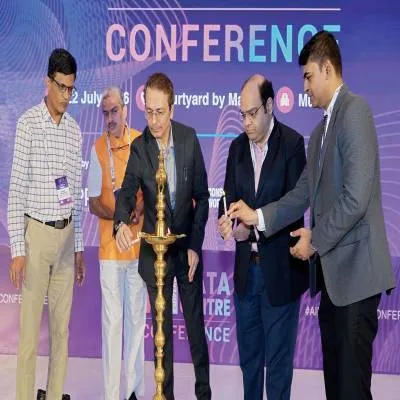
GMDC has entered into a strategic collaboration with the University of Cambridge to establish a Rare Earth Observatory at GMDC's International Centre of Excellence in Mining (iCEM). The observatory will use artificial intelligence to create an interactive platform that tracks the Rare Earth Elements (REE) value chain in real time from mine to magnet. It will monitor price movements, processing capacity, supply disruptions and geopolitical risk across global REE chains. The initiative aims to strengthen supply chain resilience and operational decision-making.

The programme combines GMDC's mining expertise with the Institute for Manufacturing at the University of Cambridge (IfM), whose Industrial Resilience Group is recognised for work on critical mineral supply chains, ESG integration and AI-driven analytics. Structured as a phased two-year programme with an investment of 600,000 pounds, the collaboration will deliver scalable operational intelligence tools. The partners aim to place Gujarat and India at the forefront of the rare earth supply chain resilience.

With India's rare earth consumption projected to double by 2030, driven by electric vehicles, renewable energy and defence, actionable real-time intelligence is a national strategic priority. The Observatory is designed to provide an evidence base for policy calibration, industrial procurement and strategic stockpiling decisions. Through iCEM, supported by GMDC, partners will have access to Cambridge's research tools and global network, integrating analytical capability with on-ground Indian mining operations. The collaboration is presented as advancing GMDC's evolution into a knowledge-driven enterprise.

GMDC's managing director indicated that rare earth elements are a sovereignty concern and described the observatory as a contribution to national capabilities by creating an AI-driven intelligence architecture for the REE value chain. The integration of Cambridge research with iCEM's operational depth is expected to scale operations and build strategic capabilities needed by the nation. GMDC, established in 1963, is a leading public sector mining and mineral processing enterprise expanding into critical minerals, coal, renewable energy and value-added projects.

GMDC has entered into a strategic collaboration with the University of Cambridge to establish a Rare Earth Observatory at GMDC's International Centre of Excellence in Mining (iCEM). The observatory will use artificial intelligence to create an interactive platform that tracks the Rare Earth Elements (REE) value chain in real time from mine to magnet. It will monitor price movements, processing capacity, supply disruptions and geopolitical risk across global REE chains. The initiative aims to strengthen supply chain resilience and operational decision-making. The programme combines GMDC's mining expertise with the Institute for Manufacturing at the University of Cambridge (IfM), whose Industrial Resilience Group is recognised for work on critical mineral supply chains, ESG integration and AI-driven analytics. Structured as a phased two-year programme with an investment of 600,000 pounds, the collaboration will deliver scalable operational intelligence tools. The partners aim to place Gujarat and India at the forefront of the rare earth supply chain resilience. With India's rare earth consumption projected to double by 2030, driven by electric vehicles, renewable energy and defence, actionable real-time intelligence is a national strategic priority. The Observatory is designed to provide an evidence base for policy calibration, industrial procurement and strategic stockpiling decisions. Through iCEM, supported by GMDC, partners will have access to Cambridge's research tools and global network, integrating analytical capability with on-ground Indian mining operations. The collaboration is presented as advancing GMDC's evolution into a knowledge-driven enterprise. GMDC's managing director indicated that rare earth elements are a sovereignty concern and described the observatory as a contribution to national capabilities by creating an AI-driven intelligence architecture for the REE value chain. The integration of Cambridge research with iCEM's operational depth is expected to scale operations and build strategic capabilities needed by the nation. GMDC, established in 1963, is a leading public sector mining and mineral processing enterprise expanding into critical minerals, coal, renewable energy and value-added projects.

Related Stories

Gold Stories

Next Story
Real Estate

LML Realty Sells Out Jhirka Valley Industrial Park in Haryana

LML Realty, the real estate arm of LML Group, recently announced the complete sell-out of its Jhirka Valley Industrial Park in Haryana, with over 1.17 million sq ft of industrial space acquired by more than 50 companies. With utilities and internal infrastructure in place, the company has commenced plot handovers, enabling buyers to begin construction and establish their operations.The industrial park has attracted companies across diverse sectors, including chemicals, metals and alloys, textiles, electrical equipment, energy, logistics, construction, polymers and engineering. Key buyers inclu..

Next Story
Real Estate

WSB Real Estate Partners Exits Six Housing Investments

WSB Real Estate Partners recently announced the successful exit of six residential investments across Bengaluru, Mumbai Metropolitan Region (MMR) and National Capital Region (NCR), delivering an average internal rate of return (IRR) of 19–21 per cent and an overall investment return of 1.4 times.The real estate-focused investment firm invested approximately Rs 7 billion across six mid-affordable housing projects over the past four years. All six investments were fully repaid between April and November 2026, several months ahead of their original investment tenures.WSB collaborated with sever..

Next Story
Infrastructure Transport

Aluminium Industry Seeks Policy Support for Rs 4 Trillion Investment

The Aluminium Association of India (AAI) has recently urged the government to introduce supportive policy measures to safeguard the sector’s proposed Rs 4 trillion investment pipeline. The association highlighted the need for a predictable policy framework to strengthen domestic manufacturing, expand production capacity and reduce import dependence.AAI submitted its recommendations for the Union Budget 2027-28 to the Ministries of Finance, Commerce and Industry, and Mines, along with the Department for Promotion of Industry and Internal Trade (DPIIT).India’s aluminium demand is projected t..

Subscribe to Our Newsletter

Get daily newsletters around different themes from Construction world.

STAY CONNECTED

Advertisement

SPECIAL OFFER
QR Code