HCL-Foxconn Groundbreaking in Uttar Pradesh Signals Semiconductor Push
ECONOMY & POLICY

HCL-Foxconn Groundbreaking in Uttar Pradesh Signals Semiconductor Push

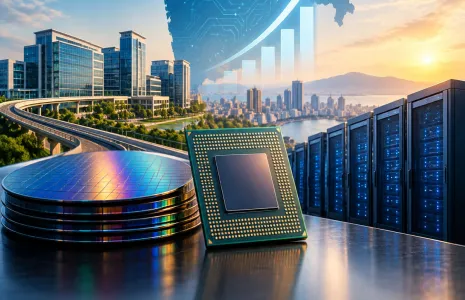
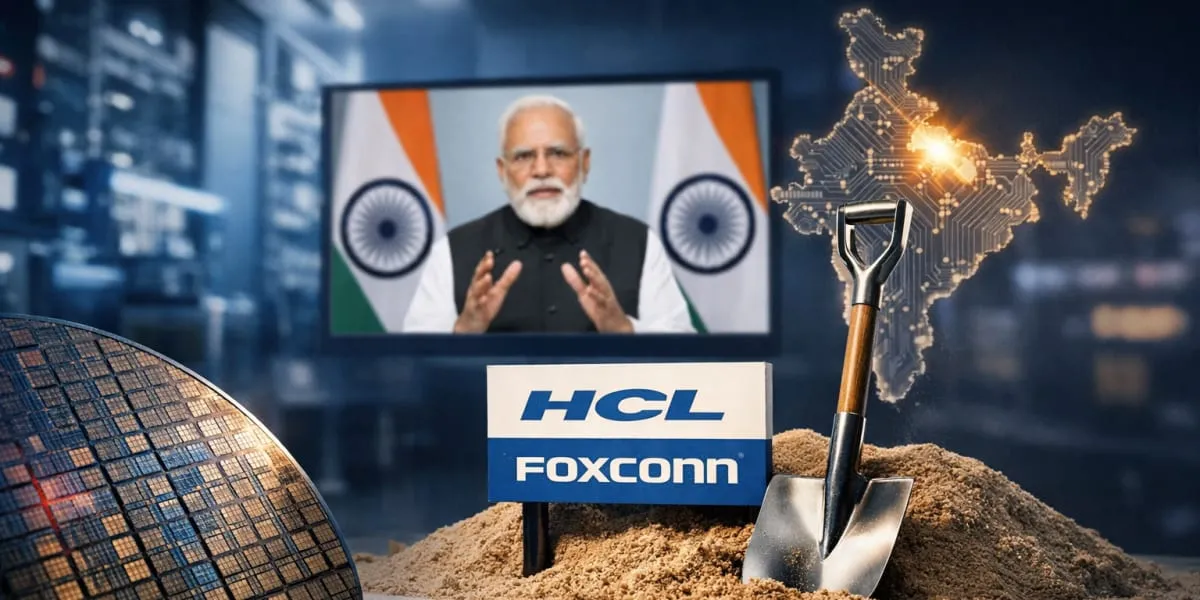
Prime Minister Narendra Modi participated by video conference in the groundbreaking ceremony for the HCL-Foxconn semiconductor unit in Uttar Pradesh, which was presented as a significant milestone in India’s drive to become a global semiconductor hub. The event followed the Global AI Impact Summit in New Delhi and was framed as part of a broader strategy to strengthen the domestic technology ecosystem and attract global partners.

He emphasised that the government is pursuing Viksit Bharat with renewed momentum and noted that India accelerated its pace since the beginning of 2026. The Prime Minister cited recent initiatives including the Viksit Bharat Young Leaders Dialogue, National Startup Day and the India Energy Summit as indicators of rapid progress and renewed investor confidence.

He characterised the current decade as India’s Techade and outlined a focus on investments in green energy, space technology, digital technologies and artificial intelligence as foundations for twenty first century capability. The development of a robust semiconductor ecosystem was presented as a practical example of this strategy, intended to secure processing power for critical sectors and support long term technological self reliance.

He said that the pandemic exposed fragility in global chip supply chains and that India chose to convert that challenge into an opportunity by aiming for self reliance in chip manufacturing. He highlighted initiatives such as the Chips to Startup scheme set to train 85,000 specialists, the Semiconductor Mission’s second phase and the establishment of Rare Earth Corridors to support end to end research, development and manufacturing.

The Prime Minister noted that Uttar Pradesh is expected to emerge as a major centre for design houses, research and development and startup ecosystems, creating significant employment opportunities for youth, and he attributed much of the state’s transformation to sustained policy focus on infrastructure and industry. He also acknowledged HCL Technologies and Foxconn for their partnership and signalled that foreign participation will increase the resilience of global value chains while benefiting India’s manufacturing ambitions.

Prime Minister Narendra Modi participated by video conference in the groundbreaking ceremony for the HCL-Foxconn semiconductor unit in Uttar Pradesh, which was presented as a significant milestone in India’s drive to become a global semiconductor hub. The event followed the Global AI Impact Summit in New Delhi and was framed as part of a broader strategy to strengthen the domestic technology ecosystem and attract global partners. He emphasised that the government is pursuing Viksit Bharat with renewed momentum and noted that India accelerated its pace since the beginning of 2026. The Prime Minister cited recent initiatives including the Viksit Bharat Young Leaders Dialogue, National Startup Day and the India Energy Summit as indicators of rapid progress and renewed investor confidence. He characterised the current decade as India’s Techade and outlined a focus on investments in green energy, space technology, digital technologies and artificial intelligence as foundations for twenty first century capability. The development of a robust semiconductor ecosystem was presented as a practical example of this strategy, intended to secure processing power for critical sectors and support long term technological self reliance. He said that the pandemic exposed fragility in global chip supply chains and that India chose to convert that challenge into an opportunity by aiming for self reliance in chip manufacturing. He highlighted initiatives such as the Chips to Startup scheme set to train 85,000 specialists, the Semiconductor Mission’s second phase and the establishment of Rare Earth Corridors to support end to end research, development and manufacturing. The Prime Minister noted that Uttar Pradesh is expected to emerge as a major centre for design houses, research and development and startup ecosystems, creating significant employment opportunities for youth, and he attributed much of the state’s transformation to sustained policy focus on infrastructure and industry. He also acknowledged HCL Technologies and Foxconn for their partnership and signalled that foreign participation will increase the resilience of global value chains while benefiting India’s manufacturing ambitions.

Next Story
Real Estate

AI: The New Recruit

From getting ideas to evaluating designs, presenting concepts to clients and tracking projects, artificial intelligence (AI) is helping architects work better and faster.“AI allows architects to spend more time doing what only they can do: think critically, synthesise complexity and design with intent,” says Dikshu C Kukreja, Managing Principal, CP Kukreja Architects. “Every minute reclaimed from repetitive processes can be invested in creativity, contextual understanding, interdisciplinary collaboration and innovation – the qualities that define meaningful architecture.”To read the ..

Next Story
Real Estate

Redevelopment 2.0

In 2017, Mumbai identified 160,000 ageing buildings due for structural audit. Close to half of these were in the Western Suburbs. Redeveloping the oldest and structurally weakest of these would help unlock new housing, much needed given the city’s growing population density and constant developed area of 437.7 sq km. At 30,600 people per sq km in 2024, Mumbai’s density was almost thrice that of Gurugram, and 60 per cent higher than Bengaluru’s.Essentially, Mumbai’s realty market has demand. It has capital. It has realty development potential.Fast forward to 2026. Mumbai has 1,094 regis..

Next Story
Technology

Cost intelligence will become a strategic contributor to project success

As India's construction industry accelerates its digital transformation, integrated platforms, AI and connected data are becoming essential to improving cost certainty, project efficiency and sustainability. Ravi Kumar, Sales Director – India, RIB Software India, shares how digital workflows are reshaping project planning, commercial management and decision-making across the construction value chain.India's construction sector is embracing digital technologies at an unprecedented pace. From your perspective, what are the biggest shifts driving this transformation and how is RIB Software enab..

Advertisement

Subscribe to Our Newsletter

Get daily newsletters around different themes from Construction world.

STAY CONNECTED

Advertisement

Advertisement

Advertisement