+
IEMI 2026 Boosts India’s Electronics Manufacturing Ecosystem
ECONOMY & POLICY

IEMI 2026 Boosts India’s Electronics Manufacturing Ecosystem

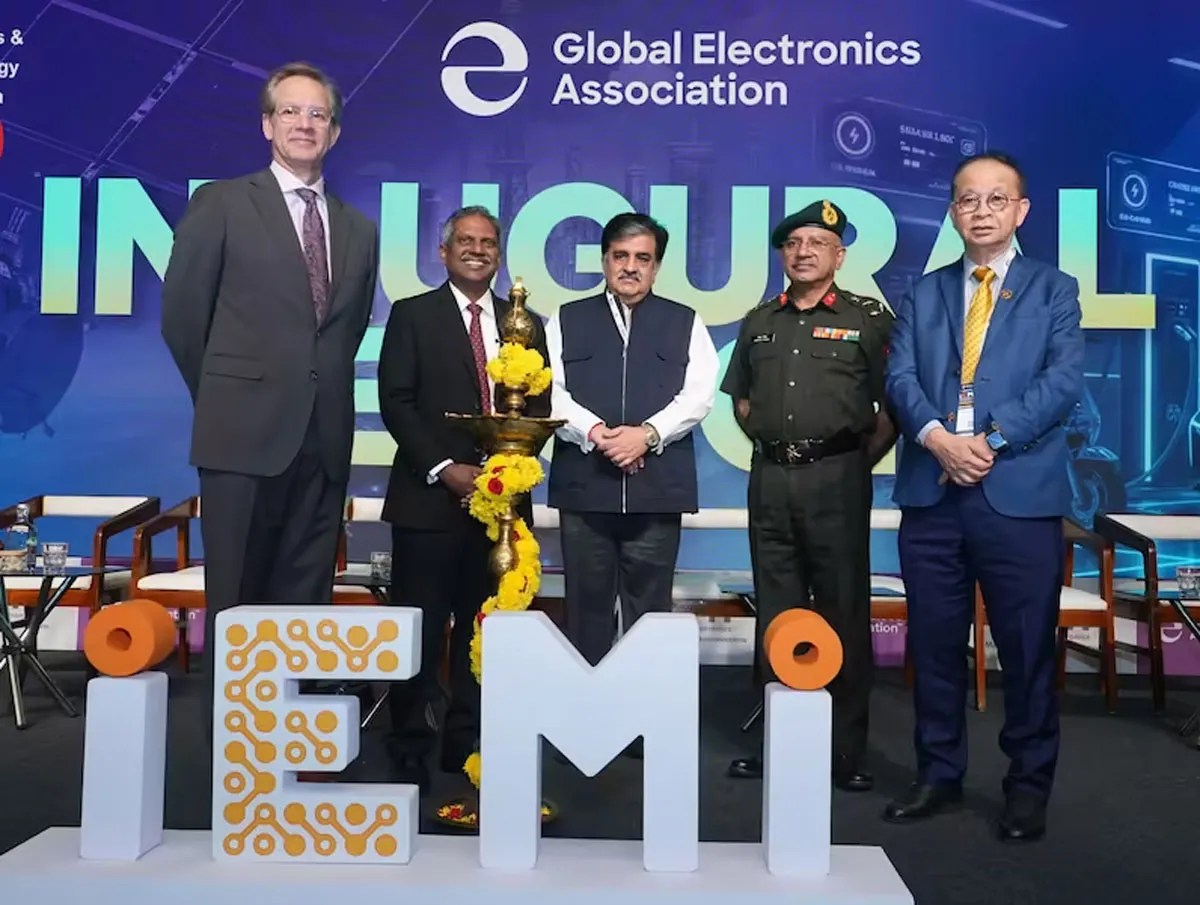
Integrated Electronics Manufacturing & Interconnections (IEMI) 2026, the flagship platform of the Global Electronics Association, concluded on January 29–30, 2026, at Hotel Taj Yeshwantpur, delivering key outcomes aligned with India’s electronics manufacturing, defence, and global supply-chain ambitions.

The two-day conference brought together over 1,800 business delegates from India and more than 100 international participants from Southeast Asia, Japan, the Middle East and Africa, Europe, the UK, and the US, highlighting India’s growing role in the global electronics manufacturing ecosystem.

A major highlight of the event was the signing of a Memorandum of Understanding between the Global Electronics Association and the Directorate General of Quality Assurance (DGQA). The agreement aims to strengthen India’s defence and aerospace electronics sector by aligning JSS standards with global requirements and enhancing collaboration among industry stakeholders in support of the national mission of Atmanirbhar Bharat.

The conference also witnessed the release of the Consumer Electronics & Mobile Manufacturing Survey Report, which outlined challenges and opportunities in improving manufacturing quality and export competitiveness. The report, published by the Global Electronics Association with support from the India Cellular & Electronics Association and ecosystem partners, provides recommendations to enhance process discipline and align India’s electronics production with global standards.

Trade development remained a key focus, with more than 100 international delegates engaging with Indian manufacturers through structured business-to-business interactions and matchmaking sessions. The event also featured dedicated forums on consumer electronics, electric vehicles, defence and aerospace, and supply chain resilience, promoting discussions on sourcing partnerships, supplier qualification, and market access.

Community engagement was another central theme, bringing together OEMs, EMS providers, PCB manufacturers, semiconductor companies, equipment suppliers, and policymakers. A key attraction was the Global Wire Harness Championship, which recognised excellence in workmanship and manufacturing precision. Siddaraju of Cyient DLM Limited was named winner, while Sawinee Wongmart of Satys Electric secured the runner-up position, and Amit Kumar of Vista Consoles Electronics Private Limited received the consolation prize.

The event also hosted the Member Awards Program, honouring companies, volunteers, certified trainers, and partners for their contributions to standards adoption, workforce development, and ecosystem growth.

Dr. John W. Mitchell, President and CEO, Global Electronics Association, said the event demonstrated the growing global competitiveness of India’s electronics manufacturing ecosystem, driven by collaboration, standards alignment, and workforce readiness.

With strong post-event outcomes, IEMI 2026 reinforced its role as a catalyst for collaboration, trade development, and quality-led growth, supporting India’s long-term position in the global electronics industry.


Integrated Electronics Manufacturing & Interconnections (IEMI) 2026, the flagship platform of the Global Electronics Association, concluded on January 29–30, 2026, at Hotel Taj Yeshwantpur, delivering key outcomes aligned with India’s electronics manufacturing, defence, and global supply-chain ambitions.The two-day conference brought together over 1,800 business delegates from India and more than 100 international participants from Southeast Asia, Japan, the Middle East and Africa, Europe, the UK, and the US, highlighting India’s growing role in the global electronics manufacturing ecosystem.A major highlight of the event was the signing of a Memorandum of Understanding between the Global Electronics Association and the Directorate General of Quality Assurance (DGQA). The agreement aims to strengthen India’s defence and aerospace electronics sector by aligning JSS standards with global requirements and enhancing collaboration among industry stakeholders in support of the national mission of Atmanirbhar Bharat.The conference also witnessed the release of the Consumer Electronics & Mobile Manufacturing Survey Report, which outlined challenges and opportunities in improving manufacturing quality and export competitiveness. The report, published by the Global Electronics Association with support from the India Cellular & Electronics Association and ecosystem partners, provides recommendations to enhance process discipline and align India’s electronics production with global standards.Trade development remained a key focus, with more than 100 international delegates engaging with Indian manufacturers through structured business-to-business interactions and matchmaking sessions. The event also featured dedicated forums on consumer electronics, electric vehicles, defence and aerospace, and supply chain resilience, promoting discussions on sourcing partnerships, supplier qualification, and market access.Community engagement was another central theme, bringing together OEMs, EMS providers, PCB manufacturers, semiconductor companies, equipment suppliers, and policymakers. A key attraction was the Global Wire Harness Championship, which recognised excellence in workmanship and manufacturing precision. Siddaraju of Cyient DLM Limited was named winner, while Sawinee Wongmart of Satys Electric secured the runner-up position, and Amit Kumar of Vista Consoles Electronics Private Limited received the consolation prize.The event also hosted the Member Awards Program, honouring companies, volunteers, certified trainers, and partners for their contributions to standards adoption, workforce development, and ecosystem growth.Dr. John W. Mitchell, President and CEO, Global Electronics Association, said the event demonstrated the growing global competitiveness of India’s electronics manufacturing ecosystem, driven by collaboration, standards alignment, and workforce readiness.With strong post-event outcomes, IEMI 2026 reinforced its role as a catalyst for collaboration, trade development, and quality-led growth, supporting India’s long-term position in the global electronics industry.

Next Story
Infrastructure Urban

Implementation Status of Jal Jeevan Mission

Since August 2019 the Government has implemented Jal Jeevan Mission to provide assured potable water through household tap connections in rural India. At the start of the mission only 32.3 million (mn) rural households, representing 16.7 per cent, were reported to have tap water connections. States and union territories have reported that 125.8 mn additional rural households have since been provided with tap connections. As a result, of about 193.6 mn rural households roughly 158.2 mn, or 81.71 per cent, are reported to have tap water supply at home.\n\nThe State, district and village level st..

Next Story
Infrastructure Urban

Jal Jeevan Mission Reaches Eighty One Per Cent Rural Coverage

The Government reported substantial progress under the Jal Jeevan Mission, launched in August 2019 to provide tap water to every rural household. At launch only 32.3 million (mn) rural households had tap connections and states and Union territories reported provision of 125.8 mn additional households by March 2026. Consequently, out of about 193.6 mn rural households around 158.2 mn, or 81.71 per cent, are reported to have tap water at home. The Finance Minister announced extension of the mission until 2028 in the 2025-26 budget speech. The Swachh Bharat Mission Grameen, launched in October 20..

Next Story
Infrastructure Urban

Empowering Local Governance for Sustainable Rural Water Supply

The Ministry of Jal Shakti has aligned the Jal Jeevan Mission (JJM) with the 73rd Amendment to strengthen village level planning and community ownership of water supply. Gram Panchayats, village water and sanitation committees and Pani Samitis are to plan, implement, manage and maintain piped water systems, with gram sabha processes formalising handover and oversight. Implementation support agencies including non government organisations, community based organisations and self help groups have been empanelled to train local committees and promote women participation. Under JJM, the department ..

Advertisement

Subscribe to Our Newsletter

Get daily newsletters around different themes from Construction world.

STAY CONNECTED

Advertisement

Advertisement

Advertisement