IIT Hyderabad Industry Summit To Strengthen Academia Industry Ties
ECONOMY & POLICY

IIT Hyderabad Industry Summit To Strengthen Academia Industry Ties

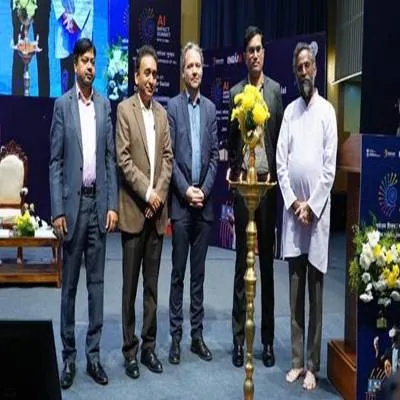
The Indian Institute of Technology Hyderabad (IIT Hyderabad) held its first industry summit to reinforce partnerships between academia and industry. The summit showcased research across domains such as sustainability, clean energy, catalysis, healthcare technologies, advanced materials, polymers, artificial intelligence driven chemical engineering, computational modelling and fluid dynamics. The event brought together industry delegates, scholars and institutional leaders to explore collaborations.

Interactive poster sessions and laboratory visits enabled direct dialogue, allowing researchers to present applied projects and industry representatives to identify problem driven opportunities for joint development. The formats were designed to move beyond formal introductions towards practical engagement that could accelerate technology translation and scale up. Delegates discussed pathways for internships, joint supervision and infrastructure sharing to support implementation.

A panel discussion titled Beyond Collaboration: Building an Actionable Industry–Academia Framework for Viksit Bharat emphasised the need to replace conventional memorandum of understanding based engagement with structured, outcome driven partnerships. The panel urged the adoption of co developed research programmes, industry embedded internships and joint doctoral supervision alongside mechanisms for rapid commercialisation. Participants highlighted measurable deliverables and long term roadmaps as essential for sustained impact.

The chief guest, Achyut Ghatak, Director Technical of Coal India Limited (CIL), underlined that faster commercialisation of research and trust based collaboration are central to India's growth and conveyed CIL's commitment to deepen problem driven engagement. He reaffirmed support for the established CLEANZ Centre of Excellence (CLEANZ) at IIT Hyderabad for clean coal energy with net zero emissions and framed the approach as strategic partnerships rather than transactional interactions. Industry leaders also indicated willingness to provide mentorship, domain challenges and shared infrastructure as part of long term alliances.

The director of IIT Hyderabad, Professor B S Murty, said institutions must act as engines of technological transformation by aligning academic research with national industrial priorities and fostering collaborative ecosystems. He urged industry to contribute not only funding but also real world problems and sustained mentorship to accelerate progress. Organisers expect the summit to seed pilot projects and deepen ties between the Indian higher education and industrial sectors.

The Indian Institute of Technology Hyderabad (IIT Hyderabad) held its first industry summit to reinforce partnerships between academia and industry. The summit showcased research across domains such as sustainability, clean energy, catalysis, healthcare technologies, advanced materials, polymers, artificial intelligence driven chemical engineering, computational modelling and fluid dynamics. The event brought together industry delegates, scholars and institutional leaders to explore collaborations. Interactive poster sessions and laboratory visits enabled direct dialogue, allowing researchers to present applied projects and industry representatives to identify problem driven opportunities for joint development. The formats were designed to move beyond formal introductions towards practical engagement that could accelerate technology translation and scale up. Delegates discussed pathways for internships, joint supervision and infrastructure sharing to support implementation. A panel discussion titled Beyond Collaboration: Building an Actionable Industry–Academia Framework for Viksit Bharat emphasised the need to replace conventional memorandum of understanding based engagement with structured, outcome driven partnerships. The panel urged the adoption of co developed research programmes, industry embedded internships and joint doctoral supervision alongside mechanisms for rapid commercialisation. Participants highlighted measurable deliverables and long term roadmaps as essential for sustained impact. The chief guest, Achyut Ghatak, Director Technical of Coal India Limited (CIL), underlined that faster commercialisation of research and trust based collaboration are central to India's growth and conveyed CIL's commitment to deepen problem driven engagement. He reaffirmed support for the established CLEANZ Centre of Excellence (CLEANZ) at IIT Hyderabad for clean coal energy with net zero emissions and framed the approach as strategic partnerships rather than transactional interactions. Industry leaders also indicated willingness to provide mentorship, domain challenges and shared infrastructure as part of long term alliances. The director of IIT Hyderabad, Professor B S Murty, said institutions must act as engines of technological transformation by aligning academic research with national industrial priorities and fostering collaborative ecosystems. He urged industry to contribute not only funding but also real world problems and sustained mentorship to accelerate progress. Organisers expect the summit to seed pilot projects and deepen ties between the Indian higher education and industrial sectors.

Next Story
Technology

AI-Enabled Workflows Lift Profitability and Productivity

Organisations modernising frontline workflows with artificial intelligence, automation and real-time data are reporting stronger financial performance, higher productivity and improved employee engagement, according to a global study by Zebra Technologies and Oxford Economics.The research covered 1,000 senior leaders across retail, manufacturing, transportation and logistics in the US, Mexico, the UK, Germany, India, Japan, Australia and New Zealand.In transportation and logistics, 54 per cent of companies that improved picking and packing operations reported faster operational performance, wh..

Next Story
Real Estate

India Leads Global AI Readiness but Implementation Lags

Indian companies lead global averages across all eight artificial intelligence readiness indicators tracked by JLL, but only 19 per cent have started making changes to their workplaces, according to the JLL 2026 Future of Work Survey.The study found that 77 per cent of Indian business leaders expect AI to change their office requirements, creating a 58-percentage-point gap between awareness and implementation. The survey covered more than 2,200 CEOs, CFOs and real estate leaders across 21 countries during the first quarter of 2026.Despite concerns over automation, 58 per cent of Indian leaders..

Next Story
Equipment

Three WOLFF Cranes Build Riyadh Cable-Stayed Bridges

Three WOLFF 180 B luffing jib cranes are supporting the construction of two cable-stayed bridges alongside the existing Wadi Laban Bridge in Riyadh, Saudi Arabia. The project is being developed for the Royal Commission for Riyadh City and executed by the ICRC joint venture comprising IC Ictas and Al Rashid Trading & Contracting Company.The cranes are handling lifting operations including formwork, reinforcement, concrete placement, work platforms, surveying equipment and other construction materials. Each crane is fitted with a 40 m jib, reaches a hook height of 157 m and offers a maximum ..

Advertisement

Subscribe to Our Newsletter

Get daily newsletters around different themes from Construction world.

STAY CONNECTED

Advertisement

Advertisement

Advertisement