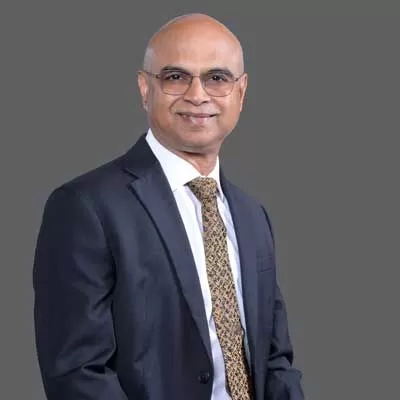





India Aims To Be Global Data Centre Hub
ECONOMY & POLICY

India Aims To Be Global Data Centre Hub

Union Minister Dr Jitendra Singh said India is entering a decisive phase in which data centres, artificial intelligence, quantum technologies and next generation digital infrastructure will shape the future global economic order. He said the world increasingly looks to India for technology partnerships and that the country is prepared to emerge as a trusted global data centre hub through policy reform, private sector participation, clean energy integration and an expanding innovation ecosystem.

The minister reported that data centre capacity is projected to grow from one point five gigawatts (GW) to nearly six point five gigawatts (GW) by 2030 and that the ongoing expansion is expected to generate zero point one million engineering jobs (0.1 mn) in fields such as artificial intelligence systems, cooling technologies, smart grids, renewable energy integration and advanced digital infrastructure. He characterised the data economy as a strategic national opportunity that will influence investment, employment, energy systems and geopolitical competitiveness over coming decades.

He urged an integrated national approach involving government, private industry, infrastructure providers, telecom networks, renewable energy stakeholders and research institutions to leverage opportunities in hyperscale data centres and colocation markets. The minister emphasised that resilient supply chains, sustainable energy systems, advanced telecom connectivity, subsea cable infrastructure and smart cooling solutions will be critical to sector growth.

He highlighted the National Quantum Mission as an example of rapid progress, saying India has achieved more than half of its planned targets in less than half the stipulated time and has already crossed 1,000 kilometres of secure quantum communication infrastructure within three years against a target of 2,000 kilometres over eight years. The minister attributed progress to policy support and coordinated effort between agencies and industry.

He outlined reforms aimed at preparing India for future technologies, noting long-term tax incentives for cloud service providers, National Research Foundation and the Semiconductor Mission, and measures to open sectors such as space and nuclear energy to private participation. He said these measures, alongside public-private collaboration, aim to position India as a dependable destination for digital infrastructure investment.

Union Minister Dr Jitendra Singh said India is entering a decisive phase in which data centres, artificial intelligence, quantum technologies and next generation digital infrastructure will shape the future global economic order. He said the world increasingly looks to India for technology partnerships and that the country is prepared to emerge as a trusted global data centre hub through policy reform, private sector participation, clean energy integration and an expanding innovation ecosystem. The minister reported that data centre capacity is projected to grow from one point five gigawatts (GW) to nearly six point five gigawatts (GW) by 2030 and that the ongoing expansion is expected to generate zero point one million engineering jobs (0.1 mn) in fields such as artificial intelligence systems, cooling technologies, smart grids, renewable energy integration and advanced digital infrastructure. He characterised the data economy as a strategic national opportunity that will influence investment, employment, energy systems and geopolitical competitiveness over coming decades. He urged an integrated national approach involving government, private industry, infrastructure providers, telecom networks, renewable energy stakeholders and research institutions to leverage opportunities in hyperscale data centres and colocation markets. The minister emphasised that resilient supply chains, sustainable energy systems, advanced telecom connectivity, subsea cable infrastructure and smart cooling solutions will be critical to sector growth. He highlighted the National Quantum Mission as an example of rapid progress, saying India has achieved more than half of its planned targets in less than half the stipulated time and has already crossed 1,000 kilometres of secure quantum communication infrastructure within three years against a target of 2,000 kilometres over eight years. The minister attributed progress to policy support and coordinated effort between agencies and industry. He outlined reforms aimed at preparing India for future technologies, noting long-term tax incentives for cloud service providers, National Research Foundation and the Semiconductor Mission, and measures to open sectors such as space and nuclear energy to private participation. He said these measures, alongside public-private collaboration, aim to position India as a dependable destination for digital infrastructure investment.

Next Story
Building Material

Dalmia Cement to Acquire 5.2 MnTPA Capacity

Dalmia Cement (Bharat), a wholly owned subsidiary of Dalmia Bharat, has executed a Business Transfer Agreement with Jaiprakash Associates and Adani Infra (India) to acquire cement assets with 5.2 MnTPA capacity in the Central region.The acquisition covers cement plants located at Rewa in Madhya Pradesh, and Churk, Chunar and Sadwa in Uttar Pradesh. The assets include 5.2 MnTPA cement capacity, 3.3 MnTPA clinker capacity, 99 MW thermal power capacity, railway sidings at Rewa and Chunar, and a common railway siding at Churk. The enterprise value of the transaction is Rs 28.5 billion.Following co..

Next Story
Infrastructure Urban

Rampura Agucha Becomes Zinc Mark Certified Mine

Hindustan Zinc’s Rampura Agucha Mine has become India’s first Zinc Mark certified mine, marking a major milestone in responsible zinc production. The mine is the world’s largest underground zinc-lead mine and is operated by Hindustan Zinc, the world’s largest integrated zinc producer.Zinc Mark is a globally recognised assurance framework that validates responsible zinc production against international Environmental, Social and Governance standards, responsible sourcing practices and value chain transparency. The certification strengthens Hindustan Zinc’s ability to offer responsibly ..

Next Story
Infrastructure Urban

Headsup B2B Targets Rs 4 bn Revenue This Fiscal

Headsup B2B, a pan-India procurement and supply chain platform serving the infrastructure, industrial and renewable energy sectors, is targeting Rs 4 billion in revenue for the current fiscal year. The company executed over 2,200 transactions worth Rs 2.5 billion in the previous financial year.Allied infrastructure services contributed nearly 80 per cent of revenue during the period, while renewable energy, industrial automation and road safety solutions emerged as the fastest-growing categories. The company is now expanding its role beyond procurement to support installation, deployment and p..

Advertisement

Subscribe to Our Newsletter

Get daily newsletters around different themes from Construction world.

STAY CONNECTED

Advertisement

Advertisement

Advertisement

-->