India Uzbekistan Should Double Bilateral Trade In Three Years
ECONOMY & POLICY

India Uzbekistan Should Double Bilateral Trade In Three Years

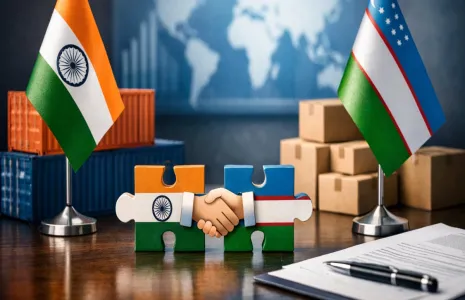
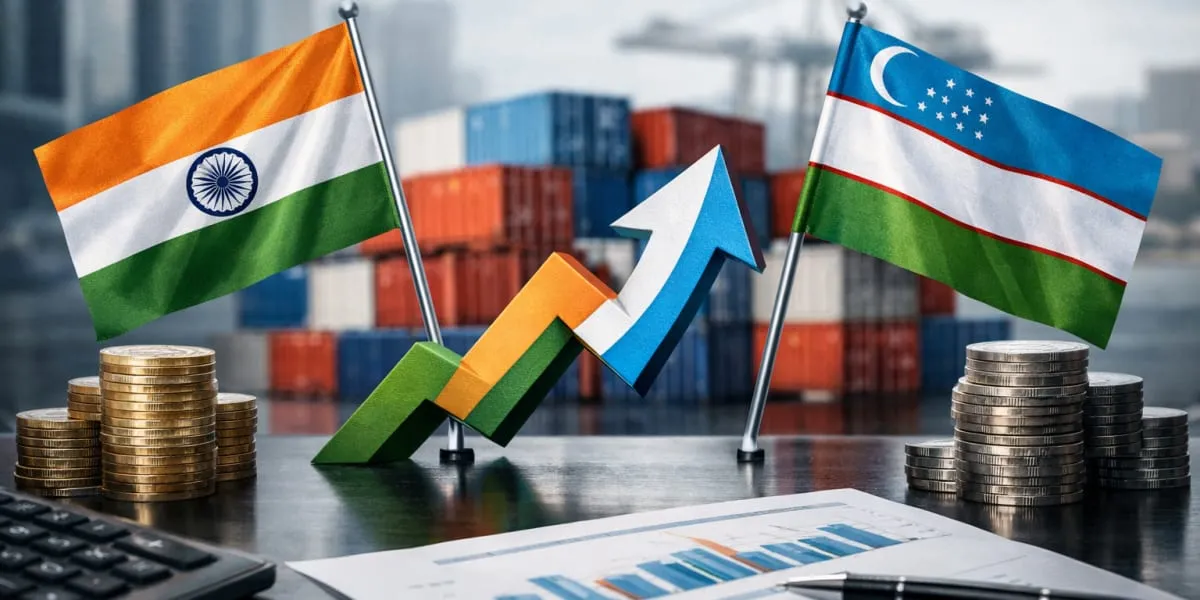
India and Uzbekistan should aim to double bilateral trade in the next three years, Commerce and Industry Minister Piyush Goyal said at the India-Uzbekistan Business Forum in New Delhi. He said two-way commerce stood at United States dollar (USD) 1.5 bn and that trade must lead efforts to boost broader economic ties. He urged businesses on both sides to increase investment in each other's economies and to pursue closer commercial cooperation. The remarks framed an agenda focused on practical measures to expand market access and investment flows.

Goyal highlighted India's strengths in information technology, a skilled workforce and digital public infrastructure, and noted that Uzbekistan offers opportunities in mining and cotton production. He said that negotiating a free trade agreement would be a promising idea to be explored by both governments. He also emphasised sectors such as pharmaceuticals and healthcare where collaboration could be intensified. The minister set a policy tone that prioritises trade facilitation and targeted investment promotion.

Uzbekistan's Minister of Investment, Industry and Trade, Laziz Kudratov, said current bilateral trade is far below potential and urged both sides to work to push it up. He noted that about 400 Indian companies are operational in Uzbekistan and sought further Indian investment in steel, pharmaceuticals, healthcare, mining and the automotive sector. His comments indicated a willingness to host greater Indian participation in key industrial projects. Officials from both governments discussed mechanisms to remove barriers and accelerate project implementation.

Stakeholders at the forum indicated that coordinated business delegations, investment facilitation measures and technology partnerships could help achieve the target within the proposed timeline. Emphasis was placed on practical agreements, capacity building and enhanced connectivity to unlock new trade corridors. Industry representatives were invited to identify concrete projects that can be advanced with government support. The shared objective is to translate diplomatic goodwill into measurable trade and investment outcomes over the next three years.

India and Uzbekistan should aim to double bilateral trade in the next three years, Commerce and Industry Minister Piyush Goyal said at the India-Uzbekistan Business Forum in New Delhi. He said two-way commerce stood at United States dollar (USD) 1.5 bn and that trade must lead efforts to boost broader economic ties. He urged businesses on both sides to increase investment in each other's economies and to pursue closer commercial cooperation. The remarks framed an agenda focused on practical measures to expand market access and investment flows. Goyal highlighted India's strengths in information technology, a skilled workforce and digital public infrastructure, and noted that Uzbekistan offers opportunities in mining and cotton production. He said that negotiating a free trade agreement would be a promising idea to be explored by both governments. He also emphasised sectors such as pharmaceuticals and healthcare where collaboration could be intensified. The minister set a policy tone that prioritises trade facilitation and targeted investment promotion. Uzbekistan's Minister of Investment, Industry and Trade, Laziz Kudratov, said current bilateral trade is far below potential and urged both sides to work to push it up. He noted that about 400 Indian companies are operational in Uzbekistan and sought further Indian investment in steel, pharmaceuticals, healthcare, mining and the automotive sector. His comments indicated a willingness to host greater Indian participation in key industrial projects. Officials from both governments discussed mechanisms to remove barriers and accelerate project implementation. Stakeholders at the forum indicated that coordinated business delegations, investment facilitation measures and technology partnerships could help achieve the target within the proposed timeline. Emphasis was placed on practical agreements, capacity building and enhanced connectivity to unlock new trade corridors. Industry representatives were invited to identify concrete projects that can be advanced with government support. The shared objective is to translate diplomatic goodwill into measurable trade and investment outcomes over the next three years.

Related Stories

Gold Stories

Next Story
Real Estate

Gradiant expands Coimbatore engineering centre

Gradiant has expanded its Global Engineering Center (GEC) in Coimbatore, more than doubling its engineering workforce from approximately 100 to over 200 professionals as it strengthens its global project execution capabilities.The expanded centre will bring together multidisciplinary expertise across process engineering, detailed design and project engineering, enabling the India team to take on greater responsibility for the engineering and design of Gradiant’s international projects.According to Govind Alagappan, COO, Gradiant, Coimbatore’s engineering talent and industrial heritage make..

Next Story
Infrastructure Urban

Domestic Firms Choose Locally Designed Reactors to Cut Delays

Domestic companies in the nuclear sector are choosing locally designed reactors to avoid time consuming approvals and supply chain bottlenecks that can delay project execution. The shift reflects an emphasis on reducing dependence on foreign designs and accelerating construction schedules by aligning design, manufacturing and regulatory processes within national frameworks. Industry participants expect that locally designed systems will allow closer coordination with regulators and vendors, shortening lead times for certification and component delivery. Localisation is projected to stimulate t..

Next Story
Infrastructure Urban

Kadiyam Kavya Seeks Separate Railway Division For Kazipet

Warangal Member of Parliament Kadiyam Kavya has urged the establishment of a separate railway division based at Kazipet and submitted a representation to the South Central Railway (SCR) general manager at the headquarters in Secunderabad. She highlighted Kazipet's role as a major railway hub and argued that the junction has not seen development commensurate with its strategic importance. The representative action aimed to press for administrative reorganisation to address local operational and developmental needs. She noted that creation of an independent Kazipet division has been a long stand..

Advertisement

Subscribe to Our Newsletter

Get daily newsletters around different themes from Construction world.

STAY CONNECTED

Advertisement