Infrastructure: The growth catalyst of Indian economy
ECONOMY & POLICY

Infrastructure: The growth catalyst of Indian economy

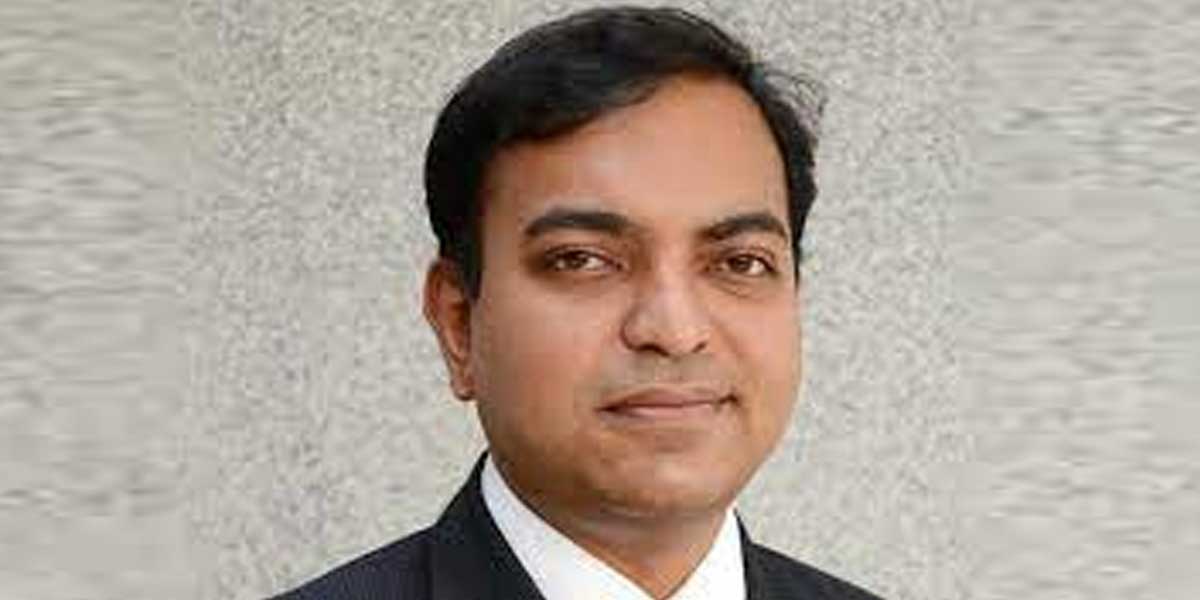
Investing in infrastructure generates a robust multiplier impact through multiple avenues. As India takes giant strides towards sustainable and inclusive growth, the significance of investment in infrastructure development serving as a vital catalyst for fostering economic development is inevitable, writes Sandeep Upadhyay, MD - Infrastructure Advisory, Centrum Capital Ltd.

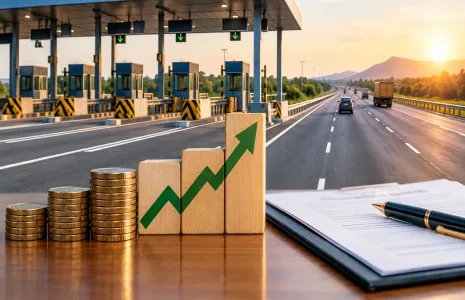
Being the fifth largest economy in the world with a nominal GDP of $ 3.75 trillion, India is expected to touch $ 5 trillion GDP by FY27. With a booming stock market which recently touched its all-time high mark and robust inflow of capital from leading FIIs, the Government has been rightly prioritising its efforts to leverage this momentum across core sectors wherein the Infrastructure sector stands out as a key beneficiary. Investing in infrastructure generates a robust multiplier impact through multiple avenues. Credible research suggests that there is a gain of Rs 2.5 to Rs 3.5 in GDP for every rupee spent on infrastructure. 

To read the full story, CLICK HERE.

Investing in infrastructure generates a robust multiplier impact through multiple avenues. As India takes giant strides towards sustainable and inclusive growth, the significance of investment in infrastructure development serving as a vital catalyst for fostering economic development is inevitable, writes Sandeep Upadhyay, MD - Infrastructure Advisory, Centrum Capital Ltd.Being the fifth largest economy in the world with a nominal GDP of $ 3.75 trillion, India is expected to touch $ 5 trillion GDP by FY27. With a booming stock market which recently touched its all-time high mark and robust inflow of capital from leading FIIs, the Government has been rightly prioritising its efforts to leverage this momentum across core sectors wherein the Infrastructure sector stands out as a key beneficiary. Investing in infrastructure generates a robust multiplier impact through multiple avenues. Credible research suggests that there is a gain of Rs 2.5 to Rs 3.5 in GDP for every rupee spent on infrastructure. To read the full story, CLICK HERE.

Next Story
Infrastructure Urban

Implementation Status of Jal Jeevan Mission

Since August 2019 the Government has implemented Jal Jeevan Mission to provide assured potable water through household tap connections in rural India. At the start of the mission only 32.3 million (mn) rural households, representing 16.7 per cent, were reported to have tap water connections. States and union territories have reported that 125.8 mn additional rural households have since been provided with tap connections. As a result, of about 193.6 mn rural households roughly 158.2 mn, or 81.71 per cent, are reported to have tap water supply at home.\n\nThe State, district and village level st..

Next Story
Infrastructure Urban

Jal Jeevan Mission Reaches Eighty One Per Cent Rural Coverage

The Government reported substantial progress under the Jal Jeevan Mission, launched in August 2019 to provide tap water to every rural household. At launch only 32.3 million (mn) rural households had tap connections and states and Union territories reported provision of 125.8 mn additional households by March 2026. Consequently, out of about 193.6 mn rural households around 158.2 mn, or 81.71 per cent, are reported to have tap water at home. The Finance Minister announced extension of the mission until 2028 in the 2025-26 budget speech. The Swachh Bharat Mission Grameen, launched in October 20..

Next Story
Infrastructure Urban

Empowering Local Governance for Sustainable Rural Water Supply

The Ministry of Jal Shakti has aligned the Jal Jeevan Mission (JJM) with the 73rd Amendment to strengthen village level planning and community ownership of water supply. Gram Panchayats, village water and sanitation committees and Pani Samitis are to plan, implement, manage and maintain piped water systems, with gram sabha processes formalising handover and oversight. Implementation support agencies including non government organisations, community based organisations and self help groups have been empanelled to train local committees and promote women participation. Under JJM, the department ..

Advertisement

Subscribe to Our Newsletter

Get daily newsletters around different themes from Construction world.

STAY CONNECTED

Advertisement

Advertisement

Advertisement