


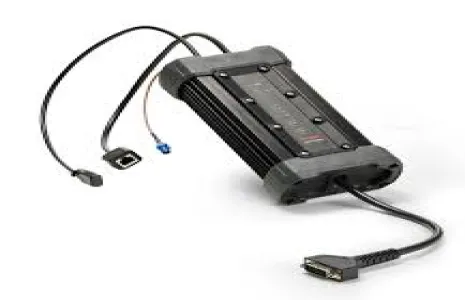


Kvaser Launches PCIe 4xLIN Interface
ECONOMY & POLICY

Kvaser Launches PCIe 4xLIN Interface

Kvaser has introduced the PCIe 4xLIN, a compact four-channel LIN interface designed for deterministic communication, precise timing analysis and scalable validation setups. The low-profile PCIe card is built for desktop, industrial and hardware-in-the-loop environments.

The Kvaser PCIe 4xLIN provides four individually galvanically isolated LIN channels through a single PCIe card. Its FPGA-based Kvaser LIN-IP technology supports communication of up to 20 kbaud with 1 microsecond timestamp resolution, helping engineers capture timing-sensitive events during testing, debugging and validation.

The interface supports simultaneous operation with multiple Kvaser devices, allowing test setups to scale with growing system complexity. It is compatible with applications built on the standardised Kvaser LINlib API, enabling teams to use existing software without modification.

The product supports Windows and Linux and works with the Kvaser CANlib SDK, which includes LINlib and APIs with examples for C, C++, C#, Python, Delphi and Visual Basic. It is installed directly in a PCI Express slot and powered through the host system, reducing cabling in compact test racks.

The PCIe 4xLIN also supports Kvaser’s software-based TimeSync for synchronised timestamps across multiple devices and systems. On Linux platforms, it exposes a PHC device for time synchronisation using tools such as phc2sys.

Designed for demanding environments, the interface operates between -40°C and +85°C and includes short and long mounting brackets. Typical applications include ECU development, automotive body electronics, HIL testing, multi-channel logging and industrial LIN communication systems.

"Join industry leaders at RAHSTA Expo, India's premier platform for roads, highways and traffic infrastructure. Register now to explore innovations, network with experts and shape the future of mobility."

Kvaser has introduced the PCIe 4xLIN, a compact four-channel LIN interface designed for deterministic communication, precise timing analysis and scalable validation setups. The low-profile PCIe card is built for desktop, industrial and hardware-in-the-loop environments.The Kvaser PCIe 4xLIN provides four individually galvanically isolated LIN channels through a single PCIe card. Its FPGA-based Kvaser LIN-IP technology supports communication of up to 20 kbaud with 1 microsecond timestamp resolution, helping engineers capture timing-sensitive events during testing, debugging and validation.The interface supports simultaneous operation with multiple Kvaser devices, allowing test setups to scale with growing system complexity. It is compatible with applications built on the standardised Kvaser LINlib API, enabling teams to use existing software without modification.The product supports Windows and Linux and works with the Kvaser CANlib SDK, which includes LINlib and APIs with examples for C, C++, C#, Python, Delphi and Visual Basic. It is installed directly in a PCI Express slot and powered through the host system, reducing cabling in compact test racks.The PCIe 4xLIN also supports Kvaser’s software-based TimeSync for synchronised timestamps across multiple devices and systems. On Linux platforms, it exposes a PHC device for time synchronisation using tools such as phc2sys.Designed for demanding environments, the interface operates between -40°C and +85°C and includes short and long mounting brackets. Typical applications include ECU development, automotive body electronics, HIL testing, multi-channel logging and industrial LIN communication systems.

Next Story
Real Estate

NICMAR’s campus is a live lesson in construction methodology

At NICMAR University, architecture becomes a live lesson in construction innovation. Pankaj Nande, Principal Architect, TDC Architecture and Design, explains how Alumil’s fenestration systems helped turn a precast campus vision into a functional, durable and future-facing learning environment for the next generation of builders.Please take us through your journey as an architect and some of the projects you have worked on.I am the founder of TDC- Architecture & Design, Pune. Our journey started with the thought of doing justice not only to design, but also to construction methodology, te..

Next Story
Infrastructure Urban

India needs to build a building health operating system

Cyond is bringing engineering-led diagnostics, AI-assisted data and standardised repair systems to building preservation, after screening nearly 1.5 lakh buildings and finding water-related deterioration in 67 per cent. In this interaction with Construction World, Sunil Gorle, Founder, Cyond, discusses how building health insights can make maintenance more predictive.What business opportunity did Cyond identify in structural diagnostics and waterproofing?India has invested trillions of rupees in creating its built environment. Yet, many assets expected to last 70-100 years begin showing deteri..

Next Story
Infrastructure Urban

Waterproofing Blueprint

Waterproofing buildings used to be an annual pre-monsoon affair but the evolution of real-estate development has changed that approach. In new developments, developers are weaving waterproofing solutions into both the design and construction phases, an approach that Nikhil Madan, Managing Director, Mahima Group, says, “is all about ensuring lasting durability [of the building] and keeping lifecycle risks including water seepage and extensive maintenance to a minimum.”Watertight by designAluminium formwork systems aren’t commonly thought of as a waterproofing tool but at the Mahima Group,..

Advertisement

Subscribe to Our Newsletter

Get daily newsletters around different themes from Construction world.

STAY CONNECTED

Advertisement

Advertisement

Advertisement














