+
LANXESS CAB 30 Binder Earns EPD Certification for Low Emissions
ECONOMY & POLICY

LANXESS CAB 30 Binder Earns EPD Certification for Low Emissions

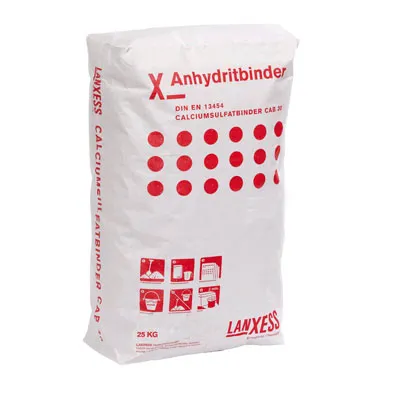
LANXESS has introduced its calcium sulfate binder CAB 30, a low-emission anhydrite binder designed to support eco-efficient construction projects. The company recently received Environmental Product Declarations (EPDs) for the product and its application in conventional calcium sulfate screeds, confirming its low carbon footprint and environmental performance.

The EPDs, issued by Institut Bauen und Umwelt e.V. (IBU), verify the environmental impact of CAB 30 throughout its lifecycle, from raw material extraction to disposal. The certification highlights the binder’s suitability for sustainable construction practices and provides transparent data for builders, architects, and engineers assessing environmentally responsible materials.

CAB 30 meets stringent requirements for volatile organic compounds (VOC) and has been tested for building biology safety. Emission tests confirmed compliance with the standards of the Committee for Health Assessment of Building Products (AgBB), while additional positive assessments were obtained under Belgian VOC regulations. The product has also received France’s “Emissions dans l’air intérieur A+” label for very low indoor air emissions, allowing it to carry an eco-label and reinforcing its environmental credentials.

Calcium sulfate screeds produced using CAB 30 offer several ecological and practical benefits compared with traditional cement screeds. They can be applied over large areas without joints or reinforcement, supporting efficient construction processes. The company’s Mebofix pro drying accelerator further enhances performance by reducing the amount of water required in screed mortar, shortening drying times and improving compressive, flexural, and surface strength, while also contributing to lower emissions at construction sites.

EPDs are internationally recognised tools for evaluating the environmental impact of building materials and play a key role in sustainable construction certification systems. By securing these declarations, the company aims to strengthen its market position and provide construction professionals with reliable data to support environmentally responsible building projects.

LANXESS has introduced its calcium sulfate binder CAB 30, a low-emission anhydrite binder designed to support eco-efficient construction projects. The company recently received Environmental Product Declarations (EPDs) for the product and its application in conventional calcium sulfate screeds, confirming its low carbon footprint and environmental performance.The EPDs, issued by Institut Bauen und Umwelt e.V. (IBU), verify the environmental impact of CAB 30 throughout its lifecycle, from raw material extraction to disposal. The certification highlights the binder’s suitability for sustainable construction practices and provides transparent data for builders, architects, and engineers assessing environmentally responsible materials.CAB 30 meets stringent requirements for volatile organic compounds (VOC) and has been tested for building biology safety. Emission tests confirmed compliance with the standards of the Committee for Health Assessment of Building Products (AgBB), while additional positive assessments were obtained under Belgian VOC regulations. The product has also received France’s “Emissions dans l’air intérieur A+” label for very low indoor air emissions, allowing it to carry an eco-label and reinforcing its environmental credentials.Calcium sulfate screeds produced using CAB 30 offer several ecological and practical benefits compared with traditional cement screeds. They can be applied over large areas without joints or reinforcement, supporting efficient construction processes. The company’s Mebofix pro drying accelerator further enhances performance by reducing the amount of water required in screed mortar, shortening drying times and improving compressive, flexural, and surface strength, while also contributing to lower emissions at construction sites.EPDs are internationally recognised tools for evaluating the environmental impact of building materials and play a key role in sustainable construction certification systems. By securing these declarations, the company aims to strengthen its market position and provide construction professionals with reliable data to support environmentally responsible building projects.

Next Story
Building Material

NITI Aayog Unveils Cement Decarbonisation Roadmap

NITI Aayog has released a sector-specific decarbonisation roadmap for cement as part of three green transition reports covering cement, aluminium and MSMEs. The report projects cement production rising to around 2,100 million tonnes by 2070 from 391 million tonnes in 2023, while targeting a reduction in carbon intensity to 0.09–0.13 tCO₂e per tonne. It recommends clinker substitution, refuse-derived fuels, CCUS adoption and carbon trading mechanisms to enable deep decarbonisation. ..

Next Story
Technology

Genesys Launches Advanced GeoRadar System

Genesys International Corporation has launched an advanced Ground Penetrating Radar (GPR) solution from IDS GeoRadar for underground utility mapping in India. The system uses patented Equalised Scrambling Technology (EST) and Wide/Multi-Array Antenna Technology to deliver high-resolution three-dimensional imaging of subsurface infrastructure. The technology enables the detection and mapping of buried assets such as water pipelines, sewer networks, telecom cables and power lines. By providing detailed subsurface insights, the system aims to help urban authorities and infrastructure developers ..

Next Story
Infrastructure Urban

Hindustan Zinc Partners Virginia Tech to Boost Silver Recovery

Hindustan Zinc Limited recently signed a Memorandum of Understanding (MoU) with Virginia Tech to advance research aimed at improving silver recovery across its lead–zinc (Pb–Zn) concentrators. The collaboration will focus on refining flotation techniques and optimising reagent usage to improve concentrate quality and operational efficiency at processing plants.Virginia Tech, based in Blacksburg, Virginia, is globally recognised for its expertise in mining engineering, mineral processing and applied metallurgical research. Through this partnership, Hindustan Zinc will leverage global resear..

Advertisement

Subscribe to Our Newsletter

Get daily newsletters around different themes from Construction world.

STAY CONNECTED

Advertisement

Advertisement

Advertisement

Open In App