+
Soil Testing Begins For Jayadev Vihar Nandankanan Corridor
ECONOMY & POLICY

Soil Testing Begins For Jayadev Vihar Nandankanan Corridor

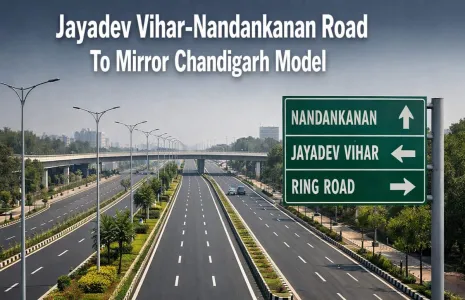
The state government has commenced soil testing for the proposed Jayadev Vihar-Nandankanan elevated corridor, marking the initial phase of work on the nine point five km route intended to reduce congestion and improve connectivity between Bhubaneswar and Cuttack. Anupam Saha, managing director of Odisha Bridge and Construction Corporation Limited, said soil investigation has been taken up as part of the initial work and that demarcation of land, shifting of utility service lanes and other preparatory steps will be initiated soon. Works department officials added that they will approach the National Highways Authority of India to seek permission for construction of a portion of the elevated corridor that will cross the national highway overbridge near Jayadev Vihar Square.

The initial testing locations include areas near Kalinga Stadium, Jayadev Vihar, Kalinga Hospital Square, Damana and KIIT Square, with further patches along the corridor to be examined to determine strength and load bearing capacity before construction commences. The corridor will stretch from Kalinga Stadium gate number four to Raghunathpur bridge and will be widened from six lanes to an eight lane carriageway with service roads and modern traffic infrastructure. The state cabinet cleared the project on July one this year.

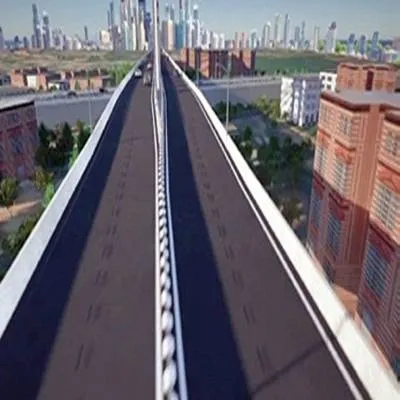
The project has been awarded on a turnkey basis to Dineshchandra R Agrawal Infracon Pvt Ltd, the lowest bidder, and is targeted for completion within 24 months. The contract value stands at Rs five point seven nine billion (bn), and subsequent references will use bn. Key features include construction of four flyovers at Jayadev Vihar as a cable stayed bridge, Kalinga Hospital Square, Damana Square and KIIT Square, together with improvements at Kalarahanga junction.

Additional components comprise service roads, slip roads, pedestrian subways, underground parking, drainage systems, bridges, roundabouts, road safety measures, lighting, landscaping and avenue plantation to support the arterial route. Officials said the corridor will serve as a major route connecting Bhubaneswar with Cuttack through Baranga and will ease traffic congestion, significantly reducing travel time on the stretch. Implementation will proceed following completion of geotechnical studies and requisite approvals.

The state government has commenced soil testing for the proposed Jayadev Vihar-Nandankanan elevated corridor, marking the initial phase of work on the nine point five km route intended to reduce congestion and improve connectivity between Bhubaneswar and Cuttack. Anupam Saha, managing director of Odisha Bridge and Construction Corporation Limited, said soil investigation has been taken up as part of the initial work and that demarcation of land, shifting of utility service lanes and other preparatory steps will be initiated soon. Works department officials added that they will approach the National Highways Authority of India to seek permission for construction of a portion of the elevated corridor that will cross the national highway overbridge near Jayadev Vihar Square. The initial testing locations include areas near Kalinga Stadium, Jayadev Vihar, Kalinga Hospital Square, Damana and KIIT Square, with further patches along the corridor to be examined to determine strength and load bearing capacity before construction commences. The corridor will stretch from Kalinga Stadium gate number four to Raghunathpur bridge and will be widened from six lanes to an eight lane carriageway with service roads and modern traffic infrastructure. The state cabinet cleared the project on July one this year. The project has been awarded on a turnkey basis to Dineshchandra R Agrawal Infracon Pvt Ltd, the lowest bidder, and is targeted for completion within 24 months. The contract value stands at Rs five point seven nine billion (bn), and subsequent references will use bn. Key features include construction of four flyovers at Jayadev Vihar as a cable stayed bridge, Kalinga Hospital Square, Damana Square and KIIT Square, together with improvements at Kalarahanga junction. Additional components comprise service roads, slip roads, pedestrian subways, underground parking, drainage systems, bridges, roundabouts, road safety measures, lighting, landscaping and avenue plantation to support the arterial route. Officials said the corridor will serve as a major route connecting Bhubaneswar with Cuttack through Baranga and will ease traffic congestion, significantly reducing travel time on the stretch. Implementation will proceed following completion of geotechnical studies and requisite approvals.

Related Stories

Gold Stories

Next Story
Real Estate

BMC OC Amnesty Scheme Requires Key Approvals from Mumbai Societies

The Brihanmumbai Municipal Corporation (BMC) has clarified that housing societies applying under its Occupation Certificate (OC) amnesty scheme must possess key approvals linked to the original construction. The requirements include a valid Intimation of Disapproval (IOD), an approved building plan and a Commencement Certificate (CC), along with a No Objection Certificate (NOC) from the developer or original construction applicant. The Standard Operating Procedure (SOP) makes clear that the absence of an OC alone will not qualify a building for relief. Societies must establish that their build..

Next Story
Real Estate

Gurugram Emerges as Luxury Senior Living Hub

Gurugram is emerging as a potential hub for luxury senior living, supported by available land, healthcare infrastructure, connectivity and a concentration of affluent professionals, high-net-worth individuals and non-resident Indians. These factors could give the city an advantage over land-constrained metros such as Mumbai. A report by the Association of Senior Living India (ASLI) and JLL estimates that India’s organised senior living market could represent a $10.1 bn opportunity by 2030. The sector had about 25,050 organised units as of June 2026, while penetration stood at only 1.5 per ce..

Next Story
Real Estate

Corrosion Costs India’s Infrastructure Rs. 142 bn Annually

Corrosion costs India an estimated Rs. 1.42 tn annually, equivalent to 4.3 per cent of gross domestic product, according to a report by the Confederation of Indian Industry and the National Research Institute. Infrastructure accounts for Rs. 142 bn of the annual burden, making it the sector with the largest absolute cost among those examined. The report, presented at the CII Annual Infrastructure Summit 2026, said the infrastructure-sector cost equals about 2.9 per cent of the sector’s gross domestic product. It estimated that effective measures could generate maximum savings of Rs. 495.8 bn..

Advertisement

Subscribe to Our Newsletter

Get daily newsletters around different themes from Construction world.

STAY CONNECTED

Advertisement

SPECIAL OFFER
QR Code