Trane Launches DCDA CDU for Asia-Pacific Data Centres
ECONOMY & POLICY

Trane Launches DCDA CDU for Asia-Pacific Data Centres

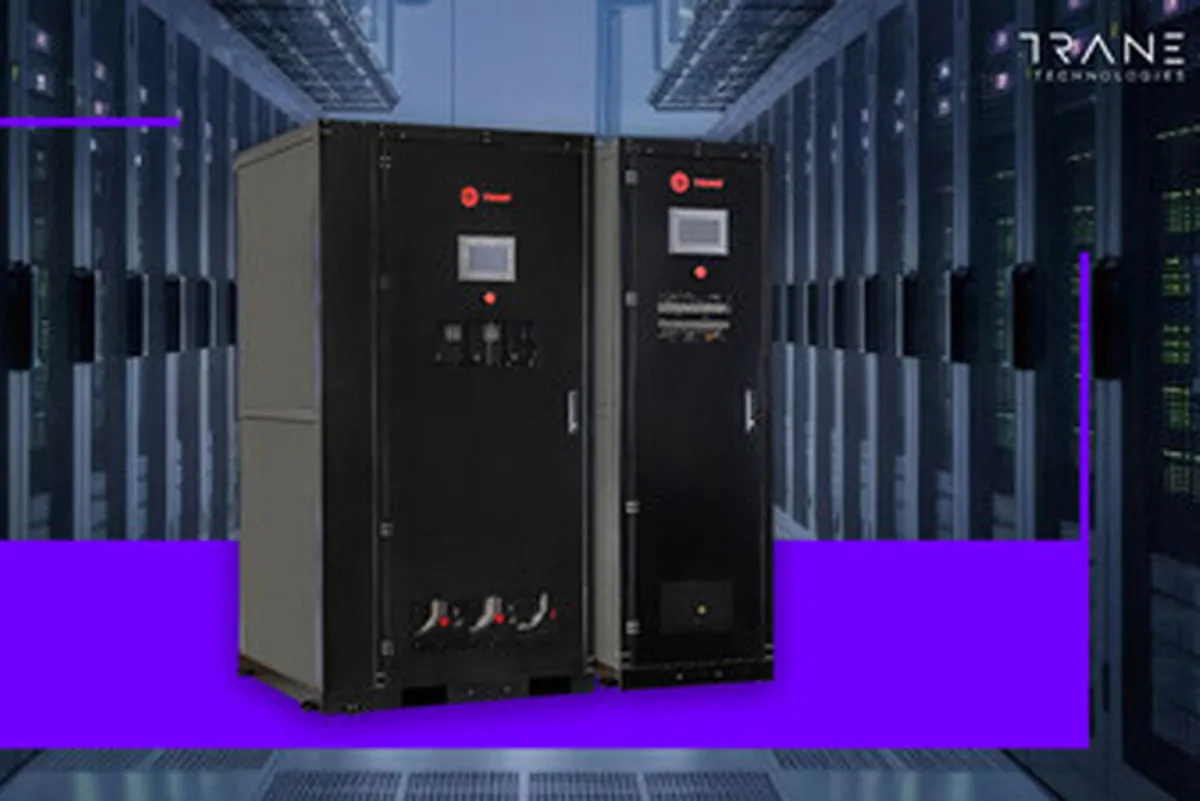
Trane Technologies, a global climate innovator, has recently launched its DCDA series, the first locally developed Coolant Distribution Unit (CDU) designed specifically for data centres in the Asia-Pacific region. The solution addresses rising heat dissipation challenges driven by AI workloads and high-power-density computing, offering a flexible, energy-efficient and integrated approach to liquid cooling.
As traditional air-cooling systems struggle with increasing server rack heat loads, liquid cooling is emerging as a preferred alternative. Industry estimates project strong growth in direct liquid cooling adoption for data centres between 2024 and 2030, highlighting the need for scalable and efficient cooling infrastructure.
The DCDA series features a compact, rack-aligned design suitable for in-row and in-room deployment, with full-front-access maintenance that can save up to 20 per cent of floor space. Built on a modular platform, the unit supports multiple pipe configurations, advanced sensor integration and optional power management systems, allowing customised deployment based on operational requirements.
Available in 400 kW, 800 kW and 1,350 kW models, with scalability up to 1,700 kW, the DCDA series supports current and future hyperscale and AI data centres. High-efficiency variable-frequency pumps and intelligent controls enable demand-based cooling, helping achieve power usage effectiveness levels as low as 1.1.
Designed for large-scale deployments, the system supports coordinated operation of up to 16 units and integrates with common building management protocols. Certified to CE and RoHS standards, the DCDA series has undergone extensive validation, with initial deliveries from China expected in the first quarter of 2026.   

Trane Technologies, a global climate innovator, has recently launched its DCDA series, the first locally developed Coolant Distribution Unit (CDU) designed specifically for data centres in the Asia-Pacific region. The solution addresses rising heat dissipation challenges driven by AI workloads and high-power-density computing, offering a flexible, energy-efficient and integrated approach to liquid cooling.As traditional air-cooling systems struggle with increasing server rack heat loads, liquid cooling is emerging as a preferred alternative. Industry estimates project strong growth in direct liquid cooling adoption for data centres between 2024 and 2030, highlighting the need for scalable and efficient cooling infrastructure.The DCDA series features a compact, rack-aligned design suitable for in-row and in-room deployment, with full-front-access maintenance that can save up to 20 per cent of floor space. Built on a modular platform, the unit supports multiple pipe configurations, advanced sensor integration and optional power management systems, allowing customised deployment based on operational requirements.Available in 400 kW, 800 kW and 1,350 kW models, with scalability up to 1,700 kW, the DCDA series supports current and future hyperscale and AI data centres. High-efficiency variable-frequency pumps and intelligent controls enable demand-based cooling, helping achieve power usage effectiveness levels as low as 1.1.Designed for large-scale deployments, the system supports coordinated operation of up to 16 units and integrates with common building management protocols. Certified to CE and RoHS standards, the DCDA series has undergone extensive validation, with initial deliveries from China expected in the first quarter of 2026.   

Next Story
Technology

Twin Tracks

Digital-twin adoption in India’s rail sector is gradually making its presence felt across asset management, infrastructure planning, predictive maintenance, construction monitoring and operator training.While large-scale deployments of digital twins are still evolving, Nipun Dumpala, a Senior Technical Lead specialising in digital twins, synthetic data, simulation and mixed reality technologies, points out that several organisations are exploring BIM-integrated digital twins, IoT-enabled monitoring, AI-based analytics and simulation platforms to improve operational efficiency and reduce life..

Next Story
Infrastructure Urban

Centre Clears Power Distribution Upgrade for Uttar Pradesh

The Central Government has approved power distribution projects worth Rs 407.39 billion for Uttar Pradesh under the Revamped Distribution Sector Scheme (RDSS). The investment will be used to modernise the state's electricity distribution infrastructure and strengthen network capacity across urban and rural areas. The package targets one of the country's largest distribution networks as the state experiences rapid urbanisation and rising electricity consumption. Planned interventions include the strengthening of distribution lines, modernisation of substations, replacement of ageing electrical ..

Next Story
Infrastructure Energy

India Data Centres To Consume 191 TWh By 2040 Driving Renewables

A Wood Mackenzie report says India's operational data centre capacity is projected to increase more than fivefold to 12 gigawatt (GW) by 2030 from 2.2 GW in 2025 as artificial intelligence (AI) and cloud computing drive demand. It projects electricity consumption to rise from 10 terawatt-hour (TWh) in 2025 to 191 TWh by 2040. The study forecasts a compound annual growth rate of around 40 per cent and notes AI-dedicated capacity will surge nearly 24-fold from 275 megawatt (MW) in 2025 to 6,546 MW by 2030. The report places India's digital economy at Rs 32 trillion (tn) in 2025 and says it contr..

Advertisement

Subscribe to Our Newsletter

Get daily newsletters around different themes from Construction world.

STAY CONNECTED

Advertisement

Advertisement

Advertisement