Union Launches India's First Multi-Lane Free Flow Tolling System
ECONOMY & POLICY

Union Launches India's First Multi-Lane Free Flow Tolling System

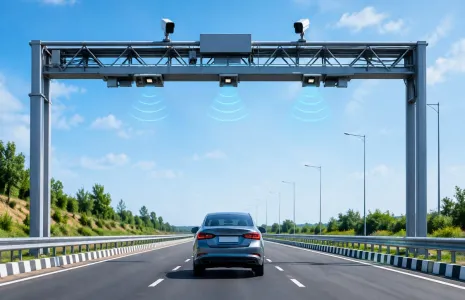
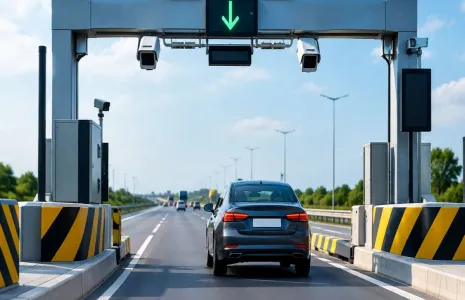
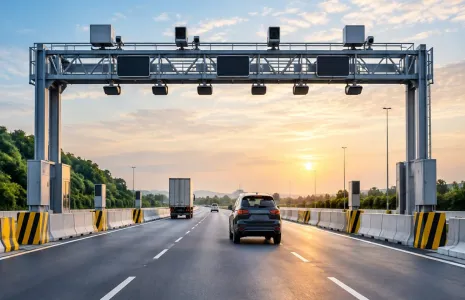
The Union Minister of Road Transport and Highways, Nitin Gadkari, launched India’s first Multi-Lane Free Flow (MLFF) barrier-less tolling system at the Chorayasi Toll Plaza on the Surat–Bharuch section of National Highway 48 in Gujarat.

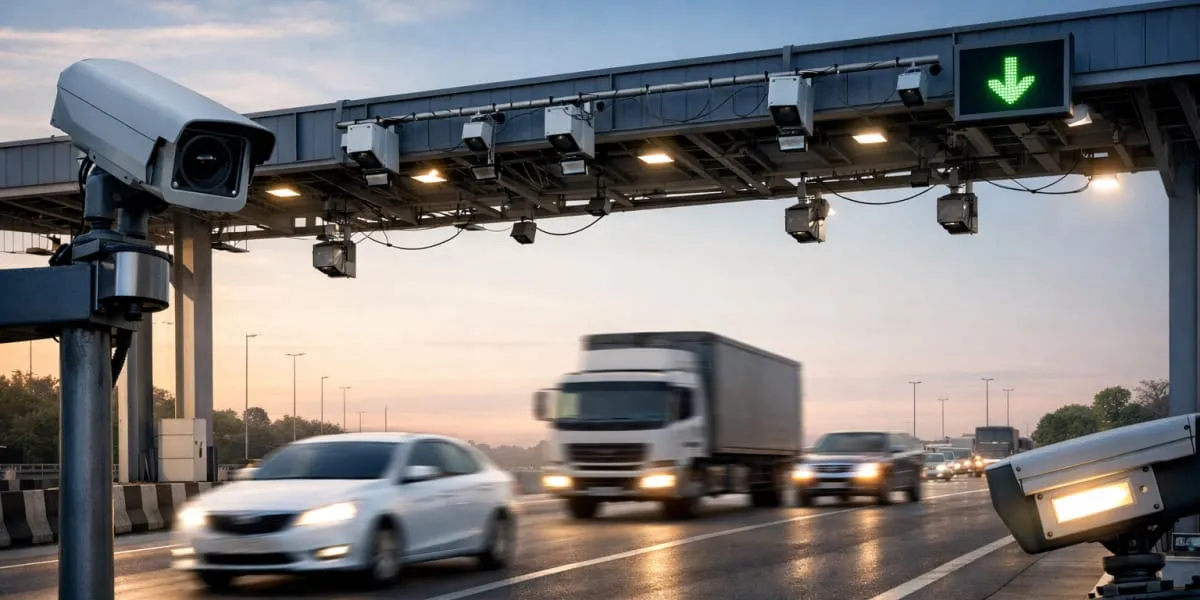
The system uses Automatic Number Plate Recognition (ANPR) and FASTag to enable toll collection without stopping vehicles.

The rollout represents a step in digitising the tolling ecosystem and modernising national highway infrastructure to meet global norms.

Authorities expect smoother throughput and reduced idling at plazas.

Officials said the barrier-less arrangement is expected to reduce travel time, ease congestion, improve fuel efficiency and lower vehicular emissions by removing the need for vehicles to stop at plazas.

The move is also intended to minimise human intervention in toll operations and to improve transparency and efficiency across corridors.

Implementation at the Surat–Bharuch stretch was presented as an initial phase for wider national deployment.

The ministry framed the initiative as supporting ease of living for citizens and facilitating ease of doing business by enabling faster movement of goods and logistics.

The announcement was linked to government priorities for technology driven upgrades and building commuter friendly highway facilities.

Officials noted that adoption of such systems aligns with efforts to modernise operations while reducing delays and operational costs.

Testing and monitoring protocols were said to be in place to assess performance before nationwide expansion.

The ministry indicated that the Chorayasi launch would serve as a model for subsequent rollouts on other national highway stretches and that lessons from performance and user experience would inform scaling.

The project combined software and hardware elements including number plate recognition cameras, payment integration and backend clearing to ensure frictionless transactions.

Officials outlined that the approach aims to balance technological efficiency with commuter convenience and regulatory oversight.

Further updates will follow after evaluation and stakeholder feedback.

The Union Minister of Road Transport and Highways, Nitin Gadkari, launched India’s first Multi-Lane Free Flow (MLFF) barrier-less tolling system at the Chorayasi Toll Plaza on the Surat–Bharuch section of National Highway 48 in Gujarat. The system uses Automatic Number Plate Recognition (ANPR) and FASTag to enable toll collection without stopping vehicles. The rollout represents a step in digitising the tolling ecosystem and modernising national highway infrastructure to meet global norms. Authorities expect smoother throughput and reduced idling at plazas. Officials said the barrier-less arrangement is expected to reduce travel time, ease congestion, improve fuel efficiency and lower vehicular emissions by removing the need for vehicles to stop at plazas. The move is also intended to minimise human intervention in toll operations and to improve transparency and efficiency across corridors. Implementation at the Surat–Bharuch stretch was presented as an initial phase for wider national deployment. The ministry framed the initiative as supporting ease of living for citizens and facilitating ease of doing business by enabling faster movement of goods and logistics. The announcement was linked to government priorities for technology driven upgrades and building commuter friendly highway facilities. Officials noted that adoption of such systems aligns with efforts to modernise operations while reducing delays and operational costs. Testing and monitoring protocols were said to be in place to assess performance before nationwide expansion. The ministry indicated that the Chorayasi launch would serve as a model for subsequent rollouts on other national highway stretches and that lessons from performance and user experience would inform scaling. The project combined software and hardware elements including number plate recognition cameras, payment integration and backend clearing to ensure frictionless transactions. Officials outlined that the approach aims to balance technological efficiency with commuter convenience and regulatory oversight. Further updates will follow after evaluation and stakeholder feedback.

Next Story
Infrastructure Urban

Meghalaya And Assam Hold Talks To End Transport Stoppages In Garo Hills

Meghalaya and Assam have opened talks aimed at ending recent stoppages of commodity transport in the Garo Hills, officials said. The deputy chief minister, in charge of home affairs, reported that both state governments are coordinating to resolve disruptions and to restore normal movement of goods. He acknowledged that misunderstandings may have contributed to the incidents and that clarification between administrative units is under way. The discussions are intended to produce practical arrangements that will allow consignments to move without hindrance while respecting local procedures. The..

Next Story
Infrastructure Transport

Kochi Metro Records 1.375 mn Rise In Passengers In FY26

Kochi Metro recorded a marginal rise in ridership in the financial year 2025-26, carrying 1.375 mn more passengers than in the previous year. The service carried 36.8 million (mn) passengers in 2025-26 compared with 35.5 mn in 2024-25, representing a year-on-year increase of 3.9 per cent. The growth was described as distributed rather than concentrated in isolated spikes. A month-wise analysis shows steady gains across quarters. In the first quarter, ridership increased from 8.57 mn to 8.84 mn, while the second quarter rose from 9.13 mn to 9.51 mn. These trends indicated broad-based improvemen..

Next Story
Infrastructure Transport

Ghaziabad Plans 16km Metro Link To Delhi Via Hindon Airport

Ghaziabad authorities are pursuing a 16 km metro link to Delhi that will run via Hindon Airport, and a detailed project report is under way. The plan is intended to improve connectivity between Ghaziabad and the national capital and to provide an interchange with the airport. Officials said the project is being studied to assess alignments, station locations and cost estimates ahead of formal approvals and tendering. The announcement follows the inauguration of the Delhi?Faridabad metro extension, which will offer hassle free travel for around 0.2 mn daily commuters between the national capita..

Advertisement

Subscribe to Our Newsletter

Get daily newsletters around different themes from Construction world.

STAY CONNECTED

Advertisement

Advertisement

Advertisement