+
Long-Term Offtake Key to India’s Low-Carbon Steel Push
Steel

Long-Term Offtake Key to India’s Low-Carbon Steel Push

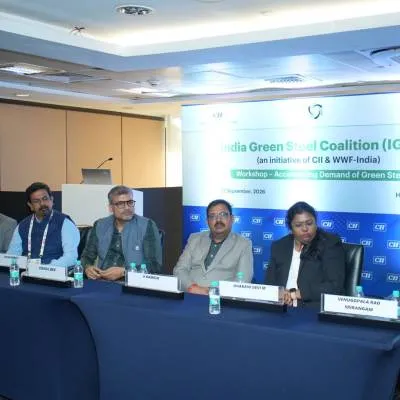
Long-term buyer commitments, clearer pricing mechanisms and stronger producer–buyer linkages recently emerged as key enablers for accelerating demand for low-carbon steel in India at a workshop convened by the India Green Steel Coalition (IGSC) in Hyderabad.

The IGSC, a joint initiative of the Confederation of Indian Industry (CII) and WWF-India, brought together more than 70 representatives from steel producers, large industrial buyers, sustainability professionals and other stakeholders to examine demand-side measures needed to support the development of India’s green steel market.

Members of the Coalition represent around 70 per cent of India’s crude steel production.

The workshop, themed “Driving the Transition to Low-Carbon Steel in India”, focused on commercial, technological and operational factors that could influence the pace of the country’s steel transition. Discussions covered long-term procurement and offtake commitments, green steel pricing and premiums, technology adoption, access to clean energy and investment requirements.

Participants examined how greater demand certainty and transparent commercial frameworks could strengthen producer–buyer relationships, provide clearer market signals and build confidence for investments in low-carbon steelmaking.

During a session on “Navigating Low-Carbon Steel Making, Clean Energy & Investment Challenges”, Gargi Mohanty, Senior Manager, Corporate Sustainability, Tata Steel Limited, highlighted the need to develop a collaborative steel ecosystem. She noted India’s position as the world’s second-largest steel producer and consumer.

Mohanty also highlighted India’s Green Steel Taxonomy, introduced in 2024 and based on carbon emission intensity during the steel production process. The framework uses a star-rating system to categorise green steel according to defined carbon emission intensity thresholds.

She outlined 14 levels of the green transition and discussed the sector-wise potential for green steel, emphasising the need for collective action from producers and consumers to accelerate adoption.

The demand-side perspective was discussed in a session titled “Driving Green Demand, Navigating Premiums & Securing Supply”, led by Amrit Sahu, Category Lead, Sourcing & Procurement, Blue Star Limited.

The discussion highlighted challenges faced by buyers in incorporating low-carbon steel into procurement strategies, particularly around green premiums, availability, quality and supply reliability.

Sahu outlined three key expectations from green steel producers — verified carbon data, predictable pricing and assured supply. Steel producers that provide credible carbon data, clear price bands and visibility on capacity could be better positioned to secure long-term buyer commitments.

He also highlighted the need for greater clarity and predictability around green steel premiums to help OEMs plan procurement and make informed purchasing decisions.

A fireside chat on “Aligning Production, Buyer Commitments & Market Pricing” brought together representatives from My Home Constructions, RMI Energy Solutions India Foundation, JSW Steel, L&T, Kirloskar Brothers and Ford Motor Company.

Moderated by Vishal Dev, Director, Sustainable Business, WWF-India, the discussion examined how stronger buyer commitments could provide greater market certainty for producers, while transparent pricing and premium mechanisms could support procurement decisions.

The workshop also underlined the importance of aligning steel production with evolving market demand. Discussions focused on strengthening links between production planning and customer requirements while improving clarity around the availability, pricing and performance of low-carbon steel.

The event concluded with emphasis on sustained collaboration across the value chain. Steel producers, buyers, policymakers, financial institutions and technology providers will need to work together to address commercial, technological and institutional barriers to scaling low-carbon steel in India.

Long-term buyer commitments, clearer pricing mechanisms and stronger producer–buyer linkages recently emerged as key enablers for accelerating demand for low-carbon steel in India at a workshop convened by the India Green Steel Coalition (IGSC) in Hyderabad.The IGSC, a joint initiative of the Confederation of Indian Industry (CII) and WWF-India, brought together more than 70 representatives from steel producers, large industrial buyers, sustainability professionals and other stakeholders to examine demand-side measures needed to support the development of India’s green steel market.Members of the Coalition represent around 70 per cent of India’s crude steel production.The workshop, themed “Driving the Transition to Low-Carbon Steel in India”, focused on commercial, technological and operational factors that could influence the pace of the country’s steel transition. Discussions covered long-term procurement and offtake commitments, green steel pricing and premiums, technology adoption, access to clean energy and investment requirements.Participants examined how greater demand certainty and transparent commercial frameworks could strengthen producer–buyer relationships, provide clearer market signals and build confidence for investments in low-carbon steelmaking.During a session on “Navigating Low-Carbon Steel Making, Clean Energy & Investment Challenges”, Gargi Mohanty, Senior Manager, Corporate Sustainability, Tata Steel Limited, highlighted the need to develop a collaborative steel ecosystem. She noted India’s position as the world’s second-largest steel producer and consumer.Mohanty also highlighted India’s Green Steel Taxonomy, introduced in 2024 and based on carbon emission intensity during the steel production process. The framework uses a star-rating system to categorise green steel according to defined carbon emission intensity thresholds.She outlined 14 levels of the green transition and discussed the sector-wise potential for green steel, emphasising the need for collective action from producers and consumers to accelerate adoption.The demand-side perspective was discussed in a session titled “Driving Green Demand, Navigating Premiums & Securing Supply”, led by Amrit Sahu, Category Lead, Sourcing & Procurement, Blue Star Limited.The discussion highlighted challenges faced by buyers in incorporating low-carbon steel into procurement strategies, particularly around green premiums, availability, quality and supply reliability.Sahu outlined three key expectations from green steel producers — verified carbon data, predictable pricing and assured supply. Steel producers that provide credible carbon data, clear price bands and visibility on capacity could be better positioned to secure long-term buyer commitments.He also highlighted the need for greater clarity and predictability around green steel premiums to help OEMs plan procurement and make informed purchasing decisions.A fireside chat on “Aligning Production, Buyer Commitments & Market Pricing” brought together representatives from My Home Constructions, RMI Energy Solutions India Foundation, JSW Steel, L&T, Kirloskar Brothers and Ford Motor Company.Moderated by Vishal Dev, Director, Sustainable Business, WWF-India, the discussion examined how stronger buyer commitments could provide greater market certainty for producers, while transparent pricing and premium mechanisms could support procurement decisions.The workshop also underlined the importance of aligning steel production with evolving market demand. Discussions focused on strengthening links between production planning and customer requirements while improving clarity around the availability, pricing and performance of low-carbon steel.The event concluded with emphasis on sustained collaboration across the value chain. Steel producers, buyers, policymakers, financial institutions and technology providers will need to work together to address commercial, technological and institutional barriers to scaling low-carbon steel in India.

Related Stories

Gold Stories
Next Story
Infrastructure Transport

Kopri-Patni Creek Bridge to Improve Thane-Navi Mumbai Connectivity

Road connectivity between Thane and Navi Mumbai is set to receive a boost with the proposed six-lane Kopri-Patni Creek Bridge, which will provide a new route across Thane Creek. The project is intended to create a direct link between the two urban centres and add capacity to the region’s road network. The bridge will connect Kopri in Thane East with Patni in Navi Mumbai. It will begin at Mith Bandar Road in Kopri, about 750 metres from Thane railway station, cross Thane Creek and land near Airoli Knowledge City Road in Navi Mumbai. The project has advanced with Akshya Infra Projects emerging..
Next Story
Infrastructure Urban

Bengaluru Cuts Unaccounted-for Water to 26.5 Per Cent

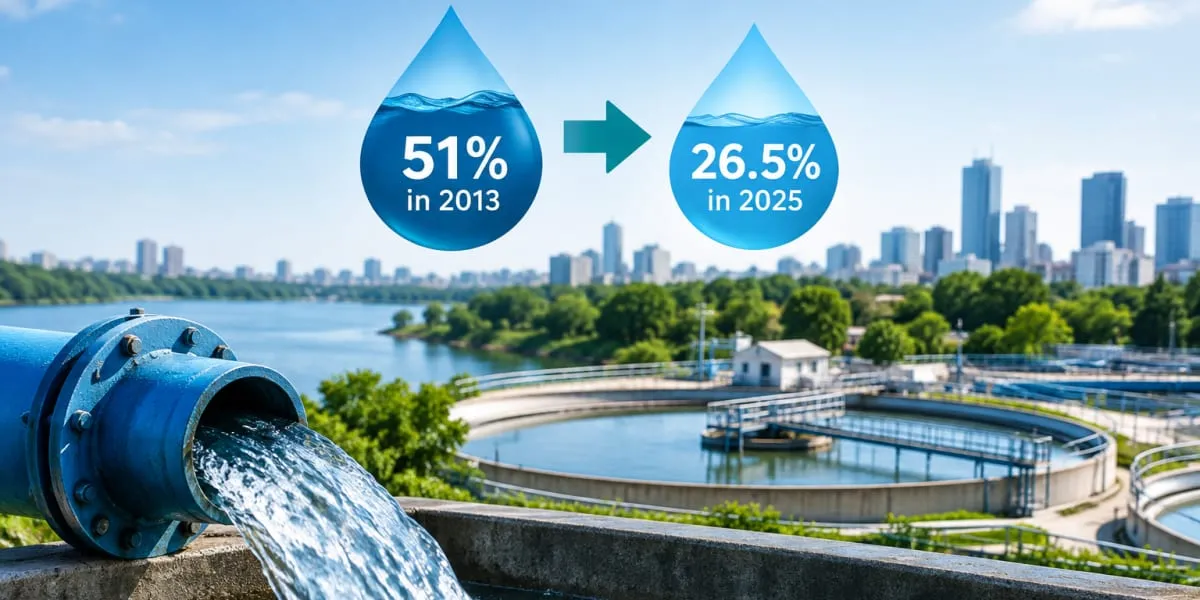
The Bengaluru Water Supply and Sewerage Board (BWSSB) has reduced unaccounted-for water from nearly 51 per cent in 2013 to 26.5 per cent in 2025, improving efficiency across a metropolitan region of 14 mn people. The reduction has saved nearly 200 mn litres of water a day without requiring equivalent additional capacity. Bengaluru depends primarily on the Cauvery river system, with water transported over 100 km to the city. BWSSB operates six major treatment plants with combined installed capacity of 2,293 MLD and supplies nearly 150 litres per person per day. The Cauvery Water Supply Scheme S..
Next Story
Infrastructure Transport

J&K Government Approves Free Public Transport for Differently-Abled

The Jammu and Kashmir Government has sanctioned free travel for differently-abled persons on public transport, fulfilling a key Budget announcement made in March. The decision was announced on Wednesday and is intended to improve access to essential transport services across the Union Territory. The facility will cover services operated by the Jammu and Kashmir Road Transport Corporation (JKRTC). It will also apply to e-buses operated by Jammu Smart City and Srinagar Smart City, extending the concession across public transport networks in the Jammu and Srinagar areas. The Office of Chief Minis..

Advertisement

Subscribe to Our Newsletter

Get daily newsletters around different themes from Construction world.

STAY CONNECTED

Advertisement

SPECIAL OFFER
QR Code