+
First TBM Completes Nine Metres Of Excavation On GMLR Tunnels
ROADS & HIGHWAYS

First TBM Completes Nine Metres Of Excavation On GMLR Tunnels

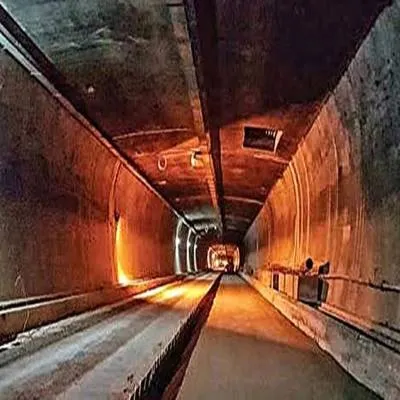
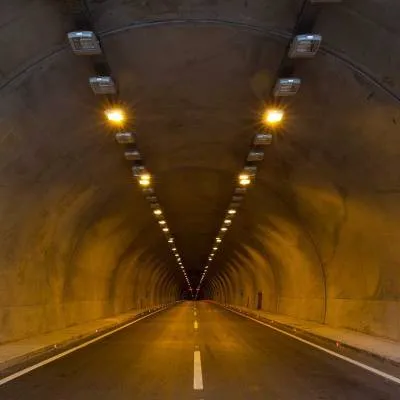
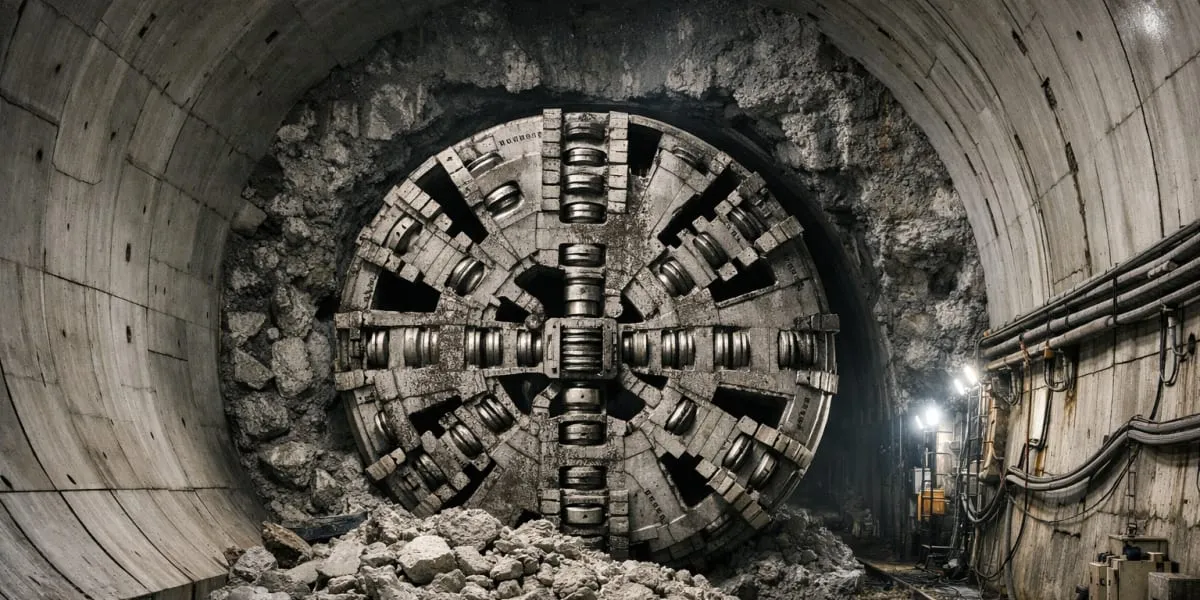
The first tunnel boring machine (TBM) deployed for Phase 3(B) of the Goregaon-Mulund Link Road (GMLR) project has completed nine metres of excavation, marking a key milestone in construction of twin tunnels beneath the Sanjay Gandhi National Park. Under Phase 3(B), twin three-lane tunnels are being constructed over a five point three kilometre stretch between Dadasaheb Phalke Chitranagari in Goregaon East and Amar Nagar in Mulund West. The work forms part of the wider GMLR east-west connectivity scheme intended to ease traffic movement across the city.

The tunnel boring machine named Tulsi was commissioned on 17 August and began operations in mid-August, the Brihanmumbai Municipal Corporation (BMC) said. Additional Municipal Commissioner (Projects) Abhijit Bangar visited and inspected the project site to review tunnelling methodology, ongoing excavation work, project progress and related technical aspects. Chief Engineer (Bridges) Rajesh Mule and other officials and consultants accompanied the inspection.

During the visit Bangar reviewed measures planned to ensure safety during tunnelling and assessed operational efficiency of the machinery and construction quality while directing officials to maintain the pace of excavation and deploy additional manpower where required. He also stressed that tunnelling is a highly technical and challenging operation and directed officials to accord the highest priority to workers' safety and to strictly enforce all safety regulations. The civic body reported that 70 per cent of assembly work for components of the second TBM has been completed and officials were instructed to complete the assembly by 30 September 2026.

Once the second machine is fully installed at the project site the Site Acceptance Test (SAT) will commence from one October to physically verify efficient and safe functioning of the machinery and to ensure that all systems operate together properly before actual tunnel excavation is planned. The GMLR is a major east-west connectivity project aimed at improving links between Goregaon and Mulund and easing traffic movement across Mumbai, and the civic authority said progress on tunnelling is central to timely delivery of the scheme.

The first tunnel boring machine (TBM) deployed for Phase 3(B) of the Goregaon-Mulund Link Road (GMLR) project has completed nine metres of excavation, marking a key milestone in construction of twin tunnels beneath the Sanjay Gandhi National Park. Under Phase 3(B), twin three-lane tunnels are being constructed over a five point three kilometre stretch between Dadasaheb Phalke Chitranagari in Goregaon East and Amar Nagar in Mulund West. The work forms part of the wider GMLR east-west connectivity scheme intended to ease traffic movement across the city. The tunnel boring machine named Tulsi was commissioned on 17 August and began operations in mid-August, the Brihanmumbai Municipal Corporation (BMC) said. Additional Municipal Commissioner (Projects) Abhijit Bangar visited and inspected the project site to review tunnelling methodology, ongoing excavation work, project progress and related technical aspects. Chief Engineer (Bridges) Rajesh Mule and other officials and consultants accompanied the inspection. During the visit Bangar reviewed measures planned to ensure safety during tunnelling and assessed operational efficiency of the machinery and construction quality while directing officials to maintain the pace of excavation and deploy additional manpower where required. He also stressed that tunnelling is a highly technical and challenging operation and directed officials to accord the highest priority to workers' safety and to strictly enforce all safety regulations. The civic body reported that 70 per cent of assembly work for components of the second TBM has been completed and officials were instructed to complete the assembly by 30 September 2026. Once the second machine is fully installed at the project site the Site Acceptance Test (SAT) will commence from one October to physically verify efficient and safe functioning of the machinery and to ensure that all systems operate together properly before actual tunnel excavation is planned. The GMLR is a major east-west connectivity project aimed at improving links between Goregaon and Mulund and easing traffic movement across Mumbai, and the civic authority said progress on tunnelling is central to timely delivery of the scheme.

Related Stories

Gold Stories

Next Story
Infrastructure Transport

MMRDA Targets Completion of Projects by December 2028

The Mumbai Metropolitan Region Development Authority (MMRDA) is targeting the completion of all its ongoing infrastructure projects by December 2028, a year ahead of its December 2029 deadline, Metropolitan Commissioner Dr Sanjay Mukherjee has said.Speaking at the sixth edition of the Real Estate & Infrastructure Investors' Summit (REIIS) 2026 in Mumbai, Mukherjee said the authority was developing an integrated network of roads, tunnels, sea links and Metro corridors under its broader vision of “Mumbai in 59 Minutes”.The objective is to improve east-west and north-south connectivity an..

Next Story
Building Material

High-Performance Façades Gain Ground in Indian Buildings

High-performance façades are gaining greater importance in Indian architecture as developers and architects increasingly focus on energy efficiency, thermal comfort and building performance, according to Shankar Fenestrations & Glasses.The company said modern façade systems are increasingly being considered as part of a building's overall performance strategy rather than being used primarily as aesthetic elements.High-performance glass, curtain wall systems and structural glazing can contribute to thermal regulation, solar control, daylight management and indoor comfort. Their growing ad..

Next Story
Technology

SPML Infra's 104.4 kWh BESS Battery Pack Clears Global Tests

SPML Infra has announced that its proprietary 104.4 kWh Battery Energy Storage System (BESS) battery pack has completed key international safety, performance and transportation testing and certification requirements, marking a step towards its commercial deployment.Developed under the company's own intellectual property, the battery pack has completed requirements under UL9540A, IEC 62619, IEC 63056, IEC 60730, IEC 61000-6-2, IEC 61000-6-4 and UN38.3 standards.The testing covers areas including thermal runaway safety, battery performance, system functional safety, electromagnetic compatibility..

Advertisement

Subscribe to Our Newsletter

Get daily newsletters around different themes from Construction world.

STAY CONNECTED

Advertisement

SPECIAL OFFER
QR Code