Kerala Steps Up Measures To Ease Kochi Metro Phase Two Traffic
ROADS & HIGHWAYS

Kerala Steps Up Measures To Ease Kochi Metro Phase Two Traffic

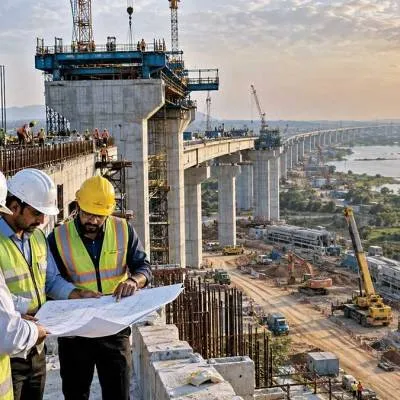
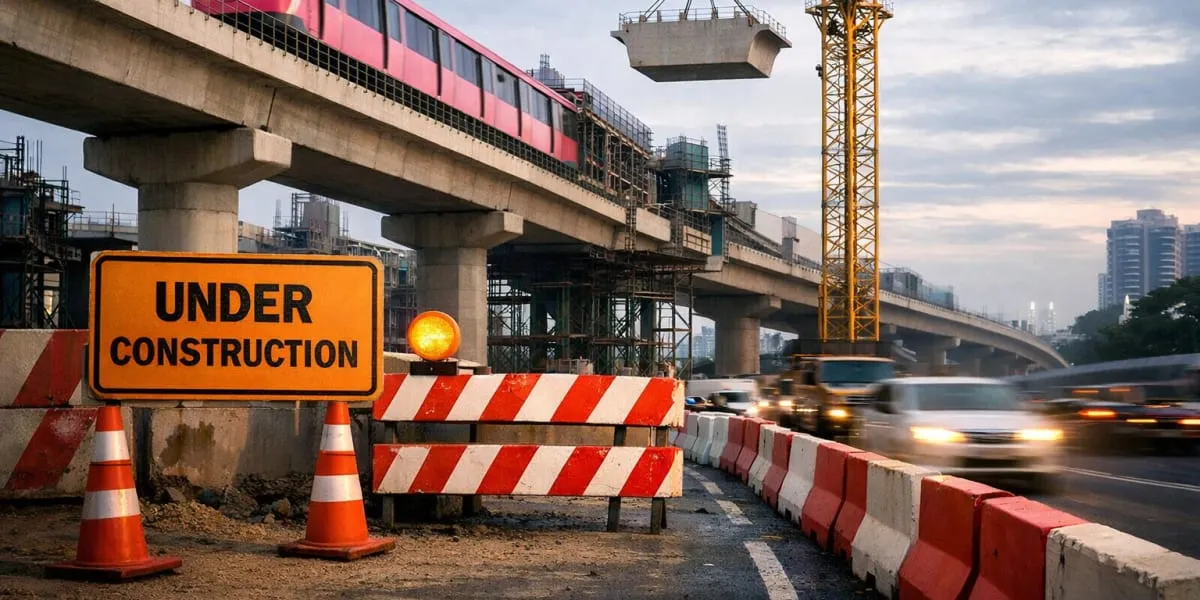
The state government has intensified measures to mitigate congestion and safety concerns arising from construction of Phase two of the Kochi Metro Rail Project along the Pink Line, following a submission by the Thrikkakara legislator Uma Thomas. The Chief Minister conveyed that the government is treating public difficulties during the construction period with seriousness and has initiated a range of corrective steps to reduce commuter inconvenience. Officials said the focus is on keeping the corridor operational while safeguarding pedestrians and motorists.

The 11.2 km long Pink Line runs from the Jawaharlal Nehru Stadium to Infopark via Kakkanad and has required temporary traffic arrangements at several locations. To manage vehicular flow, the Kochi Metro Rail Limited, in coordination with the traffic police, has deployed trained traffic wardens at key junctions and work sites from eight am to eight pm daily. Barricades that had narrowed carriageways have been shifted inward where possible and road defects along the route are being rectified to ease movement.

Traffic policing has been strengthened by dividing the Palarivattom-Kakkanad stretch into three sectors with enhanced patrols and surveillance. Additional police personnel have been stationed near major junctions and educational institutions to manage peak movements and improve safety. To reduce load on the main corridor, commuters have been informed of detours and alternative roads through multiple platforms and traffic signboards on parallel routes.

KMRL's request for Rs 75 million (Rs 75 mn) for improvement of alternative roads is under the government's consideration as part of measures to provide relief to motorists. The administration has indicated that it is giving special priority to completing Phase two on schedule while seeking to minimise inconvenience to daily travellers and local businesses. Officials are balancing work progress with traffic management requirements to retain momentum on the project.

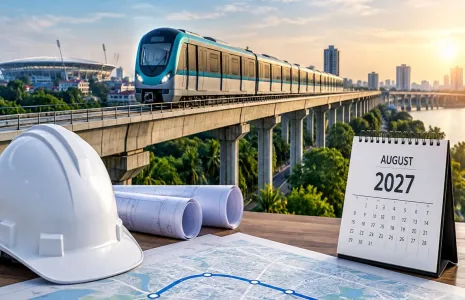
In view of the monsoon, authorities have initiated measures to prevent waterlogging by cleaning drains along the project stretch and ensuring temporary drainage remains functional. Coordination meetings involving KMRL, KWA, KSEB, BSNL, PWD, traffic police and other departments were convened under the collector to address utility and roadwork interfaces and to ensure smooth progress. The Pink Line remains slated for completion by August 2027.

The state government has intensified measures to mitigate congestion and safety concerns arising from construction of Phase two of the Kochi Metro Rail Project along the Pink Line, following a submission by the Thrikkakara legislator Uma Thomas. The Chief Minister conveyed that the government is treating public difficulties during the construction period with seriousness and has initiated a range of corrective steps to reduce commuter inconvenience. Officials said the focus is on keeping the corridor operational while safeguarding pedestrians and motorists. The 11.2 km long Pink Line runs from the Jawaharlal Nehru Stadium to Infopark via Kakkanad and has required temporary traffic arrangements at several locations. To manage vehicular flow, the Kochi Metro Rail Limited, in coordination with the traffic police, has deployed trained traffic wardens at key junctions and work sites from eight am to eight pm daily. Barricades that had narrowed carriageways have been shifted inward where possible and road defects along the route are being rectified to ease movement. Traffic policing has been strengthened by dividing the Palarivattom-Kakkanad stretch into three sectors with enhanced patrols and surveillance. Additional police personnel have been stationed near major junctions and educational institutions to manage peak movements and improve safety. To reduce load on the main corridor, commuters have been informed of detours and alternative roads through multiple platforms and traffic signboards on parallel routes. KMRL's request for Rs 75 million (Rs 75 mn) for improvement of alternative roads is under the government's consideration as part of measures to provide relief to motorists. The administration has indicated that it is giving special priority to completing Phase two on schedule while seeking to minimise inconvenience to daily travellers and local businesses. Officials are balancing work progress with traffic management requirements to retain momentum on the project. In view of the monsoon, authorities have initiated measures to prevent waterlogging by cleaning drains along the project stretch and ensuring temporary drainage remains functional. Coordination meetings involving KMRL, KWA, KSEB, BSNL, PWD, traffic police and other departments were convened under the collector to address utility and roadwork interfaces and to ensure smooth progress. The Pink Line remains slated for completion by August 2027.

Next Story
Building Material

Saint-Gobain, CEPT partner on sustainable construction

Saint-Gobain and CEPT University have entered into a strategic partnership to establish a Tech Commons Centre aimed at advancing research, innovation and skill development in sustainable and energy-efficient construction.The centre will serve as a platform for building science research, prototyping, industry collaboration and knowledge exchange, bringing together Saint-Gobain's expertise in sustainable construction and CEPT's capabilities in education and research. The collaboration will focus on sustainability, energy efficiency, climate resilience and wellbeing in the built environment.Accor..

Next Story
Building Material

Aludecor launches Stonic ACP surface series

Aludecor Lamination has launched its Stonic aluminium composite panel (ACP) surface series and the second phase of its 'Test Nahi Toh Trust Nahi' campaign as part of its 24th Foundation Day celebrations.Inspired by the natural craquelure patterns found in aged stone, the Stonic series is available in seven finishes and has been developed using the company's Spray Fusion technology. The ACP range is designed for use in façades, feature walls, entranceways, soffits, balcony fascia, ceilings and other commercial, residential and hospitality applications.The company also introduced 'The Fikar-Fre..

Next Story
Real Estate

NABARD, MAHAPREIT partner on rural green infrastructure

NABARD has signed a memorandum of understanding (MoU) with Mahatma Phule Renewable Energy and Infrastructure Technology (MAHAPREIT) to finance and promote green, climate-resilient infrastructure in rural India, with an initial focus on Maharashtra.The partnership will combine NABARD's expertise in rural development and climate finance with MAHAPREIT's experience in renewable energy and sustainable infrastructure. The collaboration will identify, develop and finance projects aimed at strengthening village infrastructure, Panchayati Raj Institutions and other community assets.Priority areas incl..

Advertisement

Subscribe to Our Newsletter

Get daily newsletters around different themes from Construction world.

STAY CONNECTED

Advertisement

Advertisement

Advertisement