National Highways Authority Of India To Develop Bee Corridors
ROADS & HIGHWAYS

National Highways Authority Of India To Develop Bee Corridors

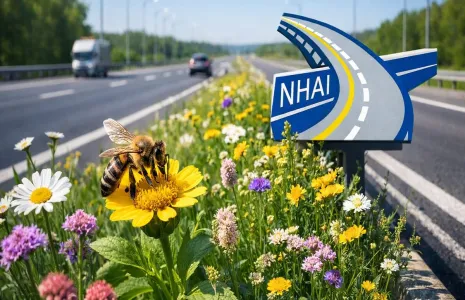
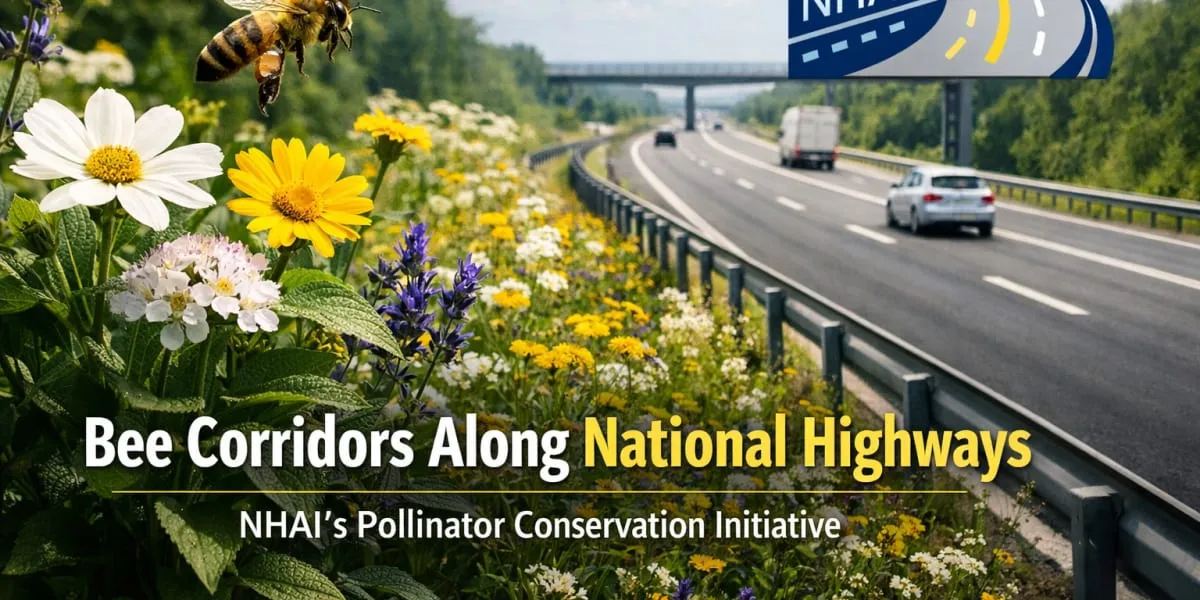
The National Highways Authority of India will develop bee corridors along national highways to boost pollinator conservation, the agency said. The initiative is designed to create continuous stretches of native flowering vegetation adjacent to road verges and service roads to support pollinators and enhance ecological connectivity. NHAI indicated the corridors will integrate with existing landscape features and follow environmental safeguards. The design will consider seasonal flowering periods to maximise benefits for diverse pollinator species.

The project will prioritise native plant species known to provide nectar and pollen and will seek input from ecologists and local communities to ensure local suitability. Implementation will focus on utilising median strips, verges and interchanges to establish habitat without compromising road safety or maintenance operations. The authority indicated monitoring protocols will be established to assess pollinator activity and habitat health. Maintenance regimes will be tailored to minimise disturbance while supporting plant establishment.

Officials said the corridors are expected to deliver co benefits including soil stabilisation, reduction of invasive species and enhancement of roadside aesthetics. The measure aligns with broader conservation goals and with efforts to maintain ecosystem services that support agriculture and biodiversity. Partnerships with state agencies, research institutions and local stakeholders were described as central to long term success. Capacity building and periodic reviews will guide adaptive management.

Funding and specific timelines were not disclosed in the release but the authority suggested phased roll out linked to routine highway works and upgrades. Technical guidelines will be developed to standardise planting, maintenance and safety measures across different climatic zones. The authority invited stakeholders to engage in planning to ensure the corridors meet ecological and operational objectives. Community outreach and public awareness campaigns will accompany planting to foster stewardship along corridors.

The National Highways Authority of India will develop bee corridors along national highways to boost pollinator conservation, the agency said. The initiative is designed to create continuous stretches of native flowering vegetation adjacent to road verges and service roads to support pollinators and enhance ecological connectivity. NHAI indicated the corridors will integrate with existing landscape features and follow environmental safeguards. The design will consider seasonal flowering periods to maximise benefits for diverse pollinator species. The project will prioritise native plant species known to provide nectar and pollen and will seek input from ecologists and local communities to ensure local suitability. Implementation will focus on utilising median strips, verges and interchanges to establish habitat without compromising road safety or maintenance operations. The authority indicated monitoring protocols will be established to assess pollinator activity and habitat health. Maintenance regimes will be tailored to minimise disturbance while supporting plant establishment. Officials said the corridors are expected to deliver co benefits including soil stabilisation, reduction of invasive species and enhancement of roadside aesthetics. The measure aligns with broader conservation goals and with efforts to maintain ecosystem services that support agriculture and biodiversity. Partnerships with state agencies, research institutions and local stakeholders were described as central to long term success. Capacity building and periodic reviews will guide adaptive management. Funding and specific timelines were not disclosed in the release but the authority suggested phased roll out linked to routine highway works and upgrades. Technical guidelines will be developed to standardise planting, maintenance and safety measures across different climatic zones. The authority invited stakeholders to engage in planning to ensure the corridors meet ecological and operational objectives. Community outreach and public awareness campaigns will accompany planting to foster stewardship along corridors.

Next Story
Building Material

Jindal Aluminium Marks 56 Years of Industrial Leadership

Jindal Aluminium Limited has marked its 56th Inception Day, celebrating a legacy built on vision, resilience and manufacturing leadership. Founded in 1968 and incorporated in 1970 by Padma Bhushan Dr Sitaram Jindal, the company has grown into a major force in India’s downstream aluminium sector under the leadership of Pragun Jindal Khaitan.The company is India’s largest manufacturer of aluminium extruded products and the second-largest producer of aluminium flat-rolled products. With a turnover of around Rs 5,500 crore and a workforce of over 4,000, Jindal Aluminium continues to strengthen..

Next Story
Infrastructure Transport

Tunnelling Begins for Thane, Borivali twin tunnel project

Tunnelling work has commenced for the 11.84-km Thane–Borivali Twin Tunnel, set to be India’s longest urban road tunnel, marking a key milestone in Mumbai’s infrastructure development.As per a post shared by Mumbai Metropolitan Region Development Authority on social media platform X, the tunnel boring machine (TBM) ‘Nayak’—the country’s largest single-shield hard rock TBM for an urban tunnel—was launched by Devendra Fadnavis on Tuesday. The event was attended by Eknath Shinde and Sunetra Pawar, among other dignitaries. A second TBM, ‘Arjuna’, is expected to be launched so..

Next Story
Infrastructure Transport

Large Format Store Planned At M G Road Metro Station

M G Road station in Bengaluru is set to host the city’s first large-format commercial and experience space, with planning led by Bangalore Metro Rail Corporation Limited. BMRCL has invited proposals to develop and operate a central business district destination at the Purple?Pink Line interchange. The plan positions the station as a commercial hub designed to serve a broad commuter base across the city. The proposal is part of a broader effort to activate transit nodes commercially. Tender documents set a minimum monthly rental of Rs 0.944 million (mn), inclusive of GST, for the large-format..

Advertisement

Subscribe to Our Newsletter

Get daily newsletters around different themes from Construction world.

STAY CONNECTED

Advertisement

Advertisement

Advertisement