+
NHSRCL Lowers Cutterhead For Second TBM In Navi Mumbai
ROADS & HIGHWAYS

NHSRCL Lowers Cutterhead For Second TBM In Navi Mumbai

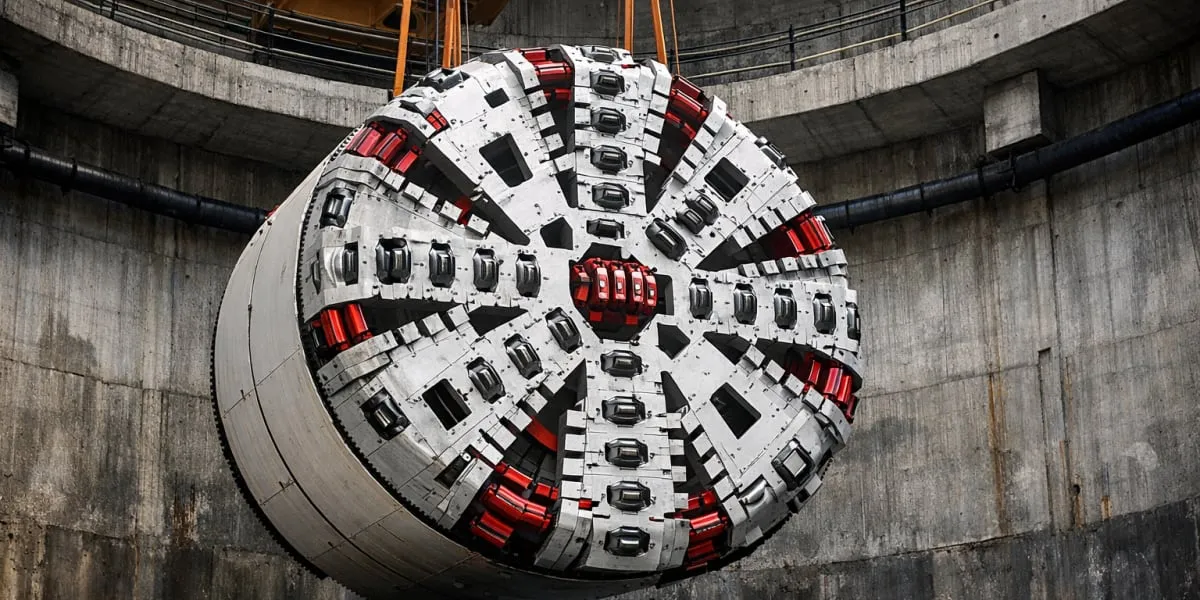
The National High Speed Rail Corporation (NHSRCL) has lowered the cutterhead of the second Tunnel Boring Machine (TBM) for the tunnel section of the Mumbai-Ahmedabad high-speed corridor in Navi Mumbai, the agency said. The 13.6-metre diameter cutterhead, weighing 350 tonnes, was lowered at Sawli near Ghansoli on Saturday and marked the final step in the primary assembly of the TBM main shield. NHSRCL characterised the operation as a milestone in the assembly phase and said it completes the shield construction required before final integration.

The second TBM will begin tunnelling from Sawli towards Vikhroli in Mumbai, and the cutterhead for the first TBM was lowered at Vikhroli last week, the release added. Both machines will now undergo final assembly and commissioning trials before beginning excavation work in the first week of July, after which they will start the planned drive through the tunnel alignment. NHSRCL said the TBMs are intended to deliver a continuous excavation sequence to meet project schedules while adhering to safety protocols.

Each cutterhead is fitted with 84 cutter discs, 124 scrapers and 16 bucket lips that will perform cutting, scraping and muck removal during tunnelling operations, the release explained. The two slurry-based Mix Shield TBMs weigh 3,080 tonnes and 3,184 tonnes respectively, and each measures 95.32 metres in length, reflecting the scale of the machines assembled on site. The machines incorporate components such as the cutter wheel, main bearing, jaw crusher, erector, main shield, tail shield and four specialised gantries to support the tunnelling process.

NHSRCL stated that the TBMs can operate at a maximum cutterhead speed of four revolutions per minute and achieve an excavation rate of up to 49 mm per minute while maintaining safety standards. The machines are being assembled to build a 16-km section of the 21-km Mumbai tunnel, a stretch that includes a seven-km undersea tunnel beneath Thane Creek and will form India's first undersea rail tunnel. The agency said commissioning will be completed before the machines enter excavation and that the works form part of the wider Mumbai-Ahmedabad high-speed rail project.

The National High Speed Rail Corporation (NHSRCL) has lowered the cutterhead of the second Tunnel Boring Machine (TBM) for the tunnel section of the Mumbai-Ahmedabad high-speed corridor in Navi Mumbai, the agency said. The 13.6-metre diameter cutterhead, weighing 350 tonnes, was lowered at Sawli near Ghansoli on Saturday and marked the final step in the primary assembly of the TBM main shield. NHSRCL characterised the operation as a milestone in the assembly phase and said it completes the shield construction required before final integration. The second TBM will begin tunnelling from Sawli towards Vikhroli in Mumbai, and the cutterhead for the first TBM was lowered at Vikhroli last week, the release added. Both machines will now undergo final assembly and commissioning trials before beginning excavation work in the first week of July, after which they will start the planned drive through the tunnel alignment. NHSRCL said the TBMs are intended to deliver a continuous excavation sequence to meet project schedules while adhering to safety protocols. Each cutterhead is fitted with 84 cutter discs, 124 scrapers and 16 bucket lips that will perform cutting, scraping and muck removal during tunnelling operations, the release explained. The two slurry-based Mix Shield TBMs weigh 3,080 tonnes and 3,184 tonnes respectively, and each measures 95.32 metres in length, reflecting the scale of the machines assembled on site. The machines incorporate components such as the cutter wheel, main bearing, jaw crusher, erector, main shield, tail shield and four specialised gantries to support the tunnelling process. NHSRCL stated that the TBMs can operate at a maximum cutterhead speed of four revolutions per minute and achieve an excavation rate of up to 49 mm per minute while maintaining safety standards. The machines are being assembled to build a 16-km section of the 21-km Mumbai tunnel, a stretch that includes a seven-km undersea tunnel beneath Thane Creek and will form India's first undersea rail tunnel. The agency said commissioning will be completed before the machines enter excavation and that the works form part of the wider Mumbai-Ahmedabad high-speed rail project.

Related Stories

Gold Stories
Next Story
Products

Interio by Godrej launches modular workplace solutions

Interio by Godrej has launched Workscapes, a modular workplace solutions category designed to help organisations configure and adapt workspaces to changing requirements. The portfolio combines mobile and compatible furniture and support elements that can be rearranged across different work modes without changes to fixed layouts.Workscapes includes Collaboration Tables, Privacy Solutions, Mobile Markerboards and Space Dividers, Power Solutions, Storage and Support Elements, Meeting and Presentation Tools, and Seating Elements. The range is designed for focused work, collaboration, informal disc..

Next Story
Infrastructure Urban

CAFE-III Gives Auto Industry Investment Clarity

The government’s new Corporate Average Fuel Economy (CAFE-III) norms have provided the automobile industry with a clearer framework for technology investments, according to industry representatives. The framework seeks to balance environmental objectives with flexibility for manufacturers while encouraging the adoption of flex-fuel vehicles and biofuels. Society of Indian Automobile Manufacturers (SIAM) President Shenu Agarwal said the five-year framework would give automakers greater predictability to plan investments and accelerate innovation. He said the regulation established annual targ..

Next Story
Infrastructure Energy

Mines Ministry to Auction Two Offshore Mineral Blocks in Andaman Sea

The Ministry of Mines will launch an auction of two offshore mineral blocks in the Andaman Sea on Thursday, seeking to unlock India’s offshore mineral potential and strengthen long-term mineral resource security. The blocks will be offered under a composite licence, which permits exploration and development activities in accordance with the applicable regulatory framework. The ministry said the auction was intended to encourage systematic exploration, attract investment and promote the use of advanced technologies for offshore mineral exploration and development. The initiative is also aimed..

Advertisement

Subscribe to Our Newsletter

Get daily newsletters around different themes from Construction world.

STAY CONNECTED

Advertisement

SPECIAL OFFER
QR Code