+
Orange Gate–Marine Drive Tunnel to Cut East–West Travel Time
ROADS & HIGHWAYS

Orange Gate–Marine Drive Tunnel to Cut East–West Travel Time

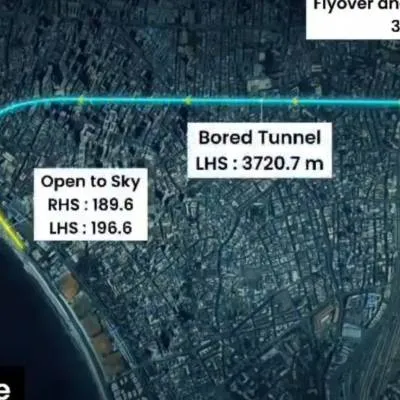
Mumbai’s ambitious Orange Gate–Marine Drive tunnel project, aimed at improving east–west connectivity in South Mumbai, is set to enter the construction phase. The Rs 80.56-billion project will connect Orange Gate on the eastern side near the Eastern Freeway to Marine Drive on the western waterfront, significantly reducing travel time across the city.

According to officials, the alignment of the tunnel has been realigned to terminate at Jawahar Bal Bhavan in Girgaon. The project is considered one of the most complex subterranean road developments undertaken in Mumbai, as it will pass beneath metro corridors, railway lines, heritage precincts and densely populated neighbourhoods.

At present, commuters travelling from the Eastern Freeway to Marine Drive and South Mumbai must navigate heavily congested surface roads such as P D’Mello Road, the Carnac (Sindoor) Bridge and the GPO junction. During peak hours, the journey typically takes 25–30 minutes or more. Once the tunnel becomes operational—expected between mid and end 2028—the same commute is projected to take around five minutes.

The project is expected to ease pressure on surface roads, improve traffic flow, reduce fuel consumption and enhance overall commuting efficiency along the east–west corridor.

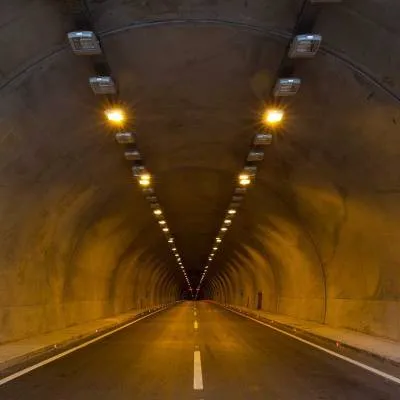
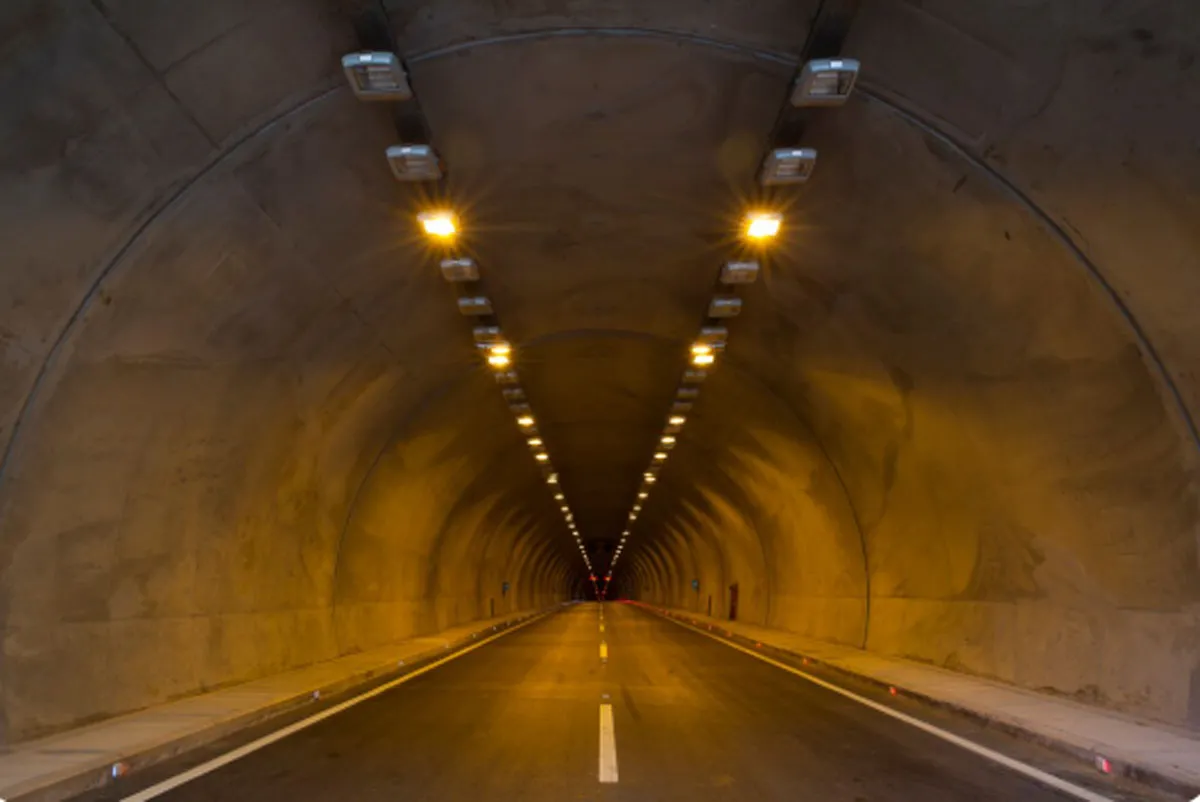
The tunnel will span nearly 10 km, of which around seven km will run underground at depths ranging between 12 metres and 52 metres below ground level. Designed as a twin-tube tunnel, it will feature two parallel tunnels—one each for eastbound and westbound traffic. Each tunnel will have two traffic lanes and an emergency lane, with cross-passages every 300 metres to enhance safety.

To accommodate existing infrastructure such as Mumbai Metro Line 3, the tunnel will descend to a maximum depth of about 47–52 metres. It will also be equipped with modern ventilation, lighting, fire safety and traffic management systems in line with contemporary urban tunnel safety standards.

Once completed, the Orange Gate–Marine Drive tunnel is expected to become a key mobility link, reshaping travel across South Mumbai.

News source: CNBC TV18

Mumbai’s ambitious Orange Gate–Marine Drive tunnel project, aimed at improving east–west connectivity in South Mumbai, is set to enter the construction phase. The Rs 80.56-billion project will connect Orange Gate on the eastern side near the Eastern Freeway to Marine Drive on the western waterfront, significantly reducing travel time across the city.According to officials, the alignment of the tunnel has been realigned to terminate at Jawahar Bal Bhavan in Girgaon. The project is considered one of the most complex subterranean road developments undertaken in Mumbai, as it will pass beneath metro corridors, railway lines, heritage precincts and densely populated neighbourhoods.At present, commuters travelling from the Eastern Freeway to Marine Drive and South Mumbai must navigate heavily congested surface roads such as P D’Mello Road, the Carnac (Sindoor) Bridge and the GPO junction. During peak hours, the journey typically takes 25–30 minutes or more. Once the tunnel becomes operational—expected between mid and end 2028—the same commute is projected to take around five minutes.The project is expected to ease pressure on surface roads, improve traffic flow, reduce fuel consumption and enhance overall commuting efficiency along the east–west corridor.The tunnel will span nearly 10 km, of which around seven km will run underground at depths ranging between 12 metres and 52 metres below ground level. Designed as a twin-tube tunnel, it will feature two parallel tunnels—one each for eastbound and westbound traffic. Each tunnel will have two traffic lanes and an emergency lane, with cross-passages every 300 metres to enhance safety.To accommodate existing infrastructure such as Mumbai Metro Line 3, the tunnel will descend to a maximum depth of about 47–52 metres. It will also be equipped with modern ventilation, lighting, fire safety and traffic management systems in line with contemporary urban tunnel safety standards.Once completed, the Orange Gate–Marine Drive tunnel is expected to become a key mobility link, reshaping travel across South Mumbai.News source: CNBC TV18

Next Story
Real Estate

Casagrand Launches Keystone In Tiruppur

Casagrand has launched Casagrand Keystone, a gated residential development at Rakkiyapalayam, off Avinashi Road, in Tiruppur. Spread across 2.2 acres, the B+G+5 structure comprises 142 units of 2 and 3 BHK homes, supported by 48 indoor and outdoor amenities. The project is introduced at a starting price of Rs 5,199 per sq. ft. The development allocates 1.3 acres to open space, including a central park of about 24,500 sq. ft. A 6,800 sq. ft. clubhouse includes a multipurpose hall, mini theatre and indoor recreation facilities. Other amenities include a 5,100 sq. ft. swimming pool, poolside par..

Next Story
Real Estate

Premium homes account for half of India’s housing sales in 2025

Knight Frank India, in its latest report on India’s office and residential property market, has highlighted a significant shift in housing demand, with homes priced above Rs 10 million accounting for 50 per cent of total residential sales across the top eight cities in 2025. The findings underscore the growing dominance of premium housing in the country’s real estate landscape.Out of 348,247 residential units sold during the year, approximately 175,091 units were in the Rs 10 million-plus category, marking a 14 per cent year-on-year increase. The data reflects changing buyer preferences, w..

Next Story
Infrastructure Energy

Xbattery launches XB-5K energy storage system for homes, offices

Xbattery, a Hyderabad-based deep-tech company specialising in next-generation energy storage and battery management technologies, has introduced its flagship XB-5K, a scalable 5kWh energy storage system designed for homes and offices in India.The XB-5K is built on the company’s indigenously developed BharatBMS platform, described as India’s first universal high-voltage battery management system architecture aimed at reducing import dependence and improving after-sales service capabilities. The launch comes as India seeks to strengthen domestic manufacturing and address reliance on imported..

Advertisement

Subscribe to Our Newsletter

Get daily newsletters around different themes from Construction world.

STAY CONNECTED

Advertisement

Advertisement

Advertisement

Open In App