Railways Steps Up Northeast Push, Revamps 60 Stations
ROADS & HIGHWAYS

Railways Steps Up Northeast Push, Revamps 60 Stations

Indian Railways has accelerated infrastructure development in the northeast, with 60 stations being redeveloped under the Amrit Bharat Station Scheme, the government said on Tuesday.

Since 2014, Indian Railways has laid more than 1,679 km of new railway tracks in the northeastern region and electrified over 2,500 route kilometres. During this period, more than 470 road overbridges and underbridges have also been constructed, the Ministry of Railways said in a statement.

A major milestone has been achieved with the full commissioning of the Bairabi–Sairang new line, which has connected Aizawl to the national rail network for the first time. Aizawl has now become the fourth capital city in the northeast to be linked by rail.

The ministry said several other strategic projects, including the Sivok–Rangpo, Dimapur–Kohima and Jiribam–Imphal lines, are progressing steadily. These initiatives are expected to strengthen economic and social integration of the northeast with the rest of the country.

Indian Railways is currently undertaking some of the most ambitious infrastructure projects of the 21st century, aimed at strengthening national integration, improving logistics efficiency and expanding the modern rail network. From complex bridges in challenging terrain to freight corridors and high-speed rail, these projects reflect India’s growing engineering capabilities and long-term vision.

One of the most significant projects is the Udhampur–Srinagar–Baramulla Rail Link, a project of high strategic and national importance. Built at an estimated cost of around Rs 440 billion, the 272 km line passes through the Himalayan region and provides all-weather rail connectivity to the Kashmir Valley.

The project includes the Chenab Rail Bridge, the world’s highest railway arch bridge, standing 359 metres above the river—taller than the Eiffel Tower. The 1,315-metre-long steel arch bridge has been engineered to withstand seismic activity and high wind conditions. It also features India’s first cable-stayed railway bridge, the Anji Rail Bridge, along with 36 tunnels spanning 119 km and a total of 943 bridges.

Another key achievement is the New Pamban Railway Bridge in Tamil Nadu, India’s first vertical-lift sea bridge. Built at a cost of about Rs 5.5 billion, the 2.08 km-long bridge comprises 100 spans, including a central 72.5-metre vertical-lift span. The bridge ensures uninterrupted rail connectivity to Rameswaram, a major pilgrimage and tourism centre, and has received the Steel Structures and Metal Buildings Award 2024 in the Bridge Design category.

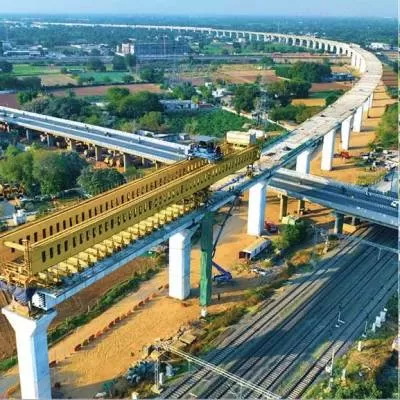
Indian Railways is also advancing in high-speed rail development. The Mumbai–Ahmedabad High-Speed Rail Project, being implemented by the National High-Speed Rail Corporation Limited, has seen significant progress. As of 21 December 2025, viaduct construction has been completed for 331 km of the total 508 km alignment, while pier work has been completed for 410 km, the ministry said.

Indian Railways has accelerated infrastructure development in the northeast, with 60 stations being redeveloped under the Amrit Bharat Station Scheme, the government said on Tuesday. Since 2014, Indian Railways has laid more than 1,679 km of new railway tracks in the northeastern region and electrified over 2,500 route kilometres. During this period, more than 470 road overbridges and underbridges have also been constructed, the Ministry of Railways said in a statement. A major milestone has been achieved with the full commissioning of the Bairabi–Sairang new line, which has connected Aizawl to the national rail network for the first time. Aizawl has now become the fourth capital city in the northeast to be linked by rail. The ministry said several other strategic projects, including the Sivok–Rangpo, Dimapur–Kohima and Jiribam–Imphal lines, are progressing steadily. These initiatives are expected to strengthen economic and social integration of the northeast with the rest of the country. Indian Railways is currently undertaking some of the most ambitious infrastructure projects of the 21st century, aimed at strengthening national integration, improving logistics efficiency and expanding the modern rail network. From complex bridges in challenging terrain to freight corridors and high-speed rail, these projects reflect India’s growing engineering capabilities and long-term vision. One of the most significant projects is the Udhampur–Srinagar–Baramulla Rail Link, a project of high strategic and national importance. Built at an estimated cost of around Rs 440 billion, the 272 km line passes through the Himalayan region and provides all-weather rail connectivity to the Kashmir Valley. The project includes the Chenab Rail Bridge, the world’s highest railway arch bridge, standing 359 metres above the river—taller than the Eiffel Tower. The 1,315-metre-long steel arch bridge has been engineered to withstand seismic activity and high wind conditions. It also features India’s first cable-stayed railway bridge, the Anji Rail Bridge, along with 36 tunnels spanning 119 km and a total of 943 bridges. Another key achievement is the New Pamban Railway Bridge in Tamil Nadu, India’s first vertical-lift sea bridge. Built at a cost of about Rs 5.5 billion, the 2.08 km-long bridge comprises 100 spans, including a central 72.5-metre vertical-lift span. The bridge ensures uninterrupted rail connectivity to Rameswaram, a major pilgrimage and tourism centre, and has received the Steel Structures and Metal Buildings Award 2024 in the Bridge Design category. Indian Railways is also advancing in high-speed rail development. The Mumbai–Ahmedabad High-Speed Rail Project, being implemented by the National High-Speed Rail Corporation Limited, has seen significant progress. As of 21 December 2025, viaduct construction has been completed for 331 km of the total 508 km alignment, while pier work has been completed for 410 km, the ministry said.

Related Stories

Gold Stories
Next Story
Resources

Schindler named among Forbes’ World’s Best Employers 2026

Schindler has been named among Forbes’ World’s Best Employers 2026, a global ranking recognising companies for their workplace environments.Compiled by Forbes in partnership with Statista, the ranking is based on independent employee feedback, including whether employees would recommend their organisation to friends and family.The company said the recognition reflected its focus on creating a workplace where employees can develop their expertise and build careers. ..
Next Story
Infrastructure Urban

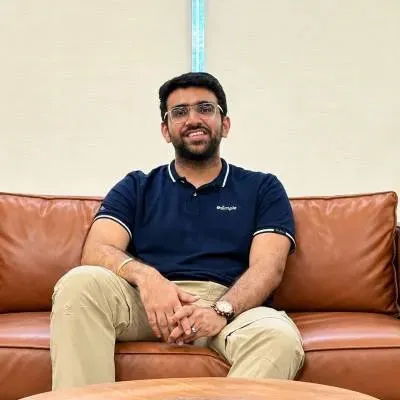
India needs an export-execution mindset: Vishesh Jain

Interview with Vishesh Jain, Founder & CEO, EximpleWhat gaps in India’s global trade ecosystem led you to build Eximple, and what problem did you see businesses struggling with most?Eximple came out of a problem that all three founders had seen from different choke points in the trade ecosystem. India has millions of MSMEs and manufacturers, and many of them can make products that are genuinely competitive on quality. Yet only a small fraction is able to build meaningful international businesses. In our experience, the gap is usually not manufacturing capability; it is the ability to exe..

Next Story
Building Material

Nuvoco reports 13.5% revenue growth in Q2 FY27

Nuvoco Vistas Corp. Ltd. reported consolidated revenue of Rs 27.9 billion for Q2 FY27, up 13.5% year on year. Cement sales volume rose 9% to 4.7 million tonnes (MMT), while EBITDA increased 11% to Rs 4.11 billion.The company said it began its cement operations in 2014 with a 2.3 MMT per annum (MMTPA) operation at Nimbol. It now aims to reach 35 MMTPA of cement capacity by FY28, nearly 15 times its initial capacity. Its portfolio spans cement, ready-mix concrete and modern building materials.On sustainability and cost efficiency, Nuvoco partnered with CleanMax for a 46.4 MW wind-solar hybrid re..

Advertisement

Subscribe to Our Newsletter

Get daily newsletters around different themes from Construction world.

STAY CONNECTED

Advertisement

SPECIAL OFFER
QR Code