Chennai Metro Phase Two CMRS Inspection Commenced For Corridor Four
RAILWAYS & METRO RAIL

Chennai Metro Phase Two CMRS Inspection Commenced For Corridor Four

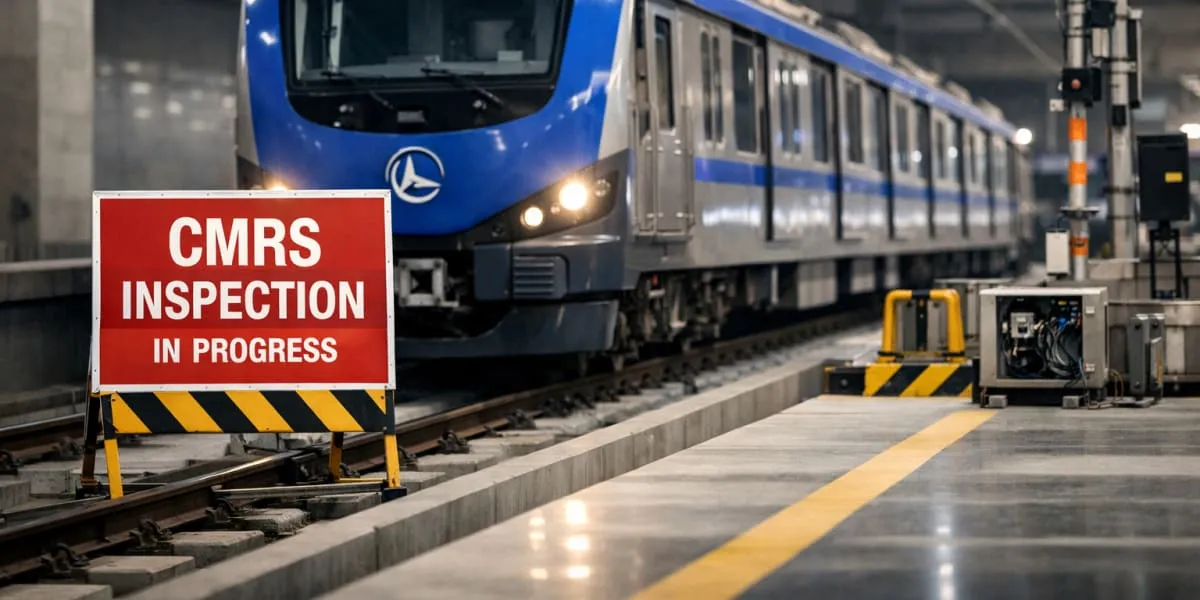
The Commissioner of Metro Rail Safety (CMRS) has commenced a formal inspection of Corridor Four of Chennai Metro Phase Two to assess readiness for passenger operations. The inspection process is being conducted to verify compliance with statutory safety norms and technical specifications across the corridor. Officials have indicated that the review marks a key milestone in the project delivery schedule.

The inspection covers civil infrastructure, track alignment, station fit-outs, signalling and telecommunications, traction power and auxiliary supply systems, and fire and life safety installations. Testing of integration between rolling stock and wayside equipment forms a central element of the assessment. Special attention is being paid to platform screen doors, passenger information systems and accessibility provisions.

Documentation and quality assurance records are being reviewed alongside physical checks. Trial runs under varied operational conditions are being carried out to evaluate system performance, punctuality of automated operations and the reliability of safety interlocks. Emergency preparedness is being examined through simulations of evacuation procedures and coordination with local emergency services.

Any defects or non-conformities identified during the inspection will be entered into an action register for rectification. Upon satisfactory completion of the CMRS inspection and closure of outstanding observations, the Commissioner of Metro Rail Safety will furnish a safety certificate that is required before commercial service can commence. Chennai Metro Rail Limited and contractor teams are expected to work through the remedial items and demonstrate compliance for final acceptance.

The Commissioner of Metro Rail Safety (CMRS) has commenced a formal inspection of Corridor Four of Chennai Metro Phase Two to assess readiness for passenger operations. The inspection process is being conducted to verify compliance with statutory safety norms and technical specifications across the corridor. Officials have indicated that the review marks a key milestone in the project delivery schedule. The inspection covers civil infrastructure, track alignment, station fit-outs, signalling and telecommunications, traction power and auxiliary supply systems, and fire and life safety installations. Testing of integration between rolling stock and wayside equipment forms a central element of the assessment. Special attention is being paid to platform screen doors, passenger information systems and accessibility provisions. Documentation and quality assurance records are being reviewed alongside physical checks. Trial runs under varied operational conditions are being carried out to evaluate system performance, punctuality of automated operations and the reliability of safety interlocks. Emergency preparedness is being examined through simulations of evacuation procedures and coordination with local emergency services. Any defects or non-conformities identified during the inspection will be entered into an action register for rectification. Upon satisfactory completion of the CMRS inspection and closure of outstanding observations, the Commissioner of Metro Rail Safety will furnish a safety certificate that is required before commercial service can commence. Chennai Metro Rail Limited and contractor teams are expected to work through the remedial items and demonstrate compliance for final acceptance.

Next Story
Infrastructure Transport

MMRDA advances 250 m on Orange Gate–Marine Drive tunnel

The Mumbai Metropolitan Region Development Authority (MMRDA) has completed 250 m of underground tunnelling for the Orange Gate–Marine Drive Urban Road Tunnel using India’s largest slurry shield tunnel boring machine (TBM) deployed for an urban road project.The project involves twin tunnels extending over 7 km beneath critical transport corridors, including Central Railway, Western Railway and Metro Line 3. The work requires high-precision engineering to navigate densely developed urban infrastructure.Once completed, the tunnel is expected to reduce travel time between Orange Gate and Marin..

Next Story
Infrastructure Urban

Hindustan Zinc Pays Rs 188.46 Billion in FY26

Hindustan Zinc contributed Rs 188.46 billion to the public exchequer in FY 2025-26, according to its 9th Tax Transparency Report. The contribution, equivalent to 46 per cent of the company’s revenue, included direct and indirect taxes, government royalties, dividends to the Government of India, withholding taxes and other statutory levies.The company’s five-year cumulative contribution to the exchequer stood at Rs 915.72 billion. In FY26, Hindustan Zinc reported revenue of Rs 408.44 billion, EBITDA of Rs 221.62 billion and profit after tax of Rs 138.32 billion. It also achieved its highest..

Next Story
Infrastructure Urban

World of Concrete India 2026 Opens in Mumbai

Informa Markets in India will host the 12th edition of World of Concrete India 2026 from 3–5 June 2026 at the Bombay Exhibition Centre, Mumbai. The specialised B2B exhibition will bring together manufacturers, suppliers, contractors, developers, architects, consultants, infrastructure companies, project leaders and government stakeholders.The event is expected to feature over 350 brands and more than 18,000 trade professionals. It will cover concrete and cement, dry mortar, precast technologies, formwork, construction chemicals, industrial and commercial flooring, scaffolding, safety solutio..

Advertisement

Subscribe to Our Newsletter

Get daily newsletters around different themes from Construction world.

STAY CONNECTED

Advertisement

Advertisement

Advertisement