Existing Units Sufficient To Meet Kerala Coach Demand
RAILWAYS & METRO RAIL

Existing Units Sufficient To Meet Kerala Coach Demand

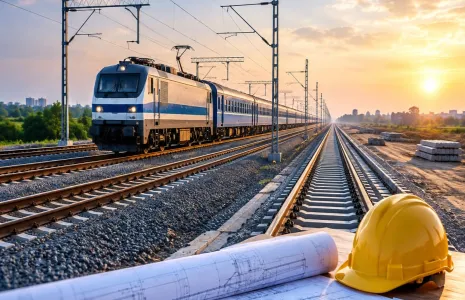
A rail coach factory at Palakkad in Kerala was sanctioned in the Railway Budget for 2012-13, the Railway Minister told the Rajya Sabha in a written reply on Friday, July 31. The minister said that the proposal had been envisaged in a joint venture and public private partnership mode as part of broader efforts to expand manufacturing capacity. He indicated that decisions on such projects are guided by an assessment of the railways' operational requirements.

The issue had been raised in the House by the CPI(M) member from Kerala, who asked why a rail coach factory at Kanjikode, sanctioned in the 2008-09 Railway Budget with a foundation stone laid in 2012, remained unimplemented despite the state having acquired the site. The member also sought clarification on whether the adoption of a public private partnership model and subsequent reviews of coach manufacturing capacity had contributed to any deferment. The minister's reply addressed those points by outlining capacity and planning considerations.

The minister explained that rail coach manufacturing units are established with reference to the railways' overall requirement for rolling stock and that existing production units, together with those already planned, are sufficient to meet demand in the near future. He noted that planning takes account of operational needs and that new factories are pursued only when justified by forecast requirements. The response therefore did not identify an immediate need to proceed with additional manufacturing capacity at the site.

The minister further said that available railway land is utilised for creating infrastructure according to operational priorities and that the land at Kanjikode, Palakkad, measuring approximately 228 acres, had been acquired for this purpose. The acquisition had been made at a cost of approximately Rs 398 million (mn) and the site has been reserved for future development and operational needs of Indian Railways. The reply therefore framed the existing position as one of planned reserve capacity pending any change in projected requirements. The minister's statement was recorded in official parliamentary records and compiled with inputs from news agencies.

A rail coach factory at Palakkad in Kerala was sanctioned in the Railway Budget for 2012-13, the Railway Minister told the Rajya Sabha in a written reply on Friday, July 31. The minister said that the proposal had been envisaged in a joint venture and public private partnership mode as part of broader efforts to expand manufacturing capacity. He indicated that decisions on such projects are guided by an assessment of the railways' operational requirements. The issue had been raised in the House by the CPI(M) member from Kerala, who asked why a rail coach factory at Kanjikode, sanctioned in the 2008-09 Railway Budget with a foundation stone laid in 2012, remained unimplemented despite the state having acquired the site. The member also sought clarification on whether the adoption of a public private partnership model and subsequent reviews of coach manufacturing capacity had contributed to any deferment. The minister's reply addressed those points by outlining capacity and planning considerations. The minister explained that rail coach manufacturing units are established with reference to the railways' overall requirement for rolling stock and that existing production units, together with those already planned, are sufficient to meet demand in the near future. He noted that planning takes account of operational needs and that new factories are pursued only when justified by forecast requirements. The response therefore did not identify an immediate need to proceed with additional manufacturing capacity at the site. The minister further said that available railway land is utilised for creating infrastructure according to operational priorities and that the land at Kanjikode, Palakkad, measuring approximately 228 acres, had been acquired for this purpose. The acquisition had been made at a cost of approximately Rs 398 million (mn) and the site has been reserved for future development and operational needs of Indian Railways. The reply therefore framed the existing position as one of planned reserve capacity pending any change in projected requirements. The minister's statement was recorded in official parliamentary records and compiled with inputs from news agencies.

Next Story
Infrastructure Transport

Surya Roshni delivers customised lighting for NCRTC RRTS stations

Surya Roshni has supplied customised indoor lighting solutions for 18 elevated stations on the National Capital Region Transport Corporation's (NCRTC) Rapid Rail Transit System (RRTS), strengthening its presence in India's infrastructure lighting segment.The project involved the design and deployment of lighting systems for platforms, concourses, foot overbridges (FOBs) and back-of-house (BOH) areas. According to the company, the luminaires were developed specifically to meet NCRTC's design, operational and performance requirements rather than using standard products.Surya introduced two custo..

Next Story
Real Estate

Hilton debuts Tapestry Collection brand in Vietnam

Hilton has opened NHAAN Resort & Spa Hoi An, Tapestry Collection by Hilton, marking the debut of the Tapestry Collection brand in Vietnam and expanding its lifestyle hospitality portfolio in Southeast Asia.Located along the Co Co River in Cam Thanh village, the 174-key resort provides access to Hoi An Ancient Town, Cua Dai Beach and the Cam Thanh Nipa Forest. The property has been designed by Vietnamese architect Vo Trong Nghia, incorporating biophilic architecture, locally sourced materials and riverfront landscapes.The resort offers a mix of guest rooms and suites, including family-frien..

Next Story
Building Material

Electrent expands lithium energy storage system portfolio

Electrent Energy has expanded its lithium-based energy storage portfolio with the launch of the ESS 850 and ESS 1050, targeting compact and maintenance-free power backup solutions for Indian homes.The new systems integrate a Home UPS and a LiFePO4 lithium battery into a single unit, extending the company's product range following the launch of its ESS 1350 and ESS 2500 models.Designed for apartments and smaller homes, the ESS 850 provides up to 1 hour 15 minutes of backup, while the ESS 1050 offers up to 1 hour 45 minutes on a typical 400 W household load. The systems can power essential appli..

Advertisement

Subscribe to Our Newsletter

Get daily newsletters around different themes from Construction world.

STAY CONNECTED

Advertisement

Advertisement

Advertisement