+
Georgian railway modernisation project begins operations
RAILWAYS & METRO RAIL

Georgian railway modernisation project begins operations

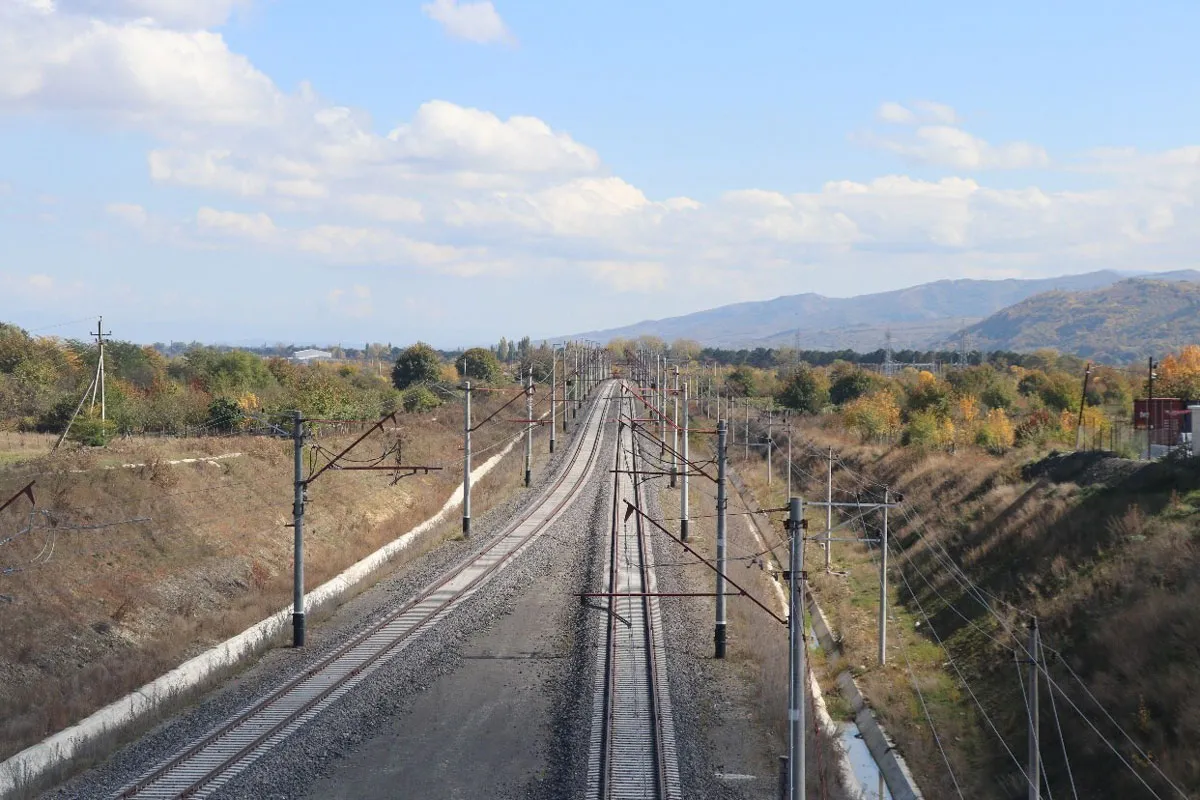
The Georgian Railway Modernisation Project, constructed by China Railway 23rd Bureau Group Co.,  has been officially commissioned, marking a major milestone in China–Georgia cooperation under the Belt and Road Initiative.
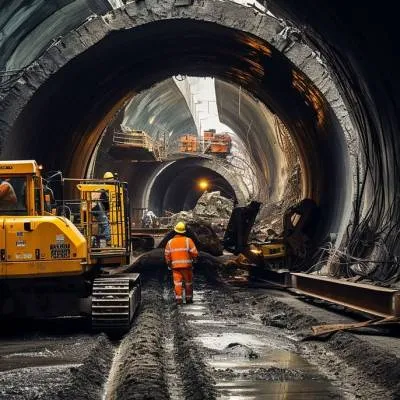
Located in central Georgia, the project runs from Zestaponi to Khashuri over 43.9 km, serving as a critical east–west transport artery. The scope included upgrading existing lines and constructing new sections, alongside works covering civil engineering, power supply, communications and station facilities. The project faced complex geological conditions, with challenging tunnel excavation, high-slope embankment protection and bridge installations addressed through technology-led construction and adaptive project management.
The scheme is the largest newly built railway project to be completed and put into operation in Georgia. It forms an important component of the Trans-Caspian International Transport Corridor, enhancing the country’s rail capacity and strengthening logistics connectivity between China and Europe.
Operational benefits include a 37 per cent improvement in average travel efficiency between Tbilisi and western Black Sea ports, and a doubling of annual freight capacity. During construction, the project generated employment for around 1,000 local workers, alongside skills training and knowledge transfer.
With commissioning now complete, the project is expected to support industrial upgrading, regional development along the corridor, and deeper trade integration with neighbouring countries, reinforcing Georgia’s role in transcontinental freight movement.

The Georgian Railway Modernisation Project, constructed by China Railway 23rd Bureau Group Co.,  has been officially commissioned, marking a major milestone in China–Georgia cooperation under the Belt and Road Initiative.Located in central Georgia, the project runs from Zestaponi to Khashuri over 43.9 km, serving as a critical east–west transport artery. The scope included upgrading existing lines and constructing new sections, alongside works covering civil engineering, power supply, communications and station facilities. The project faced complex geological conditions, with challenging tunnel excavation, high-slope embankment protection and bridge installations addressed through technology-led construction and adaptive project management.The scheme is the largest newly built railway project to be completed and put into operation in Georgia. It forms an important component of the Trans-Caspian International Transport Corridor, enhancing the country’s rail capacity and strengthening logistics connectivity between China and Europe.Operational benefits include a 37 per cent improvement in average travel efficiency between Tbilisi and western Black Sea ports, and a doubling of annual freight capacity. During construction, the project generated employment for around 1,000 local workers, alongside skills training and knowledge transfer.With commissioning now complete, the project is expected to support industrial upgrading, regional development along the corridor, and deeper trade integration with neighbouring countries, reinforcing Georgia’s role in transcontinental freight movement.

Next Story
Equipment

Kabelschlepp India Installs Robotic VMC in Bengaluru

Kabelschlepp India, part of the Tsubaki Group, has installed a state-of-the-art Vertical Machining Center (VMC) integrated with robotic automation at its Bengaluru facility. The inauguration was held in the presence of Henning Preis, President & CEO, Kabelschlepp Group, Jörg Schulz, Vice President – Production, and Srinivas P. Kamisetty, Managing Director, Kabelschlepp India.The high-precision CNC VMC is designed for advanced milling, drilling, tapping and multi-axis machining. Equipped with a vertical spindle orientation, automatic tool changer and intelligent CNC control system, it en..

Next Story
Infrastructure Transport

Highway Delivery Reset!

Project delays and inefficiencies continue to bedevil the progress of India’s National Highways network. A multi-pronged reform agenda is needed to inject greater transparency and accountability at every stage – from planning and procurement to execution, maintenance and oversight. This article offers key recommendations and reform strategies that government stakeholders – from the Ministry of Road Transport & Highways (MoRTH) and the National Highways Authority of India (NHAI) to state agencies and oversight bodies – should pursue to put highway development on a better track.Decen..

Next Story
Infrastructure Transport

MSIDC Executes ₹37,000 Crore Road Programme

With Rs 37,000 crore worth of road projects under execution across Maharashtra, Maharashtra State Infrastructure Development Corporation (MSIDC) is driving one of the state’s largest infrastructure programmes. Dr Brijesh Dixit, Managing Director, discusses the institutional reforms, execution frameworks, financing strategies and technology adoption enabling timely, high-quality delivery, in conversation with PRATAP PADODE, Editor-in-Chief, CW.With over Rs 37,000 crore worth of road projects underway across districts – many under tight timelines – what institutional and executio..

Advertisement

Subscribe to Our Newsletter

Get daily newsletters around different themes from Construction world.

STAY CONNECTED

Advertisement

Advertisement

Advertisement

Open In App