+
Indian Railways Approves Multitracking Between Danapur And Fatuha
RAILWAYS & METRO RAIL

Indian Railways Approves Multitracking Between Danapur And Fatuha

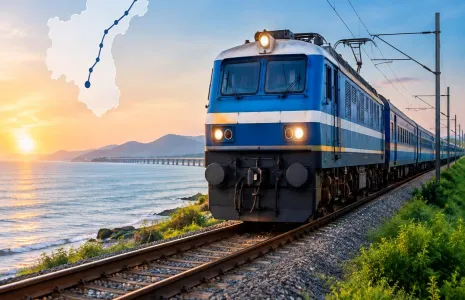
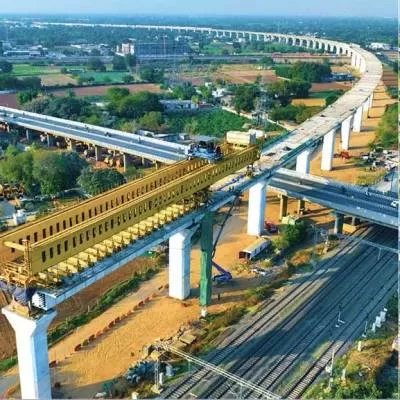
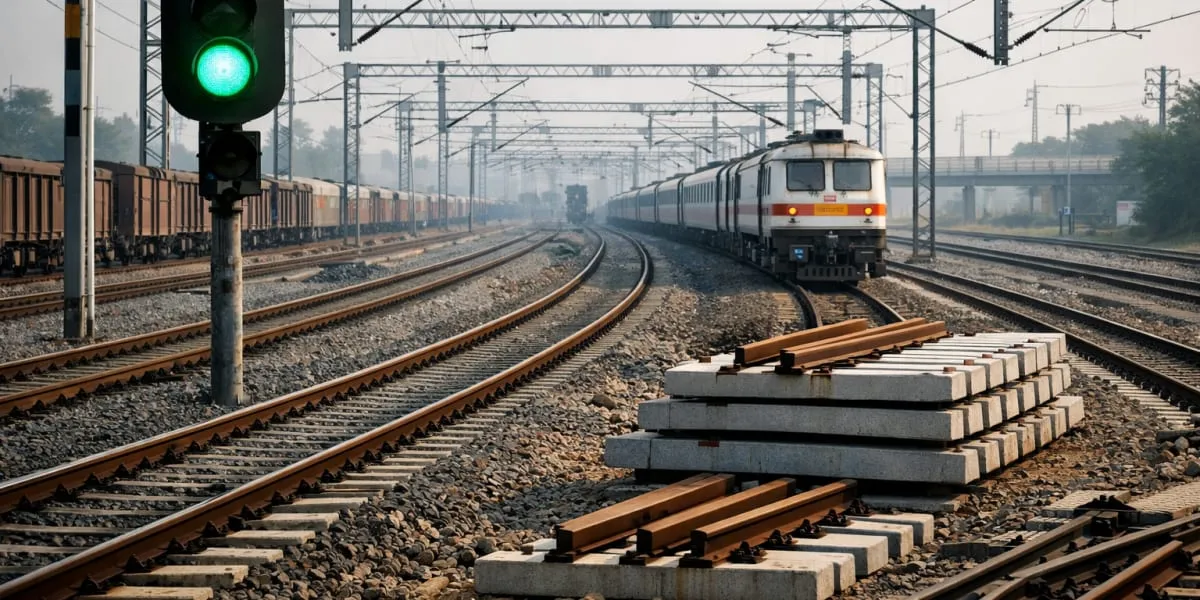
Indian Railways has approved multitracking of the 29 km Danapur to Fatuha section of East Central Railway at a cost of Rs 9.76 billion (Rs 9.76 bn), marking a major boost to rail capacity in Bihar. The sanctioned project aims to decongest one of the busiest stretches on the Patna corridor and create room for a substantial increase in passenger and freight services. The work covers expansion across key urban nodes and is expected to strengthen network resilience and operational flexibility.

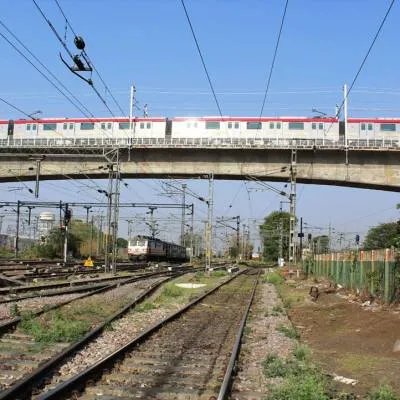
The sanctioned work comprises three components. Third and fourth lines will be laid between Danapur and Patna, a third line will be provided between Rajendra Nagar and Patna Saheb, and third and fourth lines will be installed between Patna Saheb and Fatuha. The additional tracks are intended to ease congestion, minimise delays and improve punctuality across the Patna region.

In its first year of operation the scheme will allow 22 additional passenger trains and 18 additional freight trains every day and enable the handling of an additional 5.2 million tonnes per annum (5.2 mn t). The project forms part of the quadrupling initiative on the Delhi, Deen Dayal Upadhyaya Junction, Patna, Kiul, Bhagalpur, Khanna and Howrah route and is identified under the Energy, Mineral and Cement Corridor of Indian Railways. The strengthened section is also cited as vital for the upcoming 2,120 megawatt (MW) thermal power plant at Chausa in Buxar district, which will depend on rail movement of bulk inputs.

The approval was described as reaffirming Indian Railways' commitment to expanding capacity on high density routes, strengthening logistics for energy and industry and supporting the socio-economic development of Bihar. The railways indicated that consequential train accidents have decreased by 88 per cent over the past 12 years, falling to 16 in 2025-2026 from 135 in 2014-15, with only two consequential accidents recorded so far in 2026-27 till June. The project is expected to provide long-term relief for congestion and bolster freight corridors serving the eastern region.

Indian Railways has approved multitracking of the 29 km Danapur to Fatuha section of East Central Railway at a cost of Rs 9.76 billion (Rs 9.76 bn), marking a major boost to rail capacity in Bihar. The sanctioned project aims to decongest one of the busiest stretches on the Patna corridor and create room for a substantial increase in passenger and freight services. The work covers expansion across key urban nodes and is expected to strengthen network resilience and operational flexibility. The sanctioned work comprises three components. Third and fourth lines will be laid between Danapur and Patna, a third line will be provided between Rajendra Nagar and Patna Saheb, and third and fourth lines will be installed between Patna Saheb and Fatuha. The additional tracks are intended to ease congestion, minimise delays and improve punctuality across the Patna region. In its first year of operation the scheme will allow 22 additional passenger trains and 18 additional freight trains every day and enable the handling of an additional 5.2 million tonnes per annum (5.2 mn t). The project forms part of the quadrupling initiative on the Delhi, Deen Dayal Upadhyaya Junction, Patna, Kiul, Bhagalpur, Khanna and Howrah route and is identified under the Energy, Mineral and Cement Corridor of Indian Railways. The strengthened section is also cited as vital for the upcoming 2,120 megawatt (MW) thermal power plant at Chausa in Buxar district, which will depend on rail movement of bulk inputs. The approval was described as reaffirming Indian Railways' commitment to expanding capacity on high density routes, strengthening logistics for energy and industry and supporting the socio-economic development of Bihar. The railways indicated that consequential train accidents have decreased by 88 per cent over the past 12 years, falling to 16 in 2025-2026 from 135 in 2014-15, with only two consequential accidents recorded so far in 2026-27 till June. The project is expected to provide long-term relief for congestion and bolster freight corridors serving the eastern region.

Related Stories

Gold Stories

Next Story
Real Estate

BMC OC Amnesty Scheme Requires Key Approvals from Mumbai Societies

The Brihanmumbai Municipal Corporation (BMC) has clarified that housing societies applying under its Occupation Certificate (OC) amnesty scheme must possess key approvals linked to the original construction. The requirements include a valid Intimation of Disapproval (IOD), an approved building plan and a Commencement Certificate (CC), along with a No Objection Certificate (NOC) from the developer or original construction applicant. The Standard Operating Procedure (SOP) makes clear that the absence of an OC alone will not qualify a building for relief. Societies must establish that their build..

Next Story
Real Estate

Gurugram Emerges as Luxury Senior Living Hub

Gurugram is emerging as a potential hub for luxury senior living, supported by available land, healthcare infrastructure, connectivity and a concentration of affluent professionals, high-net-worth individuals and non-resident Indians. These factors could give the city an advantage over land-constrained metros such as Mumbai. A report by the Association of Senior Living India (ASLI) and JLL estimates that India’s organised senior living market could represent a $10.1 bn opportunity by 2030. The sector had about 25,050 organised units as of June 2026, while penetration stood at only 1.5 per ce..

Next Story
Real Estate

Corrosion Costs India’s Infrastructure Rs. 142 bn Annually

Corrosion costs India an estimated Rs. 1.42 tn annually, equivalent to 4.3 per cent of gross domestic product, according to a report by the Confederation of Indian Industry and the National Research Institute. Infrastructure accounts for Rs. 142 bn of the annual burden, making it the sector with the largest absolute cost among those examined. The report, presented at the CII Annual Infrastructure Summit 2026, said the infrastructure-sector cost equals about 2.9 per cent of the sector’s gross domestic product. It estimated that effective measures could generate maximum savings of Rs. 495.8 bn..

Advertisement

Subscribe to Our Newsletter

Get daily newsletters around different themes from Construction world.

STAY CONNECTED

Advertisement

SPECIAL OFFER
QR Code