Indian Railways Becomes World's Second-Most Electrified Network
RAILWAYS & METRO RAIL

Indian Railways Becomes World's Second-Most Electrified Network

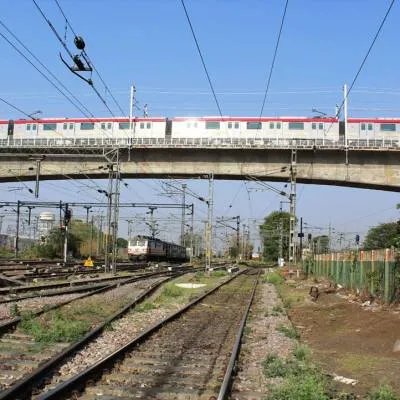
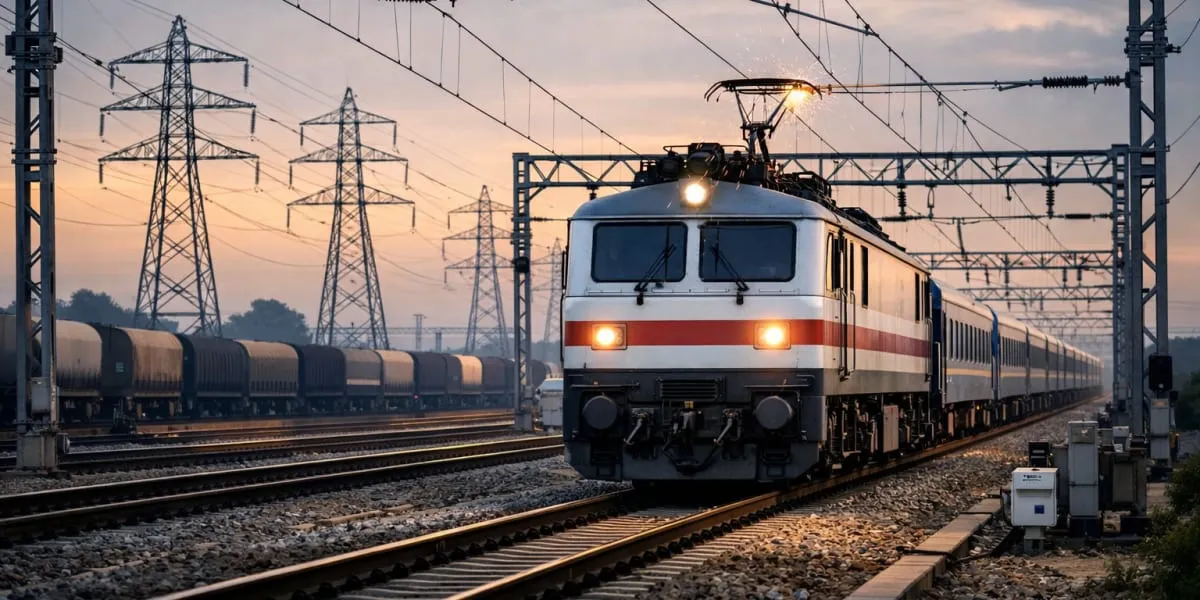
Indian Railways reached 99.6 per cent electrification of its broad gauge network as of 22 July 2026, making it the world’s second-most electrified large railway system after Switzerland, which retains full electrification. The achievement follows a phased network-wide programme that extended electric traction through overhead equipment and related supply systems across trunk routes, branch lines and freight corridors. The Union Railway Minister placed the electrification data in the Lok Sabha on 22 July 2026.

Between 2014 and 2026, Indian Railways electrified 48,072 route kilometres, while in the six decades prior to 2014 it had electrified 21,801 route kilometres, reflecting a sharp acceleration of the programme after 2014. All new line projects and multi-tracking schemes are now sanctioned and constructed with integrated electrification infrastructure to avoid subsequent retrofitting. The network expansion therefore prioritises continuous electric operation and improved operational efficiency.

Diesel consumption for train operations fell from 2,930 mn litres in 2015-16 to 1,080 mn litres in 2024-25, a reduction of about 1,850 mn litres that substantially reduced dependence on imported fuel for traction. The reduction supports wider energy transition goals and lowers operating costs and emissions intensity on rail corridors. Rail transport continues to exhibit significantly lower carbon intensity than road transport, with estimates indicating about 89 per cent less carbon dioxide per tonne-kilometre.

Indian Railways had commissioned over 1,260 megawatt (MW) of renewable energy capacity by June 2026, comprising about 1,161 MW of solar power and 103 MW of wind power, and further additions are planned to meet station and traction needs. Comparative electrification levels elsewhere include China at 82 per cent, Spain at 67 per cent, Japan at 64 per cent, France at 60 per cent and the United Kingdom at 39 per cent. The integrated approach is intended to reduce lifecycle emissions and improve reliability across the rail network.

Indian Railways reached 99.6 per cent electrification of its broad gauge network as of 22 July 2026, making it the world’s second-most electrified large railway system after Switzerland, which retains full electrification. The achievement follows a phased network-wide programme that extended electric traction through overhead equipment and related supply systems across trunk routes, branch lines and freight corridors. The Union Railway Minister placed the electrification data in the Lok Sabha on 22 July 2026. Between 2014 and 2026, Indian Railways electrified 48,072 route kilometres, while in the six decades prior to 2014 it had electrified 21,801 route kilometres, reflecting a sharp acceleration of the programme after 2014. All new line projects and multi-tracking schemes are now sanctioned and constructed with integrated electrification infrastructure to avoid subsequent retrofitting. The network expansion therefore prioritises continuous electric operation and improved operational efficiency. Diesel consumption for train operations fell from 2,930 mn litres in 2015-16 to 1,080 mn litres in 2024-25, a reduction of about 1,850 mn litres that substantially reduced dependence on imported fuel for traction. The reduction supports wider energy transition goals and lowers operating costs and emissions intensity on rail corridors. Rail transport continues to exhibit significantly lower carbon intensity than road transport, with estimates indicating about 89 per cent less carbon dioxide per tonne-kilometre. Indian Railways had commissioned over 1,260 megawatt (MW) of renewable energy capacity by June 2026, comprising about 1,161 MW of solar power and 103 MW of wind power, and further additions are planned to meet station and traction needs. Comparative electrification levels elsewhere include China at 82 per cent, Spain at 67 per cent, Japan at 64 per cent, France at 60 per cent and the United Kingdom at 39 per cent. The integrated approach is intended to reduce lifecycle emissions and improve reliability across the rail network.

Next Story
Infrastructure Urban

AI Powered Security Robot To Debut At Puri Station

The East Coast Railway (ECoR) has unveiled an artificial intelligence powered robotic surveillance platform that will be deployed at Puri railway station ahead of Lord Jagannath's Bahuda Yatra on 24 July to enhance passenger safety and security. The platform, named DSC ARJUN, was revealed in the presence of ECoR General Manager Parmeshwar Funkwal and senior railway and Railway Protection Force (RPF) officers. ECoR officials said the system has been introduced as a temporary deployment for the festival and may later be shifted to Bhubaneswar railway station. Developed to support Railway Protect..

Next Story
Infrastructure Urban

India Eases RCMC Rule For Low Value Exports

The Directorate General of Foreign Trade (DGFT) has proposed exempting low value export consignments from the requirement to hold a registration-cum-membership certificate (RCMC), in a move intended to simplify compliance for small exporters. The proposal targets shipments with a free-on-board value of up to Rs 10,000 and seeks to reduce paperwork for first time exporters and micro, small and medium enterprises. The announcement forms part of a wider government effort to encourage exports through online platforms and emerging delivery channels. Under the proposed amendment to Paragraph 2.57 of..

Next Story
Infrastructure Urban

Assam Launches Centre Of Excellence For Additive Manufacturing

The Assam government has inaugurated a Digital Design and additive manufacturing centre of excellence in Guwahati, signalling a push towards technology driven manufacturing across the state. Chief Minister Himanta Biswa Sarma opened the facility and outlined its intended role in fostering innovation, product development and entrepreneurship. The centre will provide industries, startups and researchers with access to advanced digital manufacturing tools and additive manufacturing capabilities. Officials said the facility aims to strengthen the state innovation ecosystem and reduce dependence on..

Advertisement

Subscribe to Our Newsletter

Get daily newsletters around different themes from Construction world.

STAY CONNECTED

Advertisement

Advertisement

Advertisement