Indian Railways Reforms Wagon Design Policy For Industry Needs
RAILWAYS & METRO RAIL

Indian Railways Reforms Wagon Design Policy For Industry Needs

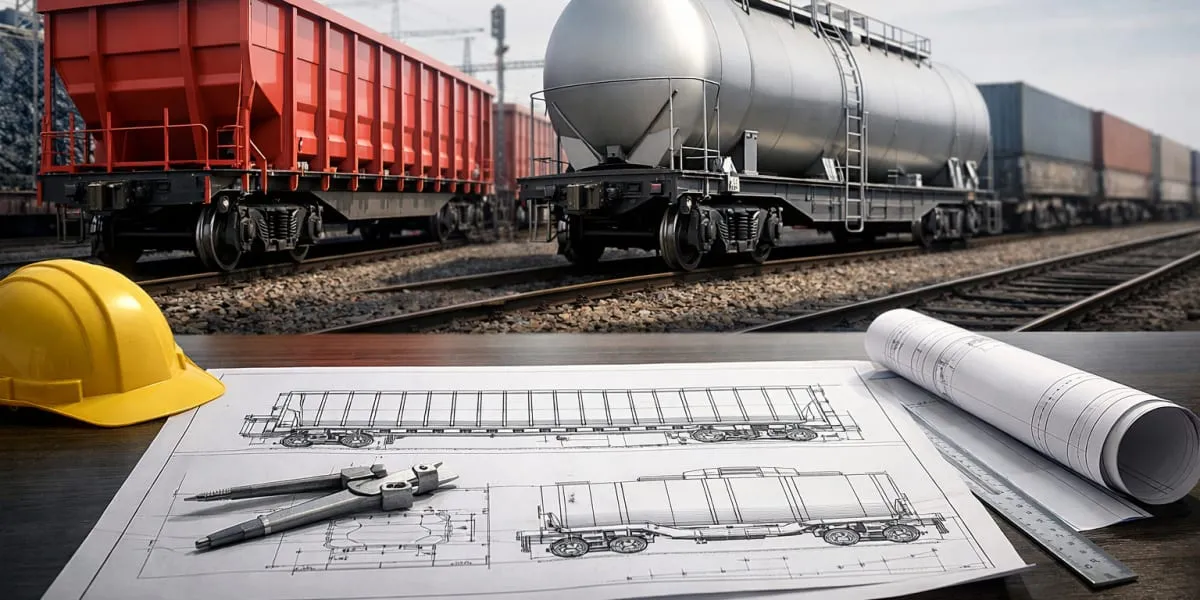
The Railway Ministry has moved to amend the Wagon Design Policy to permit industries to design freight wagons tailored to specific operational requirements. The initiative seeks to boost rail freight, improve logistics efficiency and draw new streams of cargo by enabling commodity specific configurations. The ministry presented the change as part of a wider effort to raise the rail share within national logistics.

Railway Minister Ashwini Vaishnaw held a review meeting with senior officials and instructed that the revised policy be finalised within 15 days under an industry friendly framework. The ministry said extensive consultations have taken place with industries, trade bodies and major freight customers to understand handling, loading and unloading needs. Officials conveyed that the intention is to create a more customer oriented regime that encourages businesses to opt for rail transport.

The review highlighted the performance of recently developed specialised wagons for commodities such as cement and salt as evidence of the benefits of tailored design. Officials observed that commodity specific wagons have improved loading and unloading efficiency and operational handling, making rail logistics more attractive to shippers. The ministry noted that certain goods, for example steel coils, require bespoke binding and dedicated loading systems that standard wagons do not provide.

The revised framework will empower industries to propose design modifications while maintaining strict standards for design approval and prototype development. The Research Designs and Standards Organisation (RDSO) and the Chief Commissioner of Railway Safety (CCRS) will retain responsibility for ensuring wagon safety and regulatory compliance during approval processes. The ministry emphasised that robust technical oversight will accompany the new industry facing approach.

Officials indicated that the reforms are expected to enable new industries to enter the railway freight ecosystem and encourage a modal shift of volume from road to rail. The ministry framed the policy as advancing the vision of Green Railways and greener logistics by reducing road freight dependence. Implementation of the framework will focus on quality production and operational readiness to support wider adoption.

"Join industry leaders at RAHSTA Expo, India's premier platform for roads, highways and traffic infrastructure. Register now to explore innovations, network with experts and shape the future of mobility."

The Railway Ministry has moved to amend the Wagon Design Policy to permit industries to design freight wagons tailored to specific operational requirements. The initiative seeks to boost rail freight, improve logistics efficiency and draw new streams of cargo by enabling commodity specific configurations. The ministry presented the change as part of a wider effort to raise the rail share within national logistics. Railway Minister Ashwini Vaishnaw held a review meeting with senior officials and instructed that the revised policy be finalised within 15 days under an industry friendly framework. The ministry said extensive consultations have taken place with industries, trade bodies and major freight customers to understand handling, loading and unloading needs. Officials conveyed that the intention is to create a more customer oriented regime that encourages businesses to opt for rail transport. The review highlighted the performance of recently developed specialised wagons for commodities such as cement and salt as evidence of the benefits of tailored design. Officials observed that commodity specific wagons have improved loading and unloading efficiency and operational handling, making rail logistics more attractive to shippers. The ministry noted that certain goods, for example steel coils, require bespoke binding and dedicated loading systems that standard wagons do not provide. The revised framework will empower industries to propose design modifications while maintaining strict standards for design approval and prototype development. The Research Designs and Standards Organisation (RDSO) and the Chief Commissioner of Railway Safety (CCRS) will retain responsibility for ensuring wagon safety and regulatory compliance during approval processes. The ministry emphasised that robust technical oversight will accompany the new industry facing approach. Officials indicated that the reforms are expected to enable new industries to enter the railway freight ecosystem and encourage a modal shift of volume from road to rail. The ministry framed the policy as advancing the vision of Green Railways and greener logistics by reducing road freight dependence. Implementation of the framework will focus on quality production and operational readiness to support wider adoption.

Next Story
Infrastructure Urban

Nagaland Signs MoU With T-Works To Boost MSMEs

Nagaland marked Micro, Small and Medium Enterprises (MSMEs) Day by launching Naturally Nagaland and signing an MoU with T-Works to bolster the entrepreneurial ecosystem. Advisor Hekani Jakhalu launched the initiative at the Industries & Commerce directorate in Kohima and the MoU was signed by the director of Industries and Commerce and the chief executive officer of T-Works. The agreement is intended to strengthen innovation, product development and prototyping support across the state. Jakhalu said 52,801 enterprises were registered on Udyam as of June 25, 2026, about 4,000 more than three mo..

Next Story
Infrastructure Urban

Tiruchy MSME Engineering Units Seek Revival Package

The Tamil Nadu Boilers Association has urged the state chief minister to announce a comprehensive revival package for stressed micro, small and medium enterprises (MSME) engineering units, citing years of recession, the impact of the Covid-19 pandemic, mounting debt burdens and delayed payments from customers. In a letter sent last week the association sought a range of measures to reboot local industry and restore employment and production levels. It said the proposal aimed to bring closed units back into operation and to ease financial bottlenecks that have constrained growth. The measures r..

Next Story
Infrastructure Energy

Delhi And Tehran Explore Energy Cooperation As US Sanctions Ease

India and Iran have agreed to explore cooperation in the oil and gas sector after a temporary US sanctions waiver opened access for Iranian crude to global markets. The understanding was reached on the sidelines of the 11th BRICS Energy Ministers' Meeting in Gurugram where officials discussed bilateral engagement. The talks were framed as part of efforts to strengthen energy ties and address security concerns. Union Minister for Petroleum and Natural Gas Hardeep Singh Puri met his Iranian counterpart Mohsen Paknejad and conveyed that India remained committed to enhancing energy security throug..

Advertisement

Subscribe to Our Newsletter

Get daily newsletters around different themes from Construction world.

STAY CONNECTED

Advertisement

Advertisement

Advertisement