JDA Clears Land For Jaipur Metro Phase-1C Extension
RAILWAYS & METRO RAIL

JDA Clears Land For Jaipur Metro Phase-1C Extension

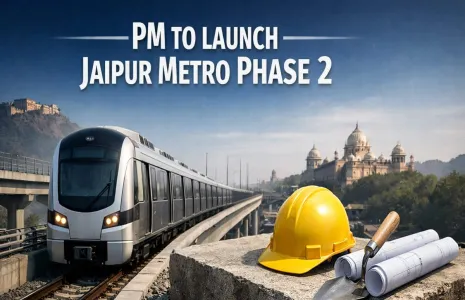
Jaipur Development Authority has approved key proposals for the city, including the allocation of land required for the Jaipur Metro Phase-1C project, marking progress on the planned extension of the Pink Line.

The decision was taken at a meeting of the JDA’s Land and Property Disposal Committee, which cleared the use of 7,700 sq metres of land for the metro alignment. The land, currently under the Forest Department, will be utilised for Phase-1C of the Jaipur Metro. In exchange, the Forest Department will be allotted an equivalent 2.01 hectares of land in Daulatpura revenue village of Amer tehsil by the JDA.

In a separate decision, the committee also approved the allocation of 2,000 sq metres of land in Chaksu village for the construction of a government primary school building.

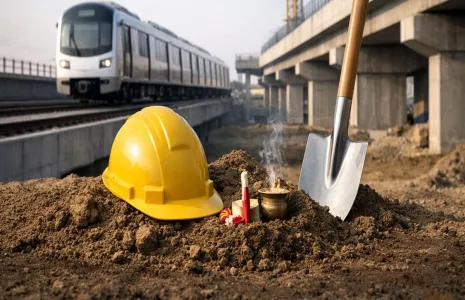
Under Jaipur Metro Phase-1C, the existing 11.97 km Pink Line, which runs from Mansarovar to Badi Chaupar, is proposed to be extended from Badi Chaupar to Transport Nagar. The earlier Gehlot government had finalised a 2.85 km alignment for this extension, passing through Ramganj Chaupar. The foundation stone for the project was laid by former Chief Minister Ashok Gehlot on September 21, 2023, following which preliminary works had begun.

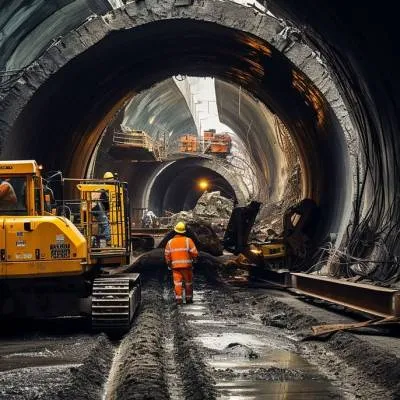
Of the total 2.85 km stretch, 2.26 km is planned as an underground corridor, while the remaining 0.59 km will be elevated. The extension will include an underground station at Ramganj Chaupar and an elevated station at Transport Nagar.

Jaipur Metro operations began on June 3, 2015, with the opening of the 9.63 km stretch between Mansarovar and Chandpole. The network was extended within the walled city on September 23, 2020, from Chandpole to Badi Chaupar via Choti Chaupar, adding 2.4 km. The Phase-1C extension from Badi Chaupar to Transport Nagar is currently targeted for completion by April 2027.

Jaipur Development Authority has approved key proposals for the city, including the allocation of land required for the Jaipur Metro Phase-1C project, marking progress on the planned extension of the Pink Line. The decision was taken at a meeting of the JDA’s Land and Property Disposal Committee, which cleared the use of 7,700 sq metres of land for the metro alignment. The land, currently under the Forest Department, will be utilised for Phase-1C of the Jaipur Metro. In exchange, the Forest Department will be allotted an equivalent 2.01 hectares of land in Daulatpura revenue village of Amer tehsil by the JDA. In a separate decision, the committee also approved the allocation of 2,000 sq metres of land in Chaksu village for the construction of a government primary school building. Under Jaipur Metro Phase-1C, the existing 11.97 km Pink Line, which runs from Mansarovar to Badi Chaupar, is proposed to be extended from Badi Chaupar to Transport Nagar. The earlier Gehlot government had finalised a 2.85 km alignment for this extension, passing through Ramganj Chaupar. The foundation stone for the project was laid by former Chief Minister Ashok Gehlot on September 21, 2023, following which preliminary works had begun. Of the total 2.85 km stretch, 2.26 km is planned as an underground corridor, while the remaining 0.59 km will be elevated. The extension will include an underground station at Ramganj Chaupar and an elevated station at Transport Nagar. Jaipur Metro operations began on June 3, 2015, with the opening of the 9.63 km stretch between Mansarovar and Chandpole. The network was extended within the walled city on September 23, 2020, from Chandpole to Badi Chaupar via Choti Chaupar, adding 2.4 km. The Phase-1C extension from Badi Chaupar to Transport Nagar is currently targeted for completion by April 2027.

Next Story
Infrastructure Transport

MMRDA advances 250 m on Orange Gate–Marine Drive tunnel

The Mumbai Metropolitan Region Development Authority (MMRDA) has completed 250 m of underground tunnelling for the Orange Gate–Marine Drive Urban Road Tunnel using India’s largest slurry shield tunnel boring machine (TBM) deployed for an urban road project.The project involves twin tunnels extending over 7 km beneath critical transport corridors, including Central Railway, Western Railway and Metro Line 3. The work requires high-precision engineering to navigate densely developed urban infrastructure.Once completed, the tunnel is expected to reduce travel time between Orange Gate and Marin..

Next Story
Infrastructure Urban

Hindustan Zinc Pays Rs 188.46 Billion in FY26

Hindustan Zinc contributed Rs 188.46 billion to the public exchequer in FY 2025-26, according to its 9th Tax Transparency Report. The contribution, equivalent to 46 per cent of the company’s revenue, included direct and indirect taxes, government royalties, dividends to the Government of India, withholding taxes and other statutory levies.The company’s five-year cumulative contribution to the exchequer stood at Rs 915.72 billion. In FY26, Hindustan Zinc reported revenue of Rs 408.44 billion, EBITDA of Rs 221.62 billion and profit after tax of Rs 138.32 billion. It also achieved its highest..

Next Story
Infrastructure Urban

World of Concrete India 2026 Opens in Mumbai

Informa Markets in India will host the 12th edition of World of Concrete India 2026 from 3–5 June 2026 at the Bombay Exhibition Centre, Mumbai. The specialised B2B exhibition will bring together manufacturers, suppliers, contractors, developers, architects, consultants, infrastructure companies, project leaders and government stakeholders.The event is expected to feature over 350 brands and more than 18,000 trade professionals. It will cover concrete and cement, dry mortar, precast technologies, formwork, construction chemicals, industrial and commercial flooring, scaffolding, safety solutio..

Advertisement

Subscribe to Our Newsletter

Get daily newsletters around different themes from Construction world.

STAY CONNECTED

Advertisement

Advertisement

Advertisement