Mumbai metro to have 8 km of underground service by year end
RAILWAYS & METRO RAIL

Mumbai metro to have 8 km of underground service by year end

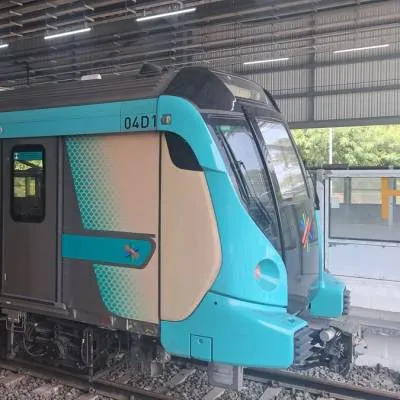
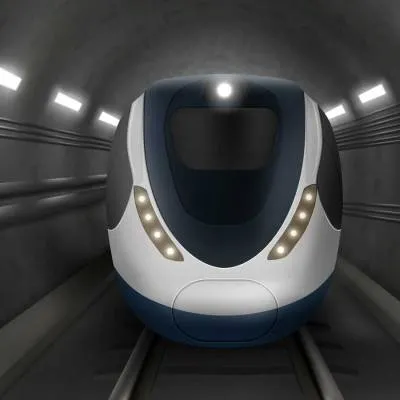
The eagerly anticipated Metro 3 subterranean line underwent its first long-distance test. A train travelled eight kilometres (km) through six stations from MIDC to Vidyanagari before returning to Seepz station, reaching a distance of about 17 kilometres. The first phase of the Aarey-Cuffe Parade corridor, also known as the Aqua Line, from Aarey to BKC is set to begin operation before the end of the year, according to metro authorities.

Along with pictures of the inside of the train, a video of the tunnel as seen from the driver's cabin of the running train was tweeted. The tweet received thousands of likes and hundreds of retweets. "The milestone demonstrates the culmination of infrastructure work related to tracks, overhead contact system (power line for trains), rolling stock and structures like platform screen doors," a Mumbai Metro Rail Corporation (MMRCL) spokeswoman said.

On the 12 kilometre Aarey-BKC section, MMRCL intends to operate 110 services, with a travel time of 25 minutes when stops are taken into consideration. For the 110 services, nine trains will be needed, of which eight have already been delivered and the other three are anticipated by the end of the month.

On 30 August of last year, Eknath Shinde, Chief Minister, and Devendra Fadnavis, Deputy Chief Minister, launched short-distance testing runs for the first prototype rake. A 3 kilometre section between Sariput Nagar in Aarey and Marol Naka was used for the experiments.

The eagerly anticipated Metro 3 subterranean line underwent its first long-distance test. A train travelled eight kilometres (km) through six stations from MIDC to Vidyanagari before returning to Seepz station, reaching a distance of about 17 kilometres. The first phase of the Aarey-Cuffe Parade corridor, also known as the Aqua Line, from Aarey to BKC is set to begin operation before the end of the year, according to metro authorities. Along with pictures of the inside of the train, a video of the tunnel as seen from the driver's cabin of the running train was tweeted. The tweet received thousands of likes and hundreds of retweets. The milestone demonstrates the culmination of infrastructure work related to tracks, overhead contact system (power line for trains), rolling stock and structures like platform screen doors, a Mumbai Metro Rail Corporation (MMRCL) spokeswoman said. On the 12 kilometre Aarey-BKC section, MMRCL intends to operate 110 services, with a travel time of 25 minutes when stops are taken into consideration. For the 110 services, nine trains will be needed, of which eight have already been delivered and the other three are anticipated by the end of the month. On 30 August of last year, Eknath Shinde, Chief Minister, and Devendra Fadnavis, Deputy Chief Minister, launched short-distance testing runs for the first prototype rake. A 3 kilometre section between Sariput Nagar in Aarey and Marol Naka was used for the experiments.

Related Stories

Gold Stories

Next Story
Infrastructure Urban

KONE Opens India's First Digital Experience Centre in Pune

KONE, a global elevator and escalator manufacturer, has inaugurated its first Digital Experience Centre (DEC) in India, located in Pune. The facility aims to showcase how artificial intelligence (AI), connectivity and data-driven technologies can enhance customer experiences and improve building operations.The centre was inaugurated by Jussi Herlin, Executive Vice Chair, KONE Corporation; Philippe Delorme, President and CEO, KONE; and Nandan Nilekani, Co-founder and Chairman of the Board, Infosys.Designed as an interactive customer environment, the facility demonstrates digital solutions cover..

Next Story
Infrastructure Urban

CII GreenCo Launches Circularity Guidelines for Indian Industry

The Confederation of Indian Industry (CII) GreenCo Council has launched the CII GreenCo Circularity Guidelines – Pilot Version at the 17th CII GreenCo Waste & Resource Management Summit 2026 in Chennai. The initiative aims to strengthen resource efficiency, waste reduction and circular economy practices across Indian manufacturing and process industries.The guidelines introduce a structured framework with circularity indices covering raw materials, consumables, packaging and other resource inputs. These indicators will help industries assess existing practices, identify opportunities to ..

Next Story
Infrastructure Energy

Global Electronics Association Launches IPC-1783-CO2E Standard

The Global Electronics Association has introduced IPC-1783-CO2E, a new international standard aimed at improving consistency, transparency and comparability in product carbon footprint reporting across the electronics manufacturing industry.The standard, titled International Standard for Data Collection and Reporting of CO2 Equivalent (CO2e) Emissions for the Electronics Manufacturing Supply Chain, provides industry-specific guidance for collecting, estimating and reporting carbon emissions data.With increasing regulatory requirements and customer expectations, electronics manufacturers face c..

Advertisement

Subscribe to Our Newsletter

Get daily newsletters around different themes from Construction world.

STAY CONNECTED

Advertisement

SPECIAL OFFER
QR Code