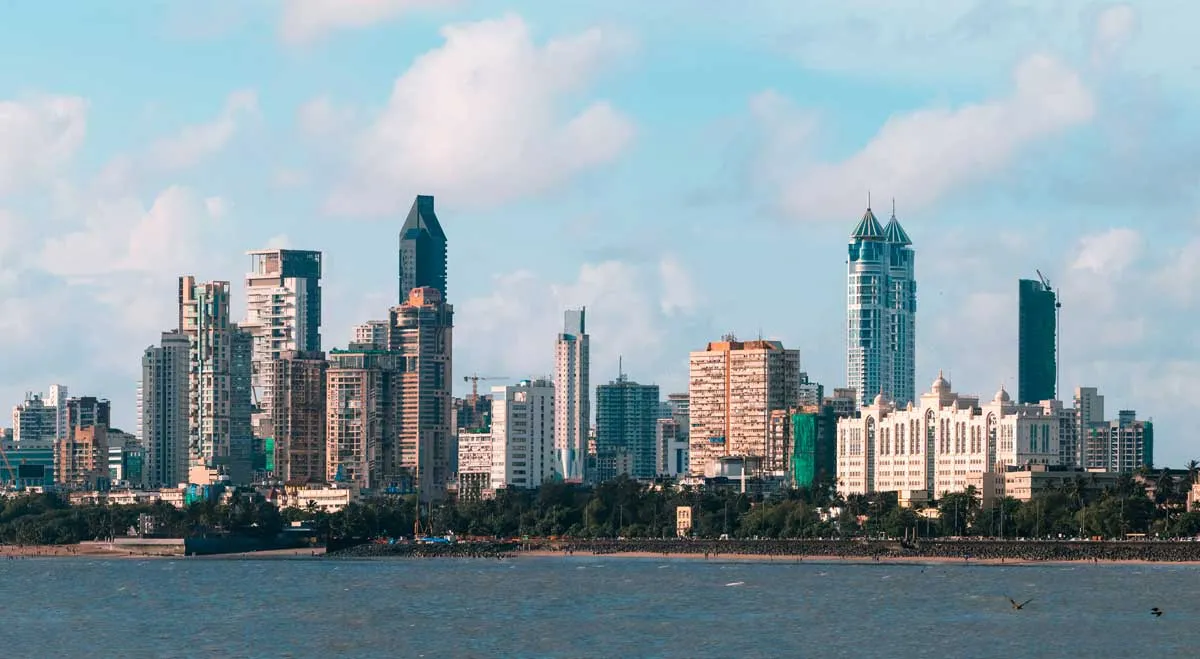
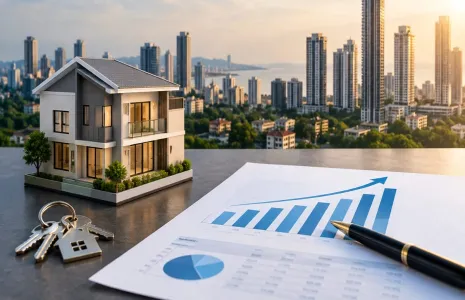
Visualise the real-estate market through the property clock concept, where the 12 o’clock position represents the peak and the 6 o’clock position the slump. A unique feature of this clock is that changes in market indicators become marginal near the peak. So, the growth between 11 and 12 is slower than that between, say, 9 and 10, while 12 to 1 sees the beginning of a mild decline before any sharper correction emerges. In fact, the mildness of these variances near the peak make it difficult to declare that the market has topped out.Yet, here’s the thing: several city markets – because, importantly, there is no India cycle, each city moves through its own trajectory – may now be approaching their peak, according to Gulam Zia, International Partner, Senior Executive Director - Research, Advisory, Infrastructure and Valuation, Knight Frank India.It’s about time. Historically, real-estate cycles tend to span roughly a decade, and the five years since 2021, the start of the ongoing real-estate cycle, following the sharp correction witnessed during the COVID-19 period, have seen a strong upcycle, he adds.CW explores how transaction volume, sales velocity and price movements, key indicators of a market’s position, are likely to move in key markets.Present positionA city market approaching its peak “does not imply a sharp decline, but rather a moderation in transaction volumes and sales velocity”, explains Zia.ANAROCK Research supports this analysis. “Q1 of the CY 2026 saw single-digit moderate price rise, 7 per cent year on year (yoy) in the top seven cities, due to rising construction costs, unlike Q1 2025 when prices rose in double digits, 17 per cent yoy,” says Dr Prashant Thakur, Executive Director & Head - Research & Advisory, ANAROCK Group, while emphasising that this trend is expected to continue in FY 2027 because of slowing sales.Zia notes that Delhi NCR and parts of Mumbai witnessed substantial price appreciation over the past few years, with select projects in Delhi nearly doubling in value within three years. In those markets, prices have now largely plateaued. Correspondingly, “in recent quarters, Delhi has started showing signs of contraction and the cycle may already be moving beyond the inflection point,” says Zia, “while Mumbai appears to have plateaued.”“Pune, while it has not seen comparable price growth, recorded unprecedented transaction volumes, with annual sales touching nearly 60,000 units compared to the earlier range of 30,000-40,000 units,” he continues. “Pune has also witnessed a visible slowdown over the past two quarters.”Contrary to these markets, Bengaluru and Hyderabad continue to grow, albeit at a more measured pace, Zia points out. He attributes their comparative stability to “stronger end-user participation and relatively lower speculative activity”.Cycle variantsWhere Zia spoke of city-wide market cycles, Gaurav Pandey, MD & CEO, Godrej Properties, points out, “Different micro-markets are at different stages of the cycle and performance is ultimately a function of the demand-supply dynamics, product-market fit and developer execution.”Viswa Prathap Desu, Chief Operating Officer - Residential, Brigade Group, speaks of different segments being at slightly different points in their cycles across the company’s key markets. “We’ve seen a very strong residential cycle over the last few years and, at this point, we see the market entering a phase of stabilisation rather than a sharp upcycle,” he says. “Demand fundamentals continue to remain healthy, albeit a continued ‘flight to quality’ favours quality developments and credible developers, which is where we are well-positioned. The office segment is seeing renewed momentum, especially driven by GCC expansion and AI-led demand, and hospitality is in a growth phase, where we are stepping up investments.” Leader’s cycleWhile a cycle impacts the entire industry, arguably, the prospects for market leaders may somewhat differ. To cite Godrej Properties as an example, it has delivered nine consecutive years of booking growth, demonstrating an ability to perform consistently across both upcycles and downcycles. In the past three years alone, its booking value has grown at a 41 per cent CAGR to touch INR 34,171 crore in FY26, driven by the sale of 17,513 units, translating to a total area of 27 million sq ft, the highest-ever full-year booking value and volume announced by any listed real-estate developer in India.In reflecting current demand, pricing strength, customer confidence, product-market fit and the strength of launch strategies across markets, booking sales, or presales, have become a very important leading indicator for real-estate developers, for providing visibility into their future revenue pipeline. “As a diversified real-estate player across residential, office and hospitality, visibility across cycles is important to plan for sustainable growth,” explains Desu. “Presales give us forward visibility and momentum, while revenue demonstrates our execution capability, delivery track record and growth. Given that we are seeing strong realisations today compared to a few years ago, our current presales pipeline also supports a positive margin outlook going forward.” Today, the pipeline of market leaders such as Godrej Properties, the Prestige Group, Macrotech Developers, DLF and Brigade Enterprises tell a different story to the prediction that the ongoing cycle has all but peaked.“On the residential side alone, we are looking at about 11.5 million sq ft of launches with an estimated gross development value of around Rs 11,500 crore across our key markets – Bengaluru, Chennai and Hyderabad – with Bengaluru accounting for around 4.5 million sq ft, and Chennai and Hyderabad contributing roughly 3 million sq ft each,” shares Desu.In addition to new launches, the Brigade Group also has an opening inventory of about 7.5 million sq ft, which it will continue to monetise to drive growth by a combination of new launches and sustenance sales.Godrej Properties has more than 100 projects at different stages of execution across markets. In FY26 alone, the company added 18 new projects across micro-markets, a few of which were launched within the year, while others are planned to be launched in current fiscal, further building on its development pipeline. While this pipeline is diversified across key segments and micro-markets, aligned to demand trends, it expresses “a continued focus on premium and high-quality residential developments, supported by strong location selection and product-market fit,” according to Pandey.Even at the height of the volatility in West Asia toward the end of March, market leader Godrej Properties saw just “some temporary hesitation among buyers”, to quote Pandey, with the market sentiment “gradually stabilising since then, as customers tend to normalise evolving global situations over time”. The top tier’s confidence suggests that the cycle is not near an immediate downturn but possibly in the mid-to-late phase.“We see the real-estate cycle as being in a mid-phase, characterised by structural, end-user-driven demand rather than speculative activity,” affirms Pandey.Speculative impactSpeculative buying is inextricably linked with city market cycles. Investors enter markets only when the expectations of price growth have been very high. As their number increases, prices breach affordability. At some point, the expectations of future appreciation weaken and investors begin retreating, leaving end-users to drive demand. This naturally impacts transaction volumes and market momentum. While earlier real-estate cycles in India were led by short-term speculation, Dr Niranjan Hiranandani, Chairman, NAREDCO, believes today’s market is being driven far more by end-user demand, income growth, infrastructure expansion and aspirational upgrading. “Healthy demand depth has led to sustained sales velocity, backed by an upgrade-living mindset shift,” he says.“Our confidence in the current environment is anchored in customer-driven demand, rising domestic consumption, ongoing wealth creation and supportive policy tailwinds,” says Pandey. “While the sector has seen strong post-pandemic recovery, current demand remains underpinned by fundamental end-user drivers rather than short-term cyclical factors.”However, buyer sentiment in more recent times has been impacted by global headwinds as well the runaway price growth across major cities, points out Karan Singh Sodi, Senior Managing Director - Mumbai MMR & Gujarat and Head - Alternatives, India, JLL. “Besides, the residential product itself is now geared towards the premium category and hence the mid-segment buyer seems to be priced out of some markets.”Interestingly, Bengaluru and Hyderabad are still growing because they are more end-user-driven. Witnessing less speculative activity, Zia explains, means they neither see very high price movements nor as many investors as, say, NCR.Boundary extenderAmong the many factors that fuel real-estate growth, especially the ongoing cycle, Hiranandani lists a growing GDP, stable interest rates, the availability of home loans, mega infrastructure projects to unlock hinterlands, last-mile connectivity, redevelopment with better FSI, rapid urbanisation-led migration, NRI influx into premium housing markets, and FII investments flowing into Grade A commercial, retail and logistics assets.In particular, better urban mobility through improved connectivity infrastructure has been a game-changer not just for extending development boundaries and transforming previously overlooked zones into high-growth hotspots but also for creating new realty cycles.“Whereas historically, real-estate appreciation was concentrated within core urban zones,” Hiranandani notes, “today, infrastructure is decentralising growth and creating entirely new residential and commercial corridors across tier cities.”“Infrastructure is not just extending growth; it’s redrawing city boundaries,” says Desu. “As connectivity improves, what were once peripheral locations are becoming prime corridors and new micro-markets are being unlocked.”For instance, Mumbai’s suburbs, Navi Mumbai, Thane and even the city centre are in the midst of an unprecedented infrastructure build-out cycle that is not only connecting far areas to the main city centres but also reviving older city areas, points out Sodi. Panvel in the Mumbai Metropolitan Region (MMR) has emerged as a primary beneficiary of the Mumbai Trans Harbour Link, according to ANAROCK Research. In Bengaluru, the Suburban Rail project along with the Namma Metro Blue Line project and proximity to Kempegowda International Airport and KIADB industrial park have catalysed development in Bagaluru and Devanahalli, which have recorded many new launches in the past six years, making them among the most dynamic micro-markets in the city. In the Whitefield-Sarjapur and Tumkur Road corridors, projects like Brigade Cornerstone Utopia have emerged as landmarks driven by developing infrastructure and strong demand for a township life, while Brigade Lumina saw very strong demand on launch. In Hyderabad, proximity to economic hubs is a key demand driver that keeps the realty cycle going. The metro is becoming a key driver in cities like Chennai and Pune as well. YEIDA in the NCR has gained prominence due to its proximity to the Jewar International airport which recently became operational. Its affordable plotted and villa developments have been gaining traction in the recent past. Being considered a major industrial hub, manufacturing and logistics and warehousing are also driving demand in these areas. Expressway completions are also propping up or reviving market clusters in the NCR.“Activation of the blue economy via RORO services, coastal roads and other water infrastructure has brought seamless connectivity across harbour locations in the Raigad-Konkan region,” adds Hiranandani. In union territories, Uttarakhand, Uttar Pradesh and Gujarat and as far as the Northeast, new connectivity is unlocking real-estate demand corridors in untapped locations.For Godrej Properties, the focus remains scaling its presence across key markets, while leveraging infrastructure-led growth where it aligns with demand.When connectivity infrastructure projects are delayed, a dampening effect on the market cycle is feared, but as long as work on ground continues, markets stay upbeat.But there is a proviso to the impact of infrastructure on realty. “Infrastructure alone does not automatically translate into real-estate value creation; it adds meaningful value only when it tangibly improves lifestyle, accessibility and economic opportunity,” says Zia. A strong example of this is Worli Sea Face, Mumbai, where the completion of the coastal road project has helped increase the per sq ft value of real estate from Rs 75,000 to over Rs 1,25,000. “People are willing to pay a premium for the improvement in lifestyle that infrastructure brings,” explains Zia. “But beyond transport, people also look for education, healthcare and economic opportunity.” Essentially, proximity to infrastructure alone is insufficient. Areas such as Kurla, despite being close to the airport, have not necessarily emerged as premium residential markets. And in other areas near existing Mumbai Metro lines, the network is yet to fully unlock value because its metro effect remains fragmented.Scaling supplyRedevelopment can be a major realty growth driver, one that not only improves housing quality but also supports rapid urbanisation, rental living, infrastructure utilisation and asset value enhancement. In Mumbai, greenfield land constraints supported by the Development Control and Promotion Regulations (DCPR) 2034, have made redevelopment the primary source of new housing supply.“Nearly 90 per cent of Mumbai’s new residential stock now comes through redevelopment, with a significant share led by slum rehabilitation projects, followed by society redevelopment in suburban markets,” points out Zia.Redevelopment projects are largely gaining traction in the western suburbs including Borivali, Andheri and Goregaon, among others. However, South Mumbai remains relatively less active in redevelopment due to structural complexities. “Existing buildings in South Mumbai had already consumed higher FSI levels compared to suburban locations such as Andheri, Goregaon, Borivali or Mulund,” explains Zia. “Additionally, fragmented ownership structures and legacy tenancy arrangements make redevelopment significantly more challenging in these precincts.”In areas seeing redevelopment, Dr Thakur expects a rental spike of 10-15 per cent over the next two years, But once these projects are complete, supply may outpace demand.Sodi expects the rental demand from unit owners or tenants of redevelopment projects in core city areas to push up rental yields 4 per cent or more in the short to medium term. “Redevelopment, especially cluster redevelopment, adds supply at scale in key residential corridors, where demand has always been high but supply has been limited,” he says. “Newer projects with modern amenities keep core city areas alive while upgrading the living standards of unit owners. However, in some clusters, too many redevelopment announcements are creating a marginal problem of plenty where new rules and owner expectations are keeping pricing high and creating some inventory overhang.”Inventory overhangUnlike previous cycles, inventory overhang is not a major concern in the ongoing cycle, according to Zia, because developers have remained relatively disciplined, partly due to the lessons from the last downturn when several firms faced insolvency, litigation and financial stress. “New launches have largely been phased rather than aggressive, ensuring that inventory levels remain manageable,” he observes. Even in Delhi NCR, existing stock can potentially be absorbed within 24-30 months, which remains a healthy range by industry standards.That said, Sodi sees robust residential supply against measured buyer sentiment creating rising inventory overhang in certain clusters and pressure on developers with slow-moving inventory, especially at the middle of the pyramid of developer brands. “While launches have surged 13 per cent yoy in Q1 2026, 8 per cent sales growth suggests buyers are exercising greater discretion amid economic uncertainties,” he says. “However, such temporary divergences are not unusual and reflect a healthy market adjustment as opposed to a structural concern.”Residential real-estate sales in what’s left of 2026 hinge on factors such as the West Asia war, RBI repo rate cuts and no major price hike by the developers, says Dr Thakur. Although many developers have bought major land parcels in 2025 for future residential developments, developers may tread cautiously in terms of new launches. Bengaluru, MMR, NCR and Pune will continue to remain prominent markets.Verticalisation, technology and safetyScarce urban land in key markets like MMR and NCR is pushing high-rise and super-high-rise development and that, in turn, is pushing the use of technology contributing to a more sustainable and efficient construction ecosystem, and greater awareness of safety. “Technologies such as aluminium formwork, precast construction and prefabrication are fundamentally changing the way high-rise developments are delivered, by enabling parallel execution, improved precision, reduced dependency on conventional labour-intensive processes and significantly compressed construction timelines without compromising quality,” explains Venkatesh Gopalakrishnan, Director Group Promoter’s Office, MD, Shapoorji Pallonji Real Estate.Aluminium formwork, central to Capacit’e’s operational philosophy, enables a rigorously standardised sequencing of construction activity, compressing floor cycle times to as few as seven to 10 days. However, with aluminium formwork delivering speed and consistency to repetitive floor cycles in high-rise construction, the question that arises is, how are architects handling the trade-off between standardisation and architectural differentiation?“Standardisation doesn’t need to be regimental,” says Pushyamitra Londhe, Senior Design Principal, Studio Pushyamitra L, Architect Hafeez Contractor. Pointing out that every plot and project is unique in terms of its brief with respect to the market scenario and location, Londhe explains, “The design both evolves and differentiates out of these criteria. Standardisation pertains to the sizing of bedrooms or toilets, kitchens or, for that matter, the staircases and lifts in the core of the building. These must be optimised and standardised. The façade is what makes each building iconic and a landmark.”Complementing aluminium formwork is precast and prefabrication, which improve quality control, minimise wastage, decouple the construction programme from the inherent constraints of a congested urban footprint, and create a more predictable construction environment, vital in large urban development where delivery commitments, quality benchmarks and customer expectations are continuously rising.Safety in high-rise development cannot be approached as a compliance checklist but “must be embedded into the culture of execution and considered at every stage, from design and engineering to construction and final occupancy”, says Gopalakrishnan.At Capacit’e, a Health, Safety, and Environment (HSE) framework fully aligned with ISO 14001 and OHSAS 45001 operates not as a compliance instrument to be fulfilled and set aside, but as a governing organisational ethos that pervades every tier of the enterprise, says Subir Malhotra, Whole Time Director, Capacit’e. Capacit’e addresses the distinct hazards attendant upon high-rise construction – fall prevention at significant elevation, the complexities of vertical material handling and the management of large, concurrent workforces – through a rigorous ‘plan-train-monitor’ culture that elevates safety to a strategic and moral imperative.Onsite, worker safety protocols translate into mandatory induction programmes, specialised work-at-height certification, daily toolbox talks designed to sustain operational discipline at every stratum of the workforce and robust physical interventions, including self-climbing edge protection systems and controlled access regimes, supplemented by digital reporting platforms and real-time monitoring capabilities that provide continuous, multi-layered oversight across the full complexity of high-density construction environments.From a building perspective, fire and life safety systems must be integrated from the design stage. In tall buildings especially, safety is also embedded in structural integrity checks because even marginal deviations in engineering standards or construction methodology can carry consequences that compound significantly and irreversibly over time. However, while India has made significant progress in strengthening building codes, engineering standards and regulatory frameworks, critics say enforcement remains uneven or limited.Because “tall buildings are engineering-intensive assets with long lifecycles, the focus has to extend beyond the singular focus on delivery timelines towards durability, resilience and long-term occupant safety,” says Gopalakrishnan, while advocating “an ongoing commitment to structural integrity throughout the building lifecycle, as opposed to a one-time certification exercise, stronger third-party audits, more robust quality assurance mechanisms and greater accountability across all stakeholders involved in project execution.”Malhotra sees meaningful and durable progress in strengthening regulatory frameworks, advancing engineering capabilities and progressively elevating construction standards happening only with deeper collaboration among developers, contractors, consultants, structural engineers, regulatory bodies and independent audit agencies, provided such partnerships are built on transparency, shared accountability and a collective commitment to the public interest.As India’s skyline transforms at a pace unprecedented in its history, the enduring imperative is how responsibly, safely and sustainably these structures are conceived, executed and ultimately entrusted to those who will inhabit them for generations to come.The possibility of price riseIndustry players have so far absorbed a significant portion of cost-escalation pressures to maintain sales momentum and minimise shocks to the consumption economy. However, if geopolitical disruptions and external shocks continue, Dr Niranjan Hiranandani, Chairman, NAREDCO, says we may see the pressure percolate down to consumers.“The ability to pass on costs will vary across segments and markets,” he avers. “Premium and luxury markets, with stronger pricing power and limited supply, may absorb price increases more readily. In contrast, affordable and lower mid-income segments remain highly price-sensitive, limiting developers’ flexibility despite rising construction costs. The price elasticity equation will be determined by project viability, financial discipline and operational efficiencies.”- CHARU BAHRICW LensConfidence amid CautionAt a time when analysts cite data to conclude that India's realty cycle in key metros has peaked, that market leading developers are still optimistic about growth suggests the power of a brand in maintaining consistent growth across upcycles and downcycles. Their confidence is rooted in end-user demand, which has driven the ongoing cycle beyond speculative activity just as key infrastructure projects have helped revive city centres and unlock value in new areas. Redevelopment, another driver of supply at scale, will continue to play a role as the market moves through a period of slow growth.