



Work Begins On Central Vista Metro Extension
RAILWAYS & METRO RAIL

Work Begins On Central Vista Metro Extension

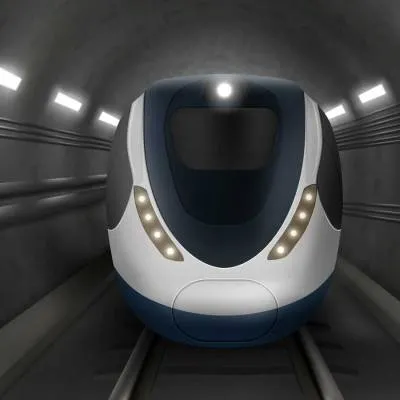
Construction work has begun on a new section of the Central Secretariat Metro station as part of the Central Vista corridor linking RK Ashram Marg and Indraprastha under an extension of the Magenta Line. The development will convert the station into a triple interchange with the Yellow and Violet Lines, with expansion activity initiated near Gate three of the existing complex after a formal groundbreaking and foundation ceremony presided over by the housing and urban affairs minister. The minister described the work as a significant facility for the capital and its administrative precincts and indicated that hundreds of thousands of passengers are expected to benefit from improved access.

The roughly ten km corridor will comprise nine underground stations, including Shivaji Stadium, Yuge Yugeen Bharat, Central Secretariat, Kartavya Bhawan, India Gate, War Memorial–High Court, Baroda House, Bharat Mandapam and Indraprastha. A Delhi Metro Rail Corporation official noted that the route will serve government employees and commuters accessing the Lutyens' Zone and surrounding administrative districts, enhancing daily mobility to key offices and attractions in central Delhi.

The section is one of three corridors approved under Phase?V(A), a project spanning 16.07 km that involves an estimated investment of around Rs 120 bn. The central government cleared the project in December and an assessment by the Centre indicated about 60,000 office?goers and 200,000 visitors would benefit daily. Funding is being provided by the Centre, the Delhi government and the Japan International Cooperation Agency, and DMRC has floated tenders for detailed design and planning of four proposed underground stations on the corridor.

Upon completion, the total length of the Magenta Line corridor will become 88.4 km, making it the longest in the DMRC network and running from Botanical Garden to Inderlok as a fully driverless corridor when operational. The line will include stations in Noida, south Delhi and central Delhi and will feature 21 interchange stations, surpassing the Pink Line which exceeds 71.5 km with 46 stations. Delhi Metro currently operates about 395 km with 289 stations and an average ridership of 6.5 million (mn) passenger journeys daily.

Construction work has begun on a new section of the Central Secretariat Metro station as part of the Central Vista corridor linking RK Ashram Marg and Indraprastha under an extension of the Magenta Line. The development will convert the station into a triple interchange with the Yellow and Violet Lines, with expansion activity initiated near Gate three of the existing complex after a formal groundbreaking and foundation ceremony presided over by the housing and urban affairs minister. The minister described the work as a significant facility for the capital and its administrative precincts and indicated that hundreds of thousands of passengers are expected to benefit from improved access. The roughly ten km corridor will comprise nine underground stations, including Shivaji Stadium, Yuge Yugeen Bharat, Central Secretariat, Kartavya Bhawan, India Gate, War Memorial–High Court, Baroda House, Bharat Mandapam and Indraprastha. A Delhi Metro Rail Corporation official noted that the route will serve government employees and commuters accessing the Lutyens' Zone and surrounding administrative districts, enhancing daily mobility to key offices and attractions in central Delhi. The section is one of three corridors approved under Phase?V(A), a project spanning 16.07 km that involves an estimated investment of around Rs 120 bn. The central government cleared the project in December and an assessment by the Centre indicated about 60,000 office?goers and 200,000 visitors would benefit daily. Funding is being provided by the Centre, the Delhi government and the Japan International Cooperation Agency, and DMRC has floated tenders for detailed design and planning of four proposed underground stations on the corridor. Upon completion, the total length of the Magenta Line corridor will become 88.4 km, making it the longest in the DMRC network and running from Botanical Garden to Inderlok as a fully driverless corridor when operational. The line will include stations in Noida, south Delhi and central Delhi and will feature 21 interchange stations, surpassing the Pink Line which exceeds 71.5 km with 46 stations. Delhi Metro currently operates about 395 km with 289 stations and an average ridership of 6.5 million (mn) passenger journeys daily.

Related Stories

Gold Stories
Next Story
Infrastructure Urban

KONE Opens India's First Digital Experience Centre in Pune

KONE, a global elevator and escalator manufacturer, has inaugurated its first Digital Experience Centre (DEC) in India, located in Pune. The facility aims to showcase how artificial intelligence (AI), connectivity and data-driven technologies can enhance customer experiences and improve building operations.The centre was inaugurated by Jussi Herlin, Executive Vice Chair, KONE Corporation; Philippe Delorme, President and CEO, KONE; and Nandan Nilekani, Co-founder and Chairman of the Board, Infosys.Designed as an interactive customer environment, the facility demonstrates digital solutions cover..

Next Story
Infrastructure Urban

CII GreenCo Launches Circularity Guidelines for Indian Industry

The Confederation of Indian Industry (CII) GreenCo Council has launched the CII GreenCo Circularity Guidelines – Pilot Version at the 17th CII GreenCo Waste & Resource Management Summit 2026 in Chennai. The initiative aims to strengthen resource efficiency, waste reduction and circular economy practices across Indian manufacturing and process industries.The guidelines introduce a structured framework with circularity indices covering raw materials, consumables, packaging and other resource inputs. These indicators will help industries assess existing practices, identify opportunities to ..

Next Story
Infrastructure Energy

Global Electronics Association Launches IPC-1783-CO2E Standard

The Global Electronics Association has introduced IPC-1783-CO2E, a new international standard aimed at improving consistency, transparency and comparability in product carbon footprint reporting across the electronics manufacturing industry.The standard, titled International Standard for Data Collection and Reporting of CO2 Equivalent (CO2e) Emissions for the Electronics Manufacturing Supply Chain, provides industry-specific guidance for collecting, estimating and reporting carbon emissions data.With increasing regulatory requirements and customer expectations, electronics manufacturers face c..

Advertisement

Subscribe to Our Newsletter

Get daily newsletters around different themes from Construction world.

STAY CONNECTED

Advertisement

SPECIAL OFFER
QR Code