





+
DAC Clears Rs 3.6 Trillion For Defence Acquisitions
DEFENSE

DAC Clears Rs 3.6 Trillion For Defence Acquisitions

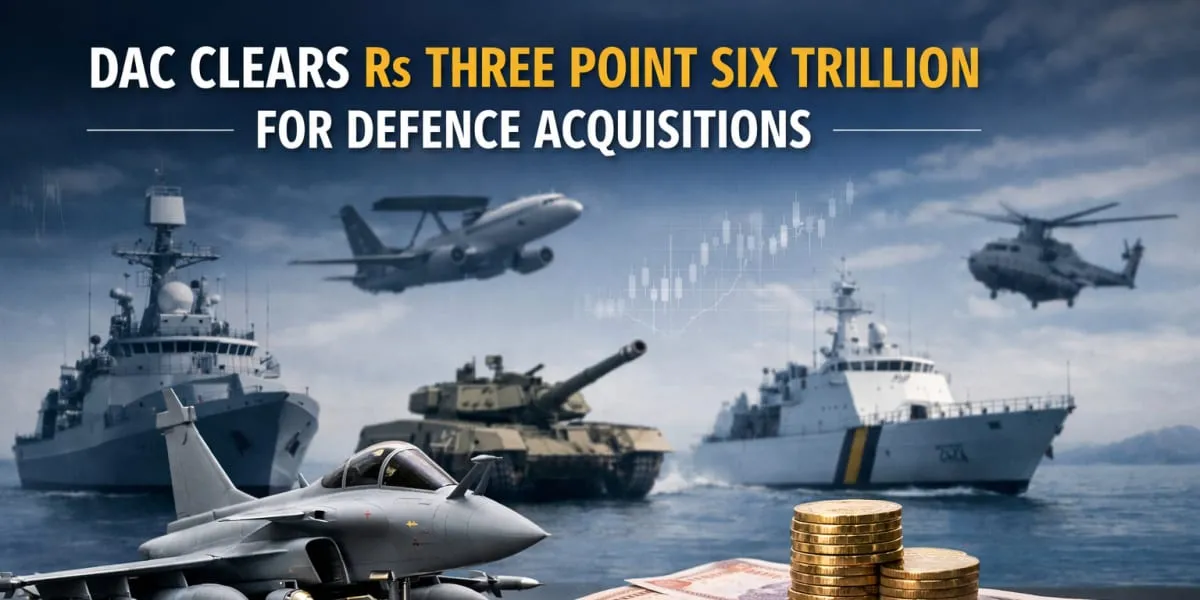
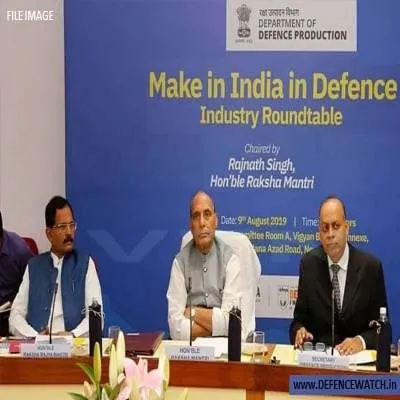
The Defence Acquisition Council chaired by Raksha Mantri Rajnath Singh accorded Acceptance of Necessity for several service proposals valued at Rs three point six trillion (tn) on 12 February 2026. The approvals covered acquisitions for the Indian Air Force (IAF), the Indian Army, the Indian Navy and the Indian Coast Guard (ICG).

For the Indian Air Force, acceptance of necessity authorised procurement of Multi Role Fighter Aircraft (MRFA) Rafale, combat missiles and an air-ship based high altitude pseudo satellite (AS-HAPS). The MRFA will enhance capability to undertake air dominance roles across the spectrum of conflict and will significantly boost deterrence through long range offensive strikes, with the majority of aircraft to be manufactured in India. The combat missiles will strengthen stand-off ground attack capability by providing deep strike power and high accuracy and the AS-HAPS will be utilised for persistent intelligence, surveillance and reconnaissance, electronic intelligence, telecommunication and remote sensing for military purposes.

For the Indian Army, approval was granted for procurement of Anti-Tank Mines Vibhav and major overhauls of armoured recovery vehicles, T-72 tanks and BMP-II infantry combat vehicles. The Vibhav mines will be laid as an anti-tank obstacle to delay the advance of enemy mechanised forces and the overhauls will extend service life to ensure readiness and operational effectiveness. These measures form part of maintenance and modernisation efforts aimed at sustaining force preparedness.

For the Indian Navy, acceptance of necessity was cleared for a four megawatt (MW) marine gas turbine electric power generator under the Make-I category and for P8I long range maritime reconnaissance aircraft. The induction of the generator will reduce dependency on foreign manufacturers and promote self-reliance in naval power generation while the P8I will enhance long range anti-submarine warfare, maritime surveillance and maritime strike capability.

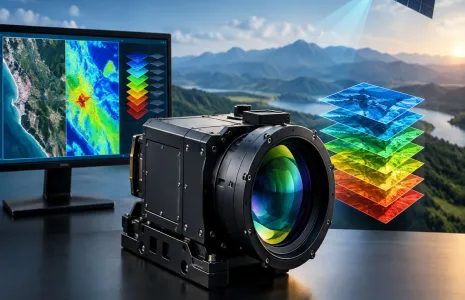
For the Indian Coast Guard, approval was accorded for procurement of an electro-optical/infra-red system for Dornier aircraft to enhance maritime surveillance efficacy. The decisions signal a coordinated push to bolster combat readiness across services while supporting indigenous manufacture to strengthen the domestic defence industrial base.

The Defence Acquisition Council chaired by Raksha Mantri Rajnath Singh accorded Acceptance of Necessity for several service proposals valued at Rs three point six trillion (tn) on 12 February 2026. The approvals covered acquisitions for the Indian Air Force (IAF), the Indian Army, the Indian Navy and the Indian Coast Guard (ICG). For the Indian Air Force, acceptance of necessity authorised procurement of Multi Role Fighter Aircraft (MRFA) Rafale, combat missiles and an air-ship based high altitude pseudo satellite (AS-HAPS). The MRFA will enhance capability to undertake air dominance roles across the spectrum of conflict and will significantly boost deterrence through long range offensive strikes, with the majority of aircraft to be manufactured in India. The combat missiles will strengthen stand-off ground attack capability by providing deep strike power and high accuracy and the AS-HAPS will be utilised for persistent intelligence, surveillance and reconnaissance, electronic intelligence, telecommunication and remote sensing for military purposes. For the Indian Army, approval was granted for procurement of Anti-Tank Mines Vibhav and major overhauls of armoured recovery vehicles, T-72 tanks and BMP-II infantry combat vehicles. The Vibhav mines will be laid as an anti-tank obstacle to delay the advance of enemy mechanised forces and the overhauls will extend service life to ensure readiness and operational effectiveness. These measures form part of maintenance and modernisation efforts aimed at sustaining force preparedness. For the Indian Navy, acceptance of necessity was cleared for a four megawatt (MW) marine gas turbine electric power generator under the Make-I category and for P8I long range maritime reconnaissance aircraft. The induction of the generator will reduce dependency on foreign manufacturers and promote self-reliance in naval power generation while the P8I will enhance long range anti-submarine warfare, maritime surveillance and maritime strike capability. For the Indian Coast Guard, approval was accorded for procurement of an electro-optical/infra-red system for Dornier aircraft to enhance maritime surveillance efficacy. The decisions signal a coordinated push to bolster combat readiness across services while supporting indigenous manufacture to strengthen the domestic defence industrial base.

Related Stories

Next Story
Infrastructure Urban

KONE Opens India's First Digital Experience Centre in Pune

KONE, a global elevator and escalator manufacturer, has inaugurated its first Digital Experience Centre (DEC) in India, located in Pune. The facility aims to showcase how artificial intelligence (AI), connectivity and data-driven technologies can enhance customer experiences and improve building operations.The centre was inaugurated by Jussi Herlin, Executive Vice Chair, KONE Corporation; Philippe Delorme, President and CEO, KONE; and Nandan Nilekani, Co-founder and Chairman of the Board, Infosys.Designed as an interactive customer environment, the facility demonstrates digital solutions cover..

Next Story
Infrastructure Urban

CII GreenCo Launches Circularity Guidelines for Indian Industry

The Confederation of Indian Industry (CII) GreenCo Council has launched the CII GreenCo Circularity Guidelines – Pilot Version at the 17th CII GreenCo Waste & Resource Management Summit 2026 in Chennai. The initiative aims to strengthen resource efficiency, waste reduction and circular economy practices across Indian manufacturing and process industries.The guidelines introduce a structured framework with circularity indices covering raw materials, consumables, packaging and other resource inputs. These indicators will help industries assess existing practices, identify opportunities to ..

Next Story
Infrastructure Energy

Global Electronics Association Launches IPC-1783-CO2E Standard

The Global Electronics Association has introduced IPC-1783-CO2E, a new international standard aimed at improving consistency, transparency and comparability in product carbon footprint reporting across the electronics manufacturing industry.The standard, titled International Standard for Data Collection and Reporting of CO2 Equivalent (CO2e) Emissions for the Electronics Manufacturing Supply Chain, provides industry-specific guidance for collecting, estimating and reporting carbon emissions data.With increasing regulatory requirements and customer expectations, electronics manufacturers face c..

Advertisement

Subscribe to Our Newsletter

Get daily newsletters around different themes from Construction world.

STAY CONNECTED

Advertisement

SPECIAL OFFER
QR Code









