Adani Project to Redevelop Dharavi and Unlock Major Value
SMART CITIES

Adani Project to Redevelop Dharavi and Unlock Major Value

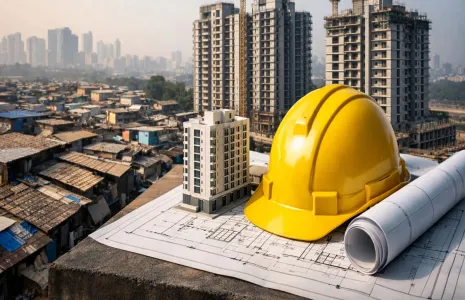
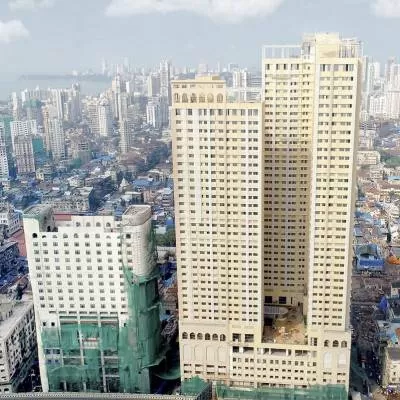
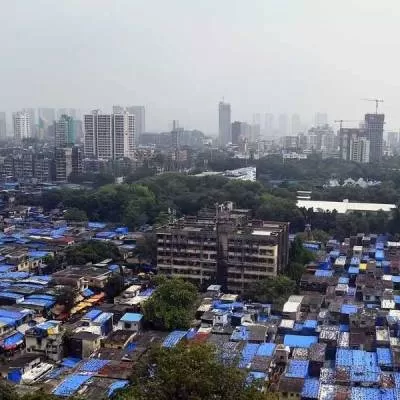
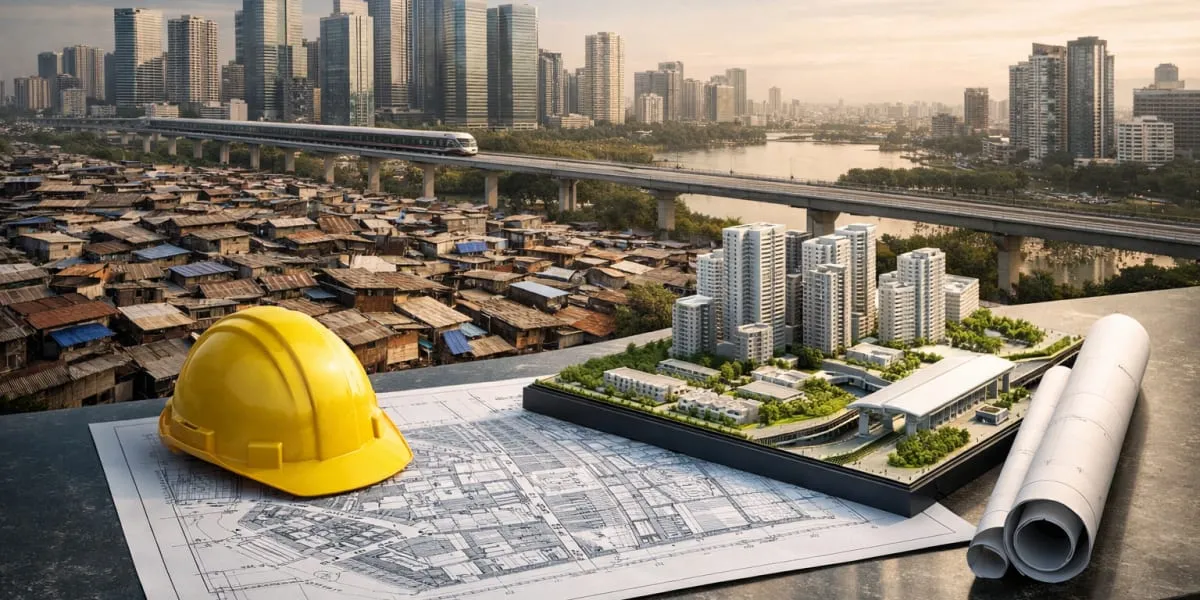
The Adani-led Dharavi redevelopment is presented as one of Asia's largest urban renewal schemes and aims to convert the settlement into a smart city precinct and transport hub while rehabilitating 0.125 million (mn) housing units for more than 1.0 mn residents, according to an HSBC report summarising a panel at the Adani Annual Conference 2026. The report frames the initiative as combining large-scale housing provision with planned public amenities and commercial inventory to raise living standards and unlock formal homeownership.

HSBC highlights a substantial commercial opportunity with about 130 mn square feet of free-sale real estate located roughly five kilometres from Bandra Kurla Complex, Mumbai's central business district. The project is structured as a public-private partnership in which the Government of Maharashtra holds a 20 per cent stake and the Adani Group 80 per cent, and it spans about 225 mn square feet in total with roughly 95 mn square feet earmarked for rehabilitation and 130 mn square feet for commercial sale.

The plan prioritises rehousing and social infrastructure, with the developer proposing to deliver housing and allied facilities across seven to eight years while starting construction of around 30,000 units in the next financial year and targeting an initial handover on Indian Railways land in December 2026. Beyond homes, the programme includes schools, healthcare facilities, sports centres, green spaces and pedestrian walkways intended to create a modern urban ecosystem for relocating residents and formalising livelihoods tied to local industries.

A central element is major transport infrastructure intended to increase land value and connectivity, including a multi-modal transport hub with three metro stations, bus depots and last-mile improvements. The redevelopment also plans environmental interventions such as cleaning the Mithi River, redeveloping the Deonar dumping ground, a six-kilometre mangrove creek and a Marine Drive-style promenade. HSBC argues that the mix of rehabilitation obligations, free-sale inventory and enhanced connectivity will shape financing structures and investor demand but notes delivery risk, social obligations and remediation costs.

The Adani-led Dharavi redevelopment is presented as one of Asia's largest urban renewal schemes and aims to convert the settlement into a smart city precinct and transport hub while rehabilitating 0.125 million (mn) housing units for more than 1.0 mn residents, according to an HSBC report summarising a panel at the Adani Annual Conference 2026. The report frames the initiative as combining large-scale housing provision with planned public amenities and commercial inventory to raise living standards and unlock formal homeownership. HSBC highlights a substantial commercial opportunity with about 130 mn square feet of free-sale real estate located roughly five kilometres from Bandra Kurla Complex, Mumbai's central business district. The project is structured as a public-private partnership in which the Government of Maharashtra holds a 20 per cent stake and the Adani Group 80 per cent, and it spans about 225 mn square feet in total with roughly 95 mn square feet earmarked for rehabilitation and 130 mn square feet for commercial sale. The plan prioritises rehousing and social infrastructure, with the developer proposing to deliver housing and allied facilities across seven to eight years while starting construction of around 30,000 units in the next financial year and targeting an initial handover on Indian Railways land in December 2026. Beyond homes, the programme includes schools, healthcare facilities, sports centres, green spaces and pedestrian walkways intended to create a modern urban ecosystem for relocating residents and formalising livelihoods tied to local industries. A central element is major transport infrastructure intended to increase land value and connectivity, including a multi-modal transport hub with three metro stations, bus depots and last-mile improvements. The redevelopment also plans environmental interventions such as cleaning the Mithi River, redeveloping the Deonar dumping ground, a six-kilometre mangrove creek and a Marine Drive-style promenade. HSBC argues that the mix of rehabilitation obligations, free-sale inventory and enhanced connectivity will shape financing structures and investor demand but notes delivery risk, social obligations and remediation costs.

Next Story
Infrastructure Transport

Surya Roshni delivers customised lighting for NCRTC RRTS stations

Surya Roshni has supplied customised indoor lighting solutions for 18 elevated stations on the National Capital Region Transport Corporation's (NCRTC) Rapid Rail Transit System (RRTS), strengthening its presence in India's infrastructure lighting segment.The project involved the design and deployment of lighting systems for platforms, concourses, foot overbridges (FOBs) and back-of-house (BOH) areas. According to the company, the luminaires were developed specifically to meet NCRTC's design, operational and performance requirements rather than using standard products.Surya introduced two custo..

Next Story
Real Estate

Hilton debuts Tapestry Collection brand in Vietnam

Hilton has opened NHAAN Resort & Spa Hoi An, Tapestry Collection by Hilton, marking the debut of the Tapestry Collection brand in Vietnam and expanding its lifestyle hospitality portfolio in Southeast Asia.Located along the Co Co River in Cam Thanh village, the 174-key resort provides access to Hoi An Ancient Town, Cua Dai Beach and the Cam Thanh Nipa Forest. The property has been designed by Vietnamese architect Vo Trong Nghia, incorporating biophilic architecture, locally sourced materials and riverfront landscapes.The resort offers a mix of guest rooms and suites, including family-frien..

Next Story
Building Material

Electrent expands lithium energy storage system portfolio

Electrent Energy has expanded its lithium-based energy storage portfolio with the launch of the ESS 850 and ESS 1050, targeting compact and maintenance-free power backup solutions for Indian homes.The new systems integrate a Home UPS and a LiFePO4 lithium battery into a single unit, extending the company's product range following the launch of its ESS 1350 and ESS 2500 models.Designed for apartments and smaller homes, the ESS 850 provides up to 1 hour 15 minutes of backup, while the ESS 1050 offers up to 1 hour 45 minutes on a typical 400 W household load. The systems can power essential appli..

Advertisement

Subscribe to Our Newsletter

Get daily newsletters around different themes from Construction world.

STAY CONNECTED

Advertisement

Advertisement

Advertisement