

Chennai Awards Contract for 600 New Electric Buses
SMART CITIES

Chennai Awards Contract for 600 New Electric Buses

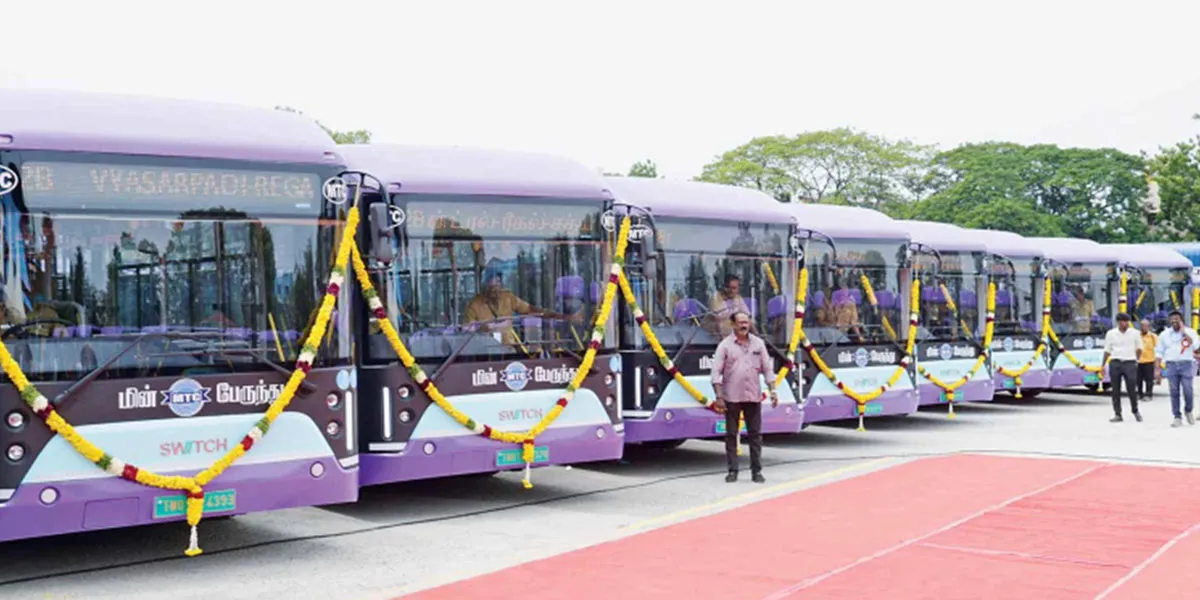
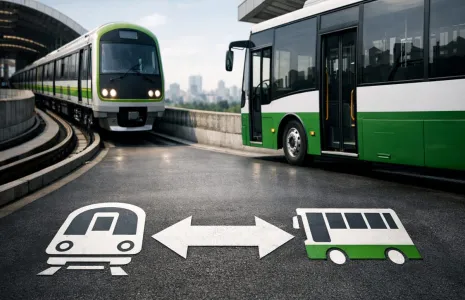
The Metropolitan Transport Corporation (Chennai) Ltd (MTC) has taken a major step towards expanding its pollution-free public transport network by awarding contracts for the procurement, operation and maintenance of 600 low-floor electric buses, including 400 air-conditioned units. The contracts have been issued to OHM Global Mobility Private Limited and Traveltime Mobility India Pvt Ltd.

The project falls under Phase II of the World Bank-supported Chennai City Partnership Programme. OHM will supply and operate 400 e-buses, including 280 AC models, while Traveltime Mobility will provide 200 buses, of which 120 will be air-conditioned. Both agencies will also develop the required electric and civil infrastructure under the Gross Cost Contract (GCC) model.

Four firms submitted bids, but only OHM, Traveltime and EVEY Trans Private Limited cleared the technical stage. In the financial bidding, OHM became the lowest bidder with a quote of Rs 83.23 per km, followed by EVEY Trans at Rs 85.75 and Traveltime at Rs 87.10. After negotiations, MTC revised the rates to Rs 77.17 per km for non-AC buses and Rs 80.86 for AC buses.

The plan includes installing charging stations and upgrading depots to handle the growing electric fleet. Each bus is expected to operate 6,500 km per month for 12 years under the GCC model, with operators paid based on distance covered.

Under Phase I of the programme, OHM was awarded a contract to supply 625 e-buses, including 225 AC buses, at Rs 77.16 per km for non-AC and Rs 80.86 for AC models. MTC currently operates 267 electric low-floor buses, including 57 AC buses, from the Vyasarpadi and Perumbakkam depots, offering accessible and environmentally sustainable transport options.

To support the expanded fleet, MTC has issued tenders to upgrade six existing depots — Alandur, Central II, Avadi, Padiyanallur, Perambur and Ayyappanthangal — to accommodate 600 electric buses. Planned works include yard concreting, RCC flooring, new roofing for maintenance sheds, additional inspection pits, toilets and renovation of administrative buildings.

New depots will also be established at Tiruvallur, Varadharajapuram on the Outer Ring Road, Thaiyur near Thiruporur, the Institute of Road Transport campus at Tharamani, Mamandur and Attanthangal near Padiyanallur. According to an MTC official, these facilities will allow diesel buses to be shifted out of existing depots, which will be converted for electric operations.

The Metropolitan Transport Corporation (Chennai) Ltd (MTC) has taken a major step towards expanding its pollution-free public transport network by awarding contracts for the procurement, operation and maintenance of 600 low-floor electric buses, including 400 air-conditioned units. The contracts have been issued to OHM Global Mobility Private Limited and Traveltime Mobility India Pvt Ltd. The project falls under Phase II of the World Bank-supported Chennai City Partnership Programme. OHM will supply and operate 400 e-buses, including 280 AC models, while Traveltime Mobility will provide 200 buses, of which 120 will be air-conditioned. Both agencies will also develop the required electric and civil infrastructure under the Gross Cost Contract (GCC) model. Four firms submitted bids, but only OHM, Traveltime and EVEY Trans Private Limited cleared the technical stage. In the financial bidding, OHM became the lowest bidder with a quote of Rs 83.23 per km, followed by EVEY Trans at Rs 85.75 and Traveltime at Rs 87.10. After negotiations, MTC revised the rates to Rs 77.17 per km for non-AC buses and Rs 80.86 for AC buses. The plan includes installing charging stations and upgrading depots to handle the growing electric fleet. Each bus is expected to operate 6,500 km per month for 12 years under the GCC model, with operators paid based on distance covered. Under Phase I of the programme, OHM was awarded a contract to supply 625 e-buses, including 225 AC buses, at Rs 77.16 per km for non-AC and Rs 80.86 for AC models. MTC currently operates 267 electric low-floor buses, including 57 AC buses, from the Vyasarpadi and Perumbakkam depots, offering accessible and environmentally sustainable transport options. To support the expanded fleet, MTC has issued tenders to upgrade six existing depots — Alandur, Central II, Avadi, Padiyanallur, Perambur and Ayyappanthangal — to accommodate 600 electric buses. Planned works include yard concreting, RCC flooring, new roofing for maintenance sheds, additional inspection pits, toilets and renovation of administrative buildings. New depots will also be established at Tiruvallur, Varadharajapuram on the Outer Ring Road, Thaiyur near Thiruporur, the Institute of Road Transport campus at Tharamani, Mamandur and Attanthangal near Padiyanallur. According to an MTC official, these facilities will allow diesel buses to be shifted out of existing depots, which will be converted for electric operations.

Next Story
Real Estate

A Paradigm Shift

The Indian real-estate and construction sector, which employs a significant number of organised and unorganised workers in the country, has embarked on a paradigm shift in its regulatory framework from an employment law perspective. With the four Labour Codes – the Code on Wages, 2019 (Wage Code); the Industrial Relations Code, 2020 (IR Code); the Code on Social Security, 2020 (SS Code) and the Occupational Safety, Health and Working Conditions Code, 2020 (OSH Code) – coming into effect in India from November 21, 2025, the industry is shifting away from a fragmented, contractor- driven com..

Next Story
Technology

We offer end-to-end traceability at scale

mjunction has evolved from an e-auction pioneer into a multi-vertical digital commerce platform with deep expertise in complex steel and coal supply chains. Its end-to-end, AI-led architecture focuses on price discovery, traceability, compliance and scalability, enabling transparent procurement, efficient logistics and data-driven decision-making across geographies. Vinaya Varma, MD, shares more about the company in conversation with CW.From a technology standpoint, what are the core USPs of mjunction today that differentiate it in steel and coal supply chains?mjunction has evolved b..

Next Story
Infrastructure Urban

Henkel, Rotary Recycle PoP Ganesha Idols Under Project HARMONY

Henkel India, in partnership with the Rotary Club of Navi Mumbai – Joy of Giving and with support from the Navi Mumbai Municipal Corporation (NMMC), has advanced circular sustainability through Project HARMONY by recycling Plaster of Paris (PoP) Ganesha idols into community learning assets. The initiative highlights an integrated approach to environmental restoration and social impact.As part of the project, materials collected after Ganesh Visarjan 2025 at Nerul were responsibly diverted from land and water bodies and processed at an authorised recycling facility, with on-ground execution s..

Advertisement

Subscribe to Our Newsletter

Get daily newsletters around different themes from Construction world.

STAY CONNECTED

Advertisement

Advertisement

Advertisement

Advertisement

Open In App