Network Planning Group Reviews Infrastructure Projects in New Delhi
WAREHOUSING & LOGISTICS

Network Planning Group Reviews Infrastructure Projects in New Delhi

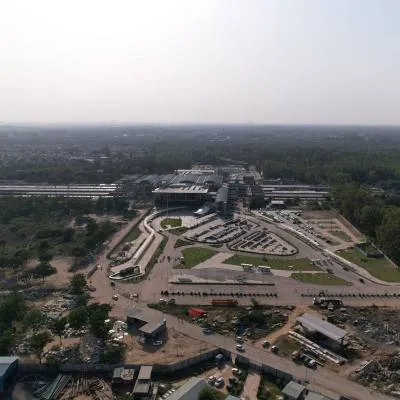
The Department for Promotion of Industry and Internal Trade convened the 110th meeting of the Network Planning Group in New Delhi to evaluate proposed infrastructure projects and their alignment with the Prime Minister's GatiShakti National Master Plan. The agenda prioritised enhancements to multimodal connectivity and logistics efficiency across regional transport networks with a focus on last?mile connectivity to economic and social nodes. The meeting brought together central and state officials, technical experts and stakeholders to review project designs and implementation roadmaps.

Delegates assessed two rail, metro and highway projects for conformity with integrated multimodal infrastructure principles and for their potential to improve access to key economic areas. Each project was reviewed for design integration, interchange facilities and linkages that facilitate smoother transfers between transport modes and reduce transit times for passengers and freight. Evaluation considered environmental clearances, land acquisition plans and integration with existing urban mobility schemes to ensure coherent delivery.

The Ministry of Commerce and Industry indicated that these initiatives are expected to boost logistics efficiency, reduce travel times and deliver significant socio?economic benefits to the catchment areas of the projects. Officials noted potential reductions in operational bottlenecks and improvements in supply chain reliability that could support regional economic activity and better connect manufacturing and service hubs. Analyses included projected freight volumes and passenger demand to assess long term operational viability and return on investment.

Following the reviews, the group recommended further technical studies and coordination with state agencies to refine project scopes, timelines and funding frameworks. The adoption of integrated planning approaches under the GatiShakti framework was presented as central to future approvals and to ensuring that investments translated into measurable gains in connectivity and economic inclusion. Stakeholders were urged to expedite requisite clearances and to prioritise multimodal nodes that link production centres with markets and ports.

The Department for Promotion of Industry and Internal Trade convened the 110th meeting of the Network Planning Group in New Delhi to evaluate proposed infrastructure projects and their alignment with the Prime Minister's GatiShakti National Master Plan. The agenda prioritised enhancements to multimodal connectivity and logistics efficiency across regional transport networks with a focus on last?mile connectivity to economic and social nodes. The meeting brought together central and state officials, technical experts and stakeholders to review project designs and implementation roadmaps. Delegates assessed two rail, metro and highway projects for conformity with integrated multimodal infrastructure principles and for their potential to improve access to key economic areas. Each project was reviewed for design integration, interchange facilities and linkages that facilitate smoother transfers between transport modes and reduce transit times for passengers and freight. Evaluation considered environmental clearances, land acquisition plans and integration with existing urban mobility schemes to ensure coherent delivery. The Ministry of Commerce and Industry indicated that these initiatives are expected to boost logistics efficiency, reduce travel times and deliver significant socio?economic benefits to the catchment areas of the projects. Officials noted potential reductions in operational bottlenecks and improvements in supply chain reliability that could support regional economic activity and better connect manufacturing and service hubs. Analyses included projected freight volumes and passenger demand to assess long term operational viability and return on investment. Following the reviews, the group recommended further technical studies and coordination with state agencies to refine project scopes, timelines and funding frameworks. The adoption of integrated planning approaches under the GatiShakti framework was presented as central to future approvals and to ensuring that investments translated into measurable gains in connectivity and economic inclusion. Stakeholders were urged to expedite requisite clearances and to prioritise multimodal nodes that link production centres with markets and ports.

Next Story
Infrastructure Transport

MMRDA advances 250 m on Orange Gate–Marine Drive tunnel

The Mumbai Metropolitan Region Development Authority (MMRDA) has completed 250 m of underground tunnelling for the Orange Gate–Marine Drive Urban Road Tunnel using India’s largest slurry shield tunnel boring machine (TBM) deployed for an urban road project.The project involves twin tunnels extending over 7 km beneath critical transport corridors, including Central Railway, Western Railway and Metro Line 3. The work requires high-precision engineering to navigate densely developed urban infrastructure.Once completed, the tunnel is expected to reduce travel time between Orange Gate and Marin..

Next Story
Infrastructure Urban

Hindustan Zinc Pays Rs 188.46 Billion in FY26

Hindustan Zinc contributed Rs 188.46 billion to the public exchequer in FY 2025-26, according to its 9th Tax Transparency Report. The contribution, equivalent to 46 per cent of the company’s revenue, included direct and indirect taxes, government royalties, dividends to the Government of India, withholding taxes and other statutory levies.The company’s five-year cumulative contribution to the exchequer stood at Rs 915.72 billion. In FY26, Hindustan Zinc reported revenue of Rs 408.44 billion, EBITDA of Rs 221.62 billion and profit after tax of Rs 138.32 billion. It also achieved its highest..

Next Story
Infrastructure Urban

World of Concrete India 2026 Opens in Mumbai

Informa Markets in India will host the 12th edition of World of Concrete India 2026 from 3–5 June 2026 at the Bombay Exhibition Centre, Mumbai. The specialised B2B exhibition will bring together manufacturers, suppliers, contractors, developers, architects, consultants, infrastructure companies, project leaders and government stakeholders.The event is expected to feature over 350 brands and more than 18,000 trade professionals. It will cover concrete and cement, dry mortar, precast technologies, formwork, construction chemicals, industrial and commercial flooring, scaffolding, safety solutio..

Advertisement

Subscribe to Our Newsletter

Get daily newsletters around different themes from Construction world.

STAY CONNECTED

Advertisement

Advertisement

Advertisement