India gets its first HAM project in sewerage sector
WATER & WASTE

India gets its first HAM project in sewerage sector

Uttarakhand Chief Minister and Union Jal Shakti Minister dedicate Sarai Project in the presence of King and Queen of Sweden.

34 sewerage projects sanctioned at a cost of Rs 11.44 billion for creation/rehabilitation of 165.50 MLD in Uttarakhand, taking care of sewerage treatment requirements till 2035.

The Sarai 14-MLD sewage treatment plant (STP) is the first STP to be completed under the Hybrid Annuity (HAM)-based public private partnership (PPP) model, involving a cost of Rs 414 million, and the plant has been completed before its scheduled timeline.

The 14-MLD STP at Sarai in Haridwar was recently inaugurated by their Majesties, King Carl XVI Gustaf and Queen Silvia of Sweden; Trivendra Singh Rawat, Chief Minister of Uttarakhand; Gajendra Singh Shekhawat, Union Minister of Jal Shakti; Dr Maja Fjaestad, Secretary of State, Sweden; Klas Molin, Ambassador of Sweden to India; Rajiv Ranjan Mishra, Director General, NMCG; and Monika KapilMohta, Ambassador of India to Sweden.

About the project
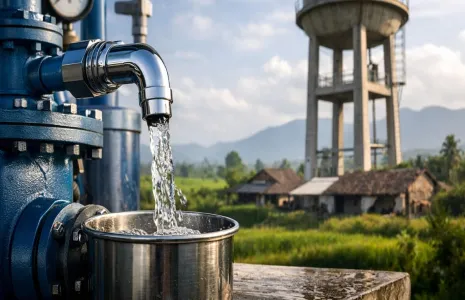
This plant is based on advanced aerobic biological process, Sequential Batch Reactor (SBR) process, capable of removing the nutrients during treatment and is a 100 per cent eco-friendly project. The plant will meet the highest standards of output parameters.

Another unique feature of this HAM project is that after its commissioning, this plant will also be maintained and operated for a period of 15 years by the same developer for efficient performance and for meeting output parameters. The vision of the National Mission for Clean Ganga (NMCG) is long term, and hence, the capability being created would fully take care of the requirements up to 2035.

Initiatives undertaken
Municipal sewage, being the main source of pollution in the Ganga, is being tackled through 150 sewerage projects at a cost of more than Rs 230 billion (more than US$ 3 billion), in addition to various interventions for checking industrial and other sources of pollution in the Ganga basin. Namami Gange interventions extend to urban as well as rural areas covering diverse sectors.

In order to improve the quality of water in river Ganga in the state of Uttarakhand, 34 projects of sewerage infrastructure works have been taken up at a cost of approximately Rs 11.44 billion for creating treatment a capacity of 165.50 MLD, and for laying sewerage network of 152 km. Out of these 34 projects, 23 have been completed and the remaining projects are at different stages of execution and implementation. Once all these projects are commissioned, the entire sewage capacity of Uttarakhand would have been met, and there would be substantial improvement in the quality of water of the river Ganga in Uttarakhand.

In addition, projects have also been taken up in Uttarakhand for several Ghats, river front development (RFD), afforestation, trash skimmers, etc, making the value of total interventions in Namami Gange in the state exceed Rs 1.50 billion.

The visit of their Majesties of the Republic of Sweden to Uttarakhand was triggered when His Majesty visited the Namami Gange Pavillion at the World Water Week 2019, Stockholm. The King showed keen interest in the way NMCG is carrying out its mission by employing technological interventions and public participation. Seeing his interest, Gajendra Singh Shekhawat, Minister of Jal Shakti, invited him to visit river Ganga and also see the Namami Gange interventions.

Uttarakhand Chief Minister and Union Jal Shakti Minister dedicate Sarai Project in the presence of King and Queen of Sweden. 34 sewerage projects sanctioned at a cost of Rs 11.44 billion for creation/rehabilitation of 165.50 MLD in Uttarakhand, taking care of sewerage treatment requirements till 2035. The Sarai 14-MLD sewage treatment plant (STP) is the first STP to be completed under the Hybrid Annuity (HAM)-based public private partnership (PPP) model, involving a cost of Rs 414 million, and the plant has been completed before its scheduled timeline. The 14-MLD STP at Sarai in Haridwar was recently inaugurated by their Majesties, King Carl XVI Gustaf and Queen Silvia of Sweden; Trivendra Singh Rawat, Chief Minister of Uttarakhand; Gajendra Singh Shekhawat, Union Minister of Jal Shakti; Dr Maja Fjaestad, Secretary of State, Sweden; Klas Molin, Ambassador of Sweden to India; Rajiv Ranjan Mishra, Director General, NMCG; and Monika KapilMohta, Ambassador of India to Sweden. About the project This plant is based on advanced aerobic biological process, Sequential Batch Reactor (SBR) process, capable of removing the nutrients during treatment and is a 100 per cent eco-friendly project. The plant will meet the highest standards of output parameters. Another unique feature of this HAM project is that after its commissioning, this plant will also be maintained and operated for a period of 15 years by the same developer for efficient performance and for meeting output parameters. The vision of the National Mission for Clean Ganga (NMCG) is long term, and hence, the capability being created would fully take care of the requirements up to 2035. Initiatives undertaken Municipal sewage, being the main source of pollution in the Ganga, is being tackled through 150 sewerage projects at a cost of more than Rs 230 billion (more than US$ 3 billion), in addition to various interventions for checking industrial and other sources of pollution in the Ganga basin. Namami Gange interventions extend to urban as well as rural areas covering diverse sectors. In order to improve the quality of water in river Ganga in the state of Uttarakhand, 34 projects of sewerage infrastructure works have been taken up at a cost of approximately Rs 11.44 billion for creating treatment a capacity of 165.50 MLD, and for laying sewerage network of 152 km. Out of these 34 projects, 23 have been completed and the remaining projects are at different stages of execution and implementation. Once all these projects are commissioned, the entire sewage capacity of Uttarakhand would have been met, and there would be substantial improvement in the quality of water of the river Ganga in Uttarakhand. In addition, projects have also been taken up in Uttarakhand for several Ghats, river front development (RFD), afforestation, trash skimmers, etc, making the value of total interventions in Namami Gange in the state exceed Rs 1.50 billion. The visit of their Majesties of the Republic of Sweden to Uttarakhand was triggered when His Majesty visited the Namami Gange Pavillion at the World Water Week 2019, Stockholm. The King showed keen interest in the way NMCG is carrying out its mission by employing technological interventions and public participation. Seeing his interest, Gajendra Singh Shekhawat, Minister of Jal Shakti, invited him to visit river Ganga and also see the Namami Gange interventions.

Next Story
Technology

AI-Enabled Workflows Lift Profitability and Productivity

Organisations modernising frontline workflows with artificial intelligence, automation and real-time data are reporting stronger financial performance, higher productivity and improved employee engagement, according to a global study by Zebra Technologies and Oxford Economics.The research covered 1,000 senior leaders across retail, manufacturing, transportation and logistics in the US, Mexico, the UK, Germany, India, Japan, Australia and New Zealand.In transportation and logistics, 54 per cent of companies that improved picking and packing operations reported faster operational performance, wh..

Next Story
Real Estate

India Leads Global AI Readiness but Implementation Lags

Indian companies lead global averages across all eight artificial intelligence readiness indicators tracked by JLL, but only 19 per cent have started making changes to their workplaces, according to the JLL 2026 Future of Work Survey.The study found that 77 per cent of Indian business leaders expect AI to change their office requirements, creating a 58-percentage-point gap between awareness and implementation. The survey covered more than 2,200 CEOs, CFOs and real estate leaders across 21 countries during the first quarter of 2026.Despite concerns over automation, 58 per cent of Indian leaders..

Next Story
Equipment

Three WOLFF Cranes Build Riyadh Cable-Stayed Bridges

Three WOLFF 180 B luffing jib cranes are supporting the construction of two cable-stayed bridges alongside the existing Wadi Laban Bridge in Riyadh, Saudi Arabia. The project is being developed for the Royal Commission for Riyadh City and executed by the ICRC joint venture comprising IC Ictas and Al Rashid Trading & Contracting Company.The cranes are handling lifting operations including formwork, reinforcement, concrete placement, work platforms, surveying equipment and other construction materials. Each crane is fitted with a 40 m jib, reaches a hook height of 157 m and offers a maximum ..

Advertisement

Subscribe to Our Newsletter

Get daily newsletters around different themes from Construction world.

STAY CONNECTED

Advertisement

Advertisement

Advertisement