Central Monitoring Committee Reviews River Rejuvenation Progress
WATER & WASTE

Central Monitoring Committee Reviews River Rejuvenation Progress

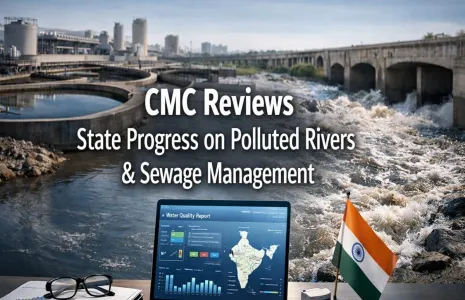
The 21st meeting (Part-II) of the Central Monitoring Committee on river rejuvenation was held under the chairpersonship of Shri V. L. Kantha Rao, Secretary of the Department of Water Resources, River Development and Ganga Rejuvenation (DoWR, RD & GR) in the Ministry of Jal Shakti. The meeting brought together senior officials from the Central Pollution Control Board (CPCB), the National River Conservation Directorate (NRCD), the National Mission for Clean Ganga (NMCG) and representatives of concerned state governments and state pollution control boards. The attendance underscored a coordinated approach across central and state agencies to address pollution in river systems.

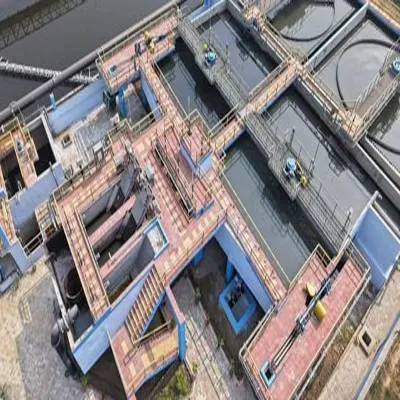
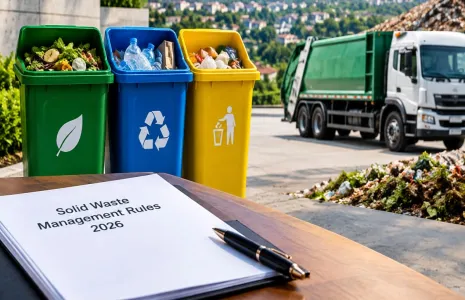
The committee reviewed the status of implementation of action plans for polluted river stretches, focusing on progress in construction and commissioning of sewage treatment plants (STPs) and common effluent treatment plants (CETPs), the functioning and compliance status of existing sewage treatment infrastructure and interventions in solid waste management. Environmental flows and floodplain regulation were examined alongside the submission of action plans for management of pollution in coastal areas.

The chair emphasised the need to bridge the gap between sewage generation and treatment by ensuring optimal utilisation and compliance of existing sewage treatment plants and by expediting ongoing projects so that improvements in river water quality are sustained. The secretary urged states to enhance reuse of treated wastewater and to adopt the Reuse of Treated Water Policy where it has not yet been adopted, to strengthen floodplain zoning and to improve monitoring mechanisms. The committee also called for timely submission of monthly progress reports (MPRs).

The committee undertook a detailed review of state level progress in Tamil Nadu, Karnataka, Sikkim, Manipur, Meghalaya, Mizoram, Nagaland, Tripura, Telangana, Andhra Pradesh, Dadra and Nagar Haveli and Daman and Diu, Maharashtra, Goa and Himachal Pradesh and noted areas requiring follow up. River Rejuvenation Committees (RRCs) were reviewed for their functioning. Further monitoring was planned.

The 21st meeting (Part-II) of the Central Monitoring Committee on river rejuvenation was held under the chairpersonship of Shri V. L. Kantha Rao, Secretary of the Department of Water Resources, River Development and Ganga Rejuvenation (DoWR, RD & GR) in the Ministry of Jal Shakti. The meeting brought together senior officials from the Central Pollution Control Board (CPCB), the National River Conservation Directorate (NRCD), the National Mission for Clean Ganga (NMCG) and representatives of concerned state governments and state pollution control boards. The attendance underscored a coordinated approach across central and state agencies to address pollution in river systems. The committee reviewed the status of implementation of action plans for polluted river stretches, focusing on progress in construction and commissioning of sewage treatment plants (STPs) and common effluent treatment plants (CETPs), the functioning and compliance status of existing sewage treatment infrastructure and interventions in solid waste management. Environmental flows and floodplain regulation were examined alongside the submission of action plans for management of pollution in coastal areas. The chair emphasised the need to bridge the gap between sewage generation and treatment by ensuring optimal utilisation and compliance of existing sewage treatment plants and by expediting ongoing projects so that improvements in river water quality are sustained. The secretary urged states to enhance reuse of treated wastewater and to adopt the Reuse of Treated Water Policy where it has not yet been adopted, to strengthen floodplain zoning and to improve monitoring mechanisms. The committee also called for timely submission of monthly progress reports (MPRs). The committee undertook a detailed review of state level progress in Tamil Nadu, Karnataka, Sikkim, Manipur, Meghalaya, Mizoram, Nagaland, Tripura, Telangana, Andhra Pradesh, Dadra and Nagar Haveli and Daman and Diu, Maharashtra, Goa and Himachal Pradesh and noted areas requiring follow up. River Rejuvenation Committees (RRCs) were reviewed for their functioning. Further monitoring was planned.

Next Story
Real Estate

Dubai Real Estate Sales Reach AED48 Billion

Dubai’s real estate market recorded 13,977 sales transactions worth AED48 billion in April 2026, reflecting continued resilience across residential and commercial segments.According to a market update by fäm Properties, sales volume rose 3.5 per cent month-on-month compared to March, while total sales value increased by 10.7 per cent. The commercial sector, including offices and shops, recorded the strongest growth, with 561 transactions valued at AED4 billion, up 33.9 per cent year-on-year and 36.2 per cent month-on-month.Apartment sales rose 6.5 per cent month-on-month to 11,377 transacti..

Next Story
Real Estate

Casagrand Launches 35-Acre Hyderabad Project

Casagrand has launched Casagrand Vybe, its largest residential project in Hyderabad, spread across 35 acres in Rajendra Nagar. The launch marks the company’s fifth residential rollout in 2026 and strengthens its expansion momentum in the city.As part of its Hyderabad growth strategy, Casagrand is adding 3.98 million sq ft of residential space to its portfolio. Since entering the Hyderabad residential market in 2023, the company has scaled its presence with projects across key micro-markets. In 2025, it launched four projects — Casagrand Evon, Casagrand Windsor Court, Casagrand Belair and C..

Next Story
Technology

Bentley Event Spotlights AI Infrastructure

Bentley Systems recently hosted Illuminate Mumbai 2026, bringing together infrastructure leaders, policymakers, technology experts and academia to discuss how AI-driven engineering and digital twins can accelerate India’s journey towards Viksit Bharat 2047.The event focused on scaling intelligent and connected infrastructure ecosystems beyond digital adoption. Discussions covered the use of infrastructure AI, open data environments and digital twin technologies to improve project delivery, sustainability and long-term asset performance across key sectors.Kamalakannan Thiruvadi, Regional Exec..

Advertisement

Subscribe to Our Newsletter

Get daily newsletters around different themes from Construction world.

STAY CONNECTED

Advertisement

Advertisement

Advertisement