
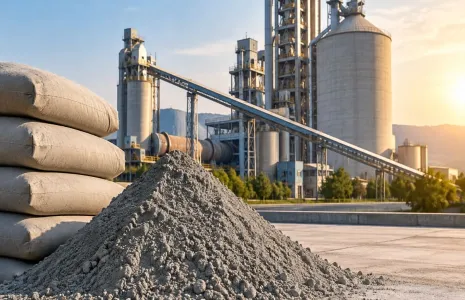

Cement Prices Set To Stay Under Pressure In July
Cement

Cement Prices Set To Stay Under Pressure In July

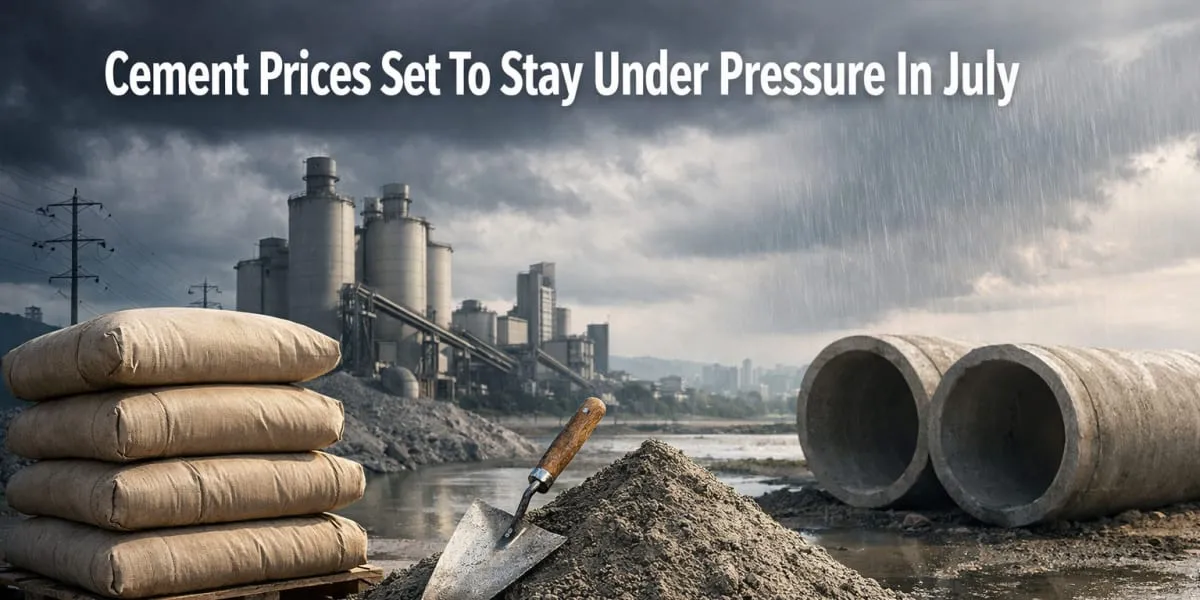
A report by Centrum said cement prices are expected to remain largely flat in July as the monsoon and weak demand weigh on the sector. The report said demand during the first quarter of FY27 remained range-bound and below expectations, with dealers across markets pointing to subdued construction activity, labour shortages, elections, heatwaves and slower execution of government projects as key reasons. It noted that some recovery was witnessed in June due to delayed onset of the monsoon and quarter-end volume push.\n\nDealers across most markets do not expect any meaningful price increases in July, the report said, adding that attempts to raise prices in some markets are aimed at defending existing levels rather than achieving significant gains. The sharp correction following the rollback of April hikes has largely played out across most regions, limiting scope for further immediate increases. Seasonal slowdown in construction activity during the monsoon is expected to continue affecting demand and pricing in the coming months.\n\nCentrum indicated that pricing pressure is likely to persist through the second quarter of FY27 as monsoon-related softness continues. Dealers remain cautious about sustainability of any price rise attempts and do not rule out further weakness during the peak monsoon period. The combination of subdued demand and seasonal factors is likely to constrain the industry's ability to raise prices in the near term. While June saw some improvement in volumes because of delayed rains and quarter-end sales efforts, the broader demand environment remains challenging.\n\nCement companies are therefore expected to focus on maintaining current price levels rather than pursuing aggressive increases as the sector navigates weak demand and seasonal headwinds. The report suggested that unless demand conditions improve significantly, limited scope will exist for meaningful price recovery. Market participants remain watchful for any shifts in execution of infrastructure projects or construction activity that could alter the outlook.

A report by Centrum said cement prices are expected to remain largely flat in July as the monsoon and weak demand weigh on the sector. The report said demand during the first quarter of FY27 remained range-bound and below expectations, with dealers across markets pointing to subdued construction activity, labour shortages, elections, heatwaves and slower execution of government projects as key reasons. It noted that some recovery was witnessed in June due to delayed onset of the monsoon and quarter-end volume push.\n\nDealers across most markets do not expect any meaningful price increases in July, the report said, adding that attempts to raise prices in some markets are aimed at defending existing levels rather than achieving significant gains. The sharp correction following the rollback of April hikes has largely played out across most regions, limiting scope for further immediate increases. Seasonal slowdown in construction activity during the monsoon is expected to continue affecting demand and pricing in the coming months.\n\nCentrum indicated that pricing pressure is likely to persist through the second quarter of FY27 as monsoon-related softness continues. Dealers remain cautious about sustainability of any price rise attempts and do not rule out further weakness during the peak monsoon period. The combination of subdued demand and seasonal factors is likely to constrain the industry's ability to raise prices in the near term. While June saw some improvement in volumes because of delayed rains and quarter-end sales efforts, the broader demand environment remains challenging.\n\nCement companies are therefore expected to focus on maintaining current price levels rather than pursuing aggressive increases as the sector navigates weak demand and seasonal headwinds. The report suggested that unless demand conditions improve significantly, limited scope will exist for meaningful price recovery. Market participants remain watchful for any shifts in execution of infrastructure projects or construction activity that could alter the outlook.

Next Story
Infrastructure Urban

Enerpac Launches Safer Industrial Lifting Solutions in India

Enerpac has introduced its CR-Series Cribbing Ring Sets and TJP-Series 30-Ton Hydraulic Toe Jack in India, expanding its range of precision lifting solutions for manufacturing, infrastructure and energy applications. The products are designed to improve safety, control and efficiency during heavy lifting, load holding and machine-moving operations. The CR-Series Cribbing Ring Sets provide an engineered alternative to improvised cribbing methods such as wooden blocks and steel plates. Their interlocking design offers predictable and mechanically secured load support for applications including t..

Next Story
Infrastructure Urban

Tembo Global Opens Vasai Plant, Raises Capacity to 100,000 MTPA

Tembo Global Industries has commissioned a new manufacturing facility in Vasai, Maharashtra, increasing its annual production capacity from 18,000 metric tonnes per annum to 100,000 MTPA. Developed with an investment of Rs 75 crore, the 120,000 sq ft integrated facility is expected to improve manufacturing efficiency, support product development and strengthen the company’s supply-chain capabilities. Its location in Vasai provides connectivity for sourcing raw materials and distributing finished products, which is expected to support faster deliveries, lower logistics costs and improved op..

Next Story
Infrastructure Transport

BorgWarner Wins China Transfer Case Order for New SUV

BorgWarner has secured an order to supply its torque-on-demand transfer case with mechanical lock for a newly developed full-size SUV from a Chinese original equipment manufacturer. Production of the vehicle is scheduled to begin in the fourth quarter of 2026. The Mlock torque-on-demand system combines automatic four-wheel drive torque distribution with mechanical locking modes. BorgWarner said the technology is designed to balance on-road efficiency with off-road capability across different driving conditions. Unlike traditional part-time four-wheel drive systems that require drivers to manua..

Advertisement

Subscribe to Our Newsletter

Get daily newsletters around different themes from Construction world.

STAY CONNECTED

Advertisement

Advertisement

Advertisement