+
Fuel And Input Costs Squeeze Cement Firms Despite Volume Growth
OIL & GAS

Fuel And Input Costs Squeeze Cement Firms Despite Volume Growth

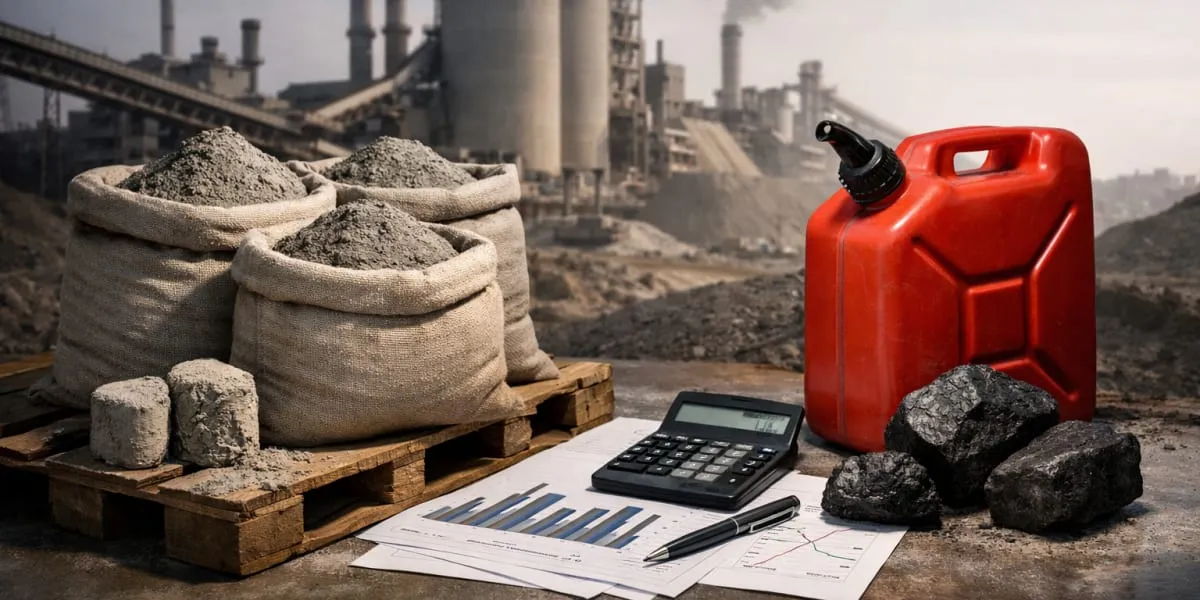
Major cement companies reported robust volume growth in the June quarter but narrower margins as fuel and input costs rose. UltraTech Cement recorded consolidated net profit of Rs 26.04 billion (bn) and revenue of Rs 246.48 bn, with domestic sales up 13.1 per cent to 39.2 million tonnes (mn t). The pattern of double digit revenue growth alongside margin pressure was evident industry wide.\n\nAmbuja Cements registered a fall in profit after tax to Rs 6.60 bn as revenue declined 7.51 per cent to Rs 94.74 bn and sales fell 14 per cent to 17.1 mn t. The company attributed the weakness to a calibrated reduction in exposure to the non trade segment, exits from low profitability regions and delays in ramping up recently acquired assets. Executives said the firm was not chasing low return volume.\n\nShree Cement saw net profit drop to Rs 5.31 bn while revenue rose to Rs 62.33 bn and cement sales reached 10.23 mn t. Dalmia Bharat reported net profit of Rs 1.92 bn on higher exceptional items with revenue at Rs 38.90 bn and volumes at 7.6 mn t. Nuvoco Vistas posted profit growth to Rs 1.60 bn on revenue of Rs 31.29 bn and sales of 5.3 mn t.\n\nJK Lakshmi and Birla Corporation recorded profit declines to Rs 1.08 bn and Rs 1.16 bn respectively amid rising revenues of Rs 19.05 bn and Rs 26.46 bn. JSW Cement posted higher revenue of Rs 18.96 bn but operating EBITDA fell to Rs 2.99 bn as fuel, packing and marketing costs rose, even as sales climbed to 2.34 mn t. Analysts noted average prices had risen quarter on quarter but remained below year earlier levels.\n\nIndustry commentary suggested stable demand from infrastructure, housing and construction supported volumes, yet margin recovery remained elusive due to imported fuel, freight inflation and geopolitical developments in West Asia. Firms appeared to prioritise profitable volumes over growth in low return segments to protect margins. The quarter underlined that volume gains were insufficient to offset input cost pressures.

Major cement companies reported robust volume growth in the June quarter but narrower margins as fuel and input costs rose. UltraTech Cement recorded consolidated net profit of Rs 26.04 billion (bn) and revenue of Rs 246.48 bn, with domestic sales up 13.1 per cent to 39.2 million tonnes (mn t). The pattern of double digit revenue growth alongside margin pressure was evident industry wide.\n\nAmbuja Cements registered a fall in profit after tax to Rs 6.60 bn as revenue declined 7.51 per cent to Rs 94.74 bn and sales fell 14 per cent to 17.1 mn t. The company attributed the weakness to a calibrated reduction in exposure to the non trade segment, exits from low profitability regions and delays in ramping up recently acquired assets. Executives said the firm was not chasing low return volume.\n\nShree Cement saw net profit drop to Rs 5.31 bn while revenue rose to Rs 62.33 bn and cement sales reached 10.23 mn t. Dalmia Bharat reported net profit of Rs 1.92 bn on higher exceptional items with revenue at Rs 38.90 bn and volumes at 7.6 mn t. Nuvoco Vistas posted profit growth to Rs 1.60 bn on revenue of Rs 31.29 bn and sales of 5.3 mn t.\n\nJK Lakshmi and Birla Corporation recorded profit declines to Rs 1.08 bn and Rs 1.16 bn respectively amid rising revenues of Rs 19.05 bn and Rs 26.46 bn. JSW Cement posted higher revenue of Rs 18.96 bn but operating EBITDA fell to Rs 2.99 bn as fuel, packing and marketing costs rose, even as sales climbed to 2.34 mn t. Analysts noted average prices had risen quarter on quarter but remained below year earlier levels.\n\nIndustry commentary suggested stable demand from infrastructure, housing and construction supported volumes, yet margin recovery remained elusive due to imported fuel, freight inflation and geopolitical developments in West Asia. Firms appeared to prioritise profitable volumes over growth in low return segments to protect margins. The quarter underlined that volume gains were insufficient to offset input cost pressures.

Related Stories

Gold Stories

Next Story
Real Estate

BMC OC Amnesty Scheme Requires Key Approvals from Mumbai Societies

The Brihanmumbai Municipal Corporation (BMC) has clarified that housing societies applying under its Occupation Certificate (OC) amnesty scheme must possess key approvals linked to the original construction. The requirements include a valid Intimation of Disapproval (IOD), an approved building plan and a Commencement Certificate (CC), along with a No Objection Certificate (NOC) from the developer or original construction applicant. The Standard Operating Procedure (SOP) makes clear that the absence of an OC alone will not qualify a building for relief. Societies must establish that their build..

Next Story
Real Estate

Gurugram Emerges as Luxury Senior Living Hub

Gurugram is emerging as a potential hub for luxury senior living, supported by available land, healthcare infrastructure, connectivity and a concentration of affluent professionals, high-net-worth individuals and non-resident Indians. These factors could give the city an advantage over land-constrained metros such as Mumbai. A report by the Association of Senior Living India (ASLI) and JLL estimates that India’s organised senior living market could represent a $10.1 bn opportunity by 2030. The sector had about 25,050 organised units as of June 2026, while penetration stood at only 1.5 per ce..

Next Story
Real Estate

Corrosion Costs India’s Infrastructure Rs. 142 bn Annually

Corrosion costs India an estimated Rs. 1.42 tn annually, equivalent to 4.3 per cent of gross domestic product, according to a report by the Confederation of Indian Industry and the National Research Institute. Infrastructure accounts for Rs. 142 bn of the annual burden, making it the sector with the largest absolute cost among those examined. The report, presented at the CII Annual Infrastructure Summit 2026, said the infrastructure-sector cost equals about 2.9 per cent of the sector’s gross domestic product. It estimated that effective measures could generate maximum savings of Rs. 495.8 bn..

Advertisement

Subscribe to Our Newsletter

Get daily newsletters around different themes from Construction world.

STAY CONNECTED

Advertisement

SPECIAL OFFER
QR Code