India Advances Renewable Targets And Climate Leadership
POWER & RENEWABLE ENERGY

India Advances Renewable Targets And Climate Leadership

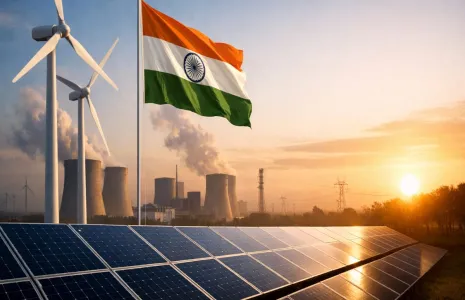
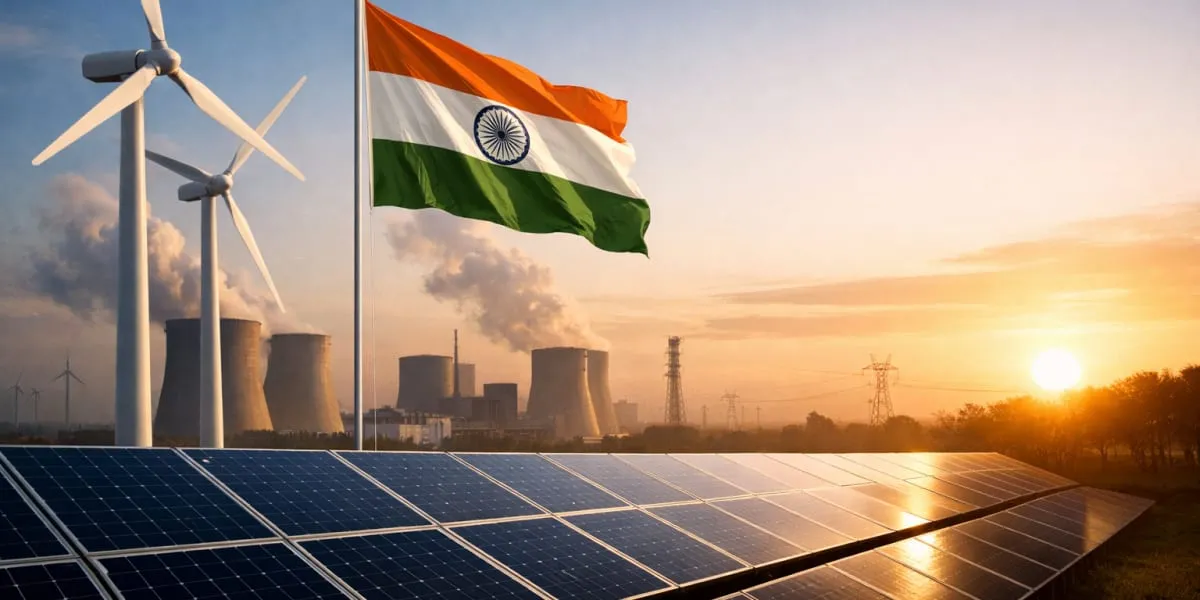
Union Minister Piyush Goyal opened the Advancing Resilience with Climate Change dialogue in New Delhi and presented India as a leader in climate action and renewables. He said India ranks among the top one to three G20 countries on Intended Nationally Determined Contributions and met renewable goals eight years early by reaching 260 gigawatt (GW). The government has set a 500 GW clean energy target by 2030.

He recalled India’s role at Paris COP21 and said the country moved to global leadership under Prime Minister Narendra Modi. He noted engagements with 12 countries and regions, including Peru, Chile, Canada, Saudi Arabia, Brazil, Russia and Israel, and said these dialogues aim to open markets for Indian business.

He argued that sound economics, ease of doing business and innovation are central to growth. He said climate action has become economically viable, with renewable firms creating jobs and export potential in capital goods, power and services. Planning work, including 29 studies on renewable scenarios, informed infrastructure and capacity choices.

He highlighted power sector reforms and the One Nation, One Grid vision that enabled efficient distribution and reduced regional cost disparities. He recalled that southern regions once faced peak costs of Rs 12 per unit while power remained underutilised elsewhere, and that integration helped reduce costs to around Rs two point five to three per unit. He cited expansion of transmission networks and revival of stalled projects to support intermittent renewables.

He launched the Climate Resilience Analytics and Visualisation Intelligence System (CRAVIS), an artificial intelligence (AI) climate platform that combines over forty years of historical data with projections up to 2070 and enables district-level analysis across 279 indicators. The system integrates datasets from the India Meteorological Department and the Indian Institute of Tropical Meteorology, Pune, and provides maps, dashboards and natural language queries for decision making. He invoked trusteeship and assured full government support for collective action to build a resilient and sustainable future.

Union Minister Piyush Goyal opened the Advancing Resilience with Climate Change dialogue in New Delhi and presented India as a leader in climate action and renewables. He said India ranks among the top one to three G20 countries on Intended Nationally Determined Contributions and met renewable goals eight years early by reaching 260 gigawatt (GW). The government has set a 500 GW clean energy target by 2030. He recalled India’s role at Paris COP21 and said the country moved to global leadership under Prime Minister Narendra Modi. He noted engagements with 12 countries and regions, including Peru, Chile, Canada, Saudi Arabia, Brazil, Russia and Israel, and said these dialogues aim to open markets for Indian business. He argued that sound economics, ease of doing business and innovation are central to growth. He said climate action has become economically viable, with renewable firms creating jobs and export potential in capital goods, power and services. Planning work, including 29 studies on renewable scenarios, informed infrastructure and capacity choices. He highlighted power sector reforms and the One Nation, One Grid vision that enabled efficient distribution and reduced regional cost disparities. He recalled that southern regions once faced peak costs of Rs 12 per unit while power remained underutilised elsewhere, and that integration helped reduce costs to around Rs two point five to three per unit. He cited expansion of transmission networks and revival of stalled projects to support intermittent renewables. He launched the Climate Resilience Analytics and Visualisation Intelligence System (CRAVIS), an artificial intelligence (AI) climate platform that combines over forty years of historical data with projections up to 2070 and enables district-level analysis across 279 indicators. The system integrates datasets from the India Meteorological Department and the Indian Institute of Tropical Meteorology, Pune, and provides maps, dashboards and natural language queries for decision making. He invoked trusteeship and assured full government support for collective action to build a resilient and sustainable future.

Next Story
Infrastructure Transport

RAHSTA Awards 2026 Opens Nominations for Smart Road Innovations

RAHSTA Awards 2026 has announced nominations for the Materials and Technology categories, recognising the innovations reshaping India’s road and highway infrastructure sector.With growing emphasis on sustainability, durability, digitalisation and safety, modern road infrastructure increasingly relies on advanced materials and intelligent technologies. The awards aim to celebrate organisations developing next-generation solutions for road construction, pavement performance, digital project management and smart mobility.The awards will be presented during RAHSTA 2026, scheduled on July 8–9, ..

Next Story
Infrastructure Urban

Top 10 Mega Infrastructure Projects in India (2026)

India is undergoing one of the largest infrastructure transformations in the world, with massive investments being channelled into highways, railways, urban transit, ports, and smart cities. These mega infrastructure projects in India are not only improving connectivity but also boosting economic growth, creating jobs, and attracting global investments.In 2026, the focus is on building world-class infrastructure that is faster, more sustainable, and technologically advanced. From expressways and bullet trains to smart cities and industrial corridors, these projects are shaping the future of In..

Next Story
Equipment

MANN+HUMMEL Opens Tumkur Innovation Centre

MANN+HUMMEL, a global leader in filtration solutions, today announced the launch of its new state-of-the-art Global Technology & Innovation Center in Tumkur, Karnataka, marking a significant milestone in its global growth strategy. Positioned as MANN+HUMMEL’s largest development center outside Germany, the facility reinforces India’s role as a critical hub for engineering, innovation, and advanced filtration technologies.The Tumkur facility is designed to accelerate global product development and customer-centric innovation by integrating advanced research labs, testing infrastructure,..

Advertisement

Subscribe to Our Newsletter

Get daily newsletters around different themes from Construction world.

STAY CONNECTED

Advertisement

Advertisement

Advertisement

-->