India Must Accelerate Geothermal, Natural Hydrogen Development: Experts
POWER & RENEWABLE ENERGY

India Must Accelerate Geothermal, Natural Hydrogen Development: Experts

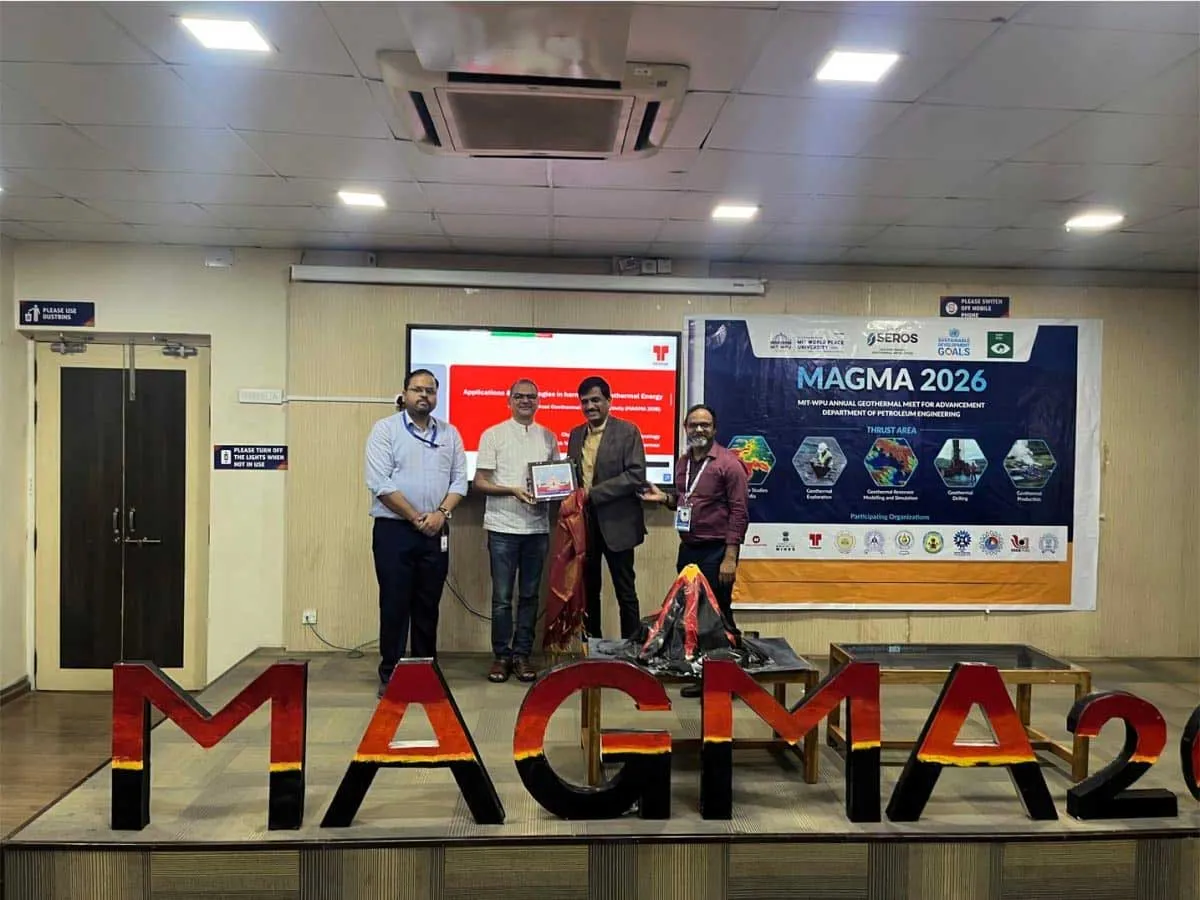
Experts at the MAGMA 2026 conference organised by MIT World Peace University stressed the need for India to accelerate investments in geothermal energy and natural hydrogen to strengthen long-term energy security amid global fuel supply disruptions and geopolitical uncertainties.

The five-day workshop on Geothermal Energy Exploration and Production witnessed participation from more than 16 organisations, including the Geological Survey of India, IITs, IISER, CSIR laboratories, multinational firms such as Halliburton and Beicip-Franlab, as well as Indian companies including SEROS Energy and Thermax Limited.

Experts noted that while solar and wind energy continue to scale rapidly, India also requires stable base-load energy sources capable of generating power round the clock to reduce dependence on imported fossil fuels. Discussions highlighted that India’s geothermal energy potential exceeds 10 GW and could play a key role in supporting energy sovereignty.

Ashish Agarwal said geothermal energy development is critical for India’s energy security and reaffirmed the company’s commitment to advancing the sector. Meanwhile, Prakash Kumar highlighted advancements in geophysical technologies that can improve the identification of geothermal prospects with greater accuracy.

During the valedictory session, Shalivahan said geothermal energy would play a strategic and complementary role in India’s future energy mix. He also emphasised the importance of artificial intelligence, machine learning and advanced data analytics in reducing exploration uncertainty and improving commercial viability.

The conference also highlighted the emerging global interest in natural hydrogen, which experts described as a potentially low-cost clean energy source compared to conventional hydrogen production methods. India was said to possess strong geological potential for both geothermal energy and natural hydrogen across several regions.

Rajib K. Sinharay said India must adopt a mission-driven approach towards energy self-reliance through stronger collaboration between academia, industry and policymakers. Experts concluded that geothermal energy and natural hydrogen would serve as important supporting pillars alongside solar and wind in building a diversified and resilient energy ecosystem.


Experts at the MAGMA 2026 conference organised by MIT World Peace University stressed the need for India to accelerate investments in geothermal energy and natural hydrogen to strengthen long-term energy security amid global fuel supply disruptions and geopolitical uncertainties.The five-day workshop on Geothermal Energy Exploration and Production witnessed participation from more than 16 organisations, including the Geological Survey of India, IITs, IISER, CSIR laboratories, multinational firms such as Halliburton and Beicip-Franlab, as well as Indian companies including SEROS Energy and Thermax Limited.Experts noted that while solar and wind energy continue to scale rapidly, India also requires stable base-load energy sources capable of generating power round the clock to reduce dependence on imported fossil fuels. Discussions highlighted that India’s geothermal energy potential exceeds 10 GW and could play a key role in supporting energy sovereignty.Ashish Agarwal said geothermal energy development is critical for India’s energy security and reaffirmed the company’s commitment to advancing the sector. Meanwhile, Prakash Kumar highlighted advancements in geophysical technologies that can improve the identification of geothermal prospects with greater accuracy.During the valedictory session, Shalivahan said geothermal energy would play a strategic and complementary role in India’s future energy mix. He also emphasised the importance of artificial intelligence, machine learning and advanced data analytics in reducing exploration uncertainty and improving commercial viability.The conference also highlighted the emerging global interest in natural hydrogen, which experts described as a potentially low-cost clean energy source compared to conventional hydrogen production methods. India was said to possess strong geological potential for both geothermal energy and natural hydrogen across several regions.Rajib K. Sinharay said India must adopt a mission-driven approach towards energy self-reliance through stronger collaboration between academia, industry and policymakers. Experts concluded that geothermal energy and natural hydrogen would serve as important supporting pillars alongside solar and wind in building a diversified and resilient energy ecosystem.

Next Story
Infrastructure Transport

MMRDA Removes 1.14 lakh m of Metro Barricades

In a bid to ease congestion and improve urban mobility during monsoon, MMRDA has undertaken one of the largest coordinated barricade removal and monsoon preparedness drives across its ongoing metro and infrastructure projects.With substantial progress achieved in viaduct and structural works across multiple metro corridors, barricades from completed stretches beneath metro viaducts are being systematically removed, restoring maximum possible road space before the monsoon. Wider carriageways across key arterial roads are expected to improve traffic flow, reduce congestion, support better rainwa..

Next Story
Infrastructure Transport

Pune Division to Remove All Diamond Crossings by Year-End

The Pune railway division has announced plans to remove all 16 diamond crossings by the end of 2026 as part of a major yard remodelling project following the derailment of a Vande Bharat Express at Pune Junction on April 27. Railway authorities said the replacements aim to improve safety and streamline train operations across the busy station. The decision followed a Central Railway finding that the accident involved a non-standard diamond crossing and highlighted the need for replacement. Regular maintenance of existing crossings will continue until the replacement work is completed. Official..

Next Story
Infrastructure Urban

Goa Declares 80 Million Square Metres No Development Zone

The Goa state government has declared 80 million square metres (mn) of land a no development zone, designating the area as protected from new construction. The notification reclassifies tracts across the state under a no development category for planning and regulatory purposes. The declaration signals a formal halt to new building permits within the defined zone. Authorities indicated that maps will be issued to show broad boundaries while detailed surveys will refine precise limits. The move transfers responsibility for enforcement to local planning authorities and relevant departments, whic..

Advertisement

Subscribe to Our Newsletter

Get daily newsletters around different themes from Construction world.

STAY CONNECTED

Advertisement

Advertisement

Advertisement