+
India’s Non-Fossil Power Capacity Crosses 300 GW
POWER & RENEWABLE ENERGY

India’s Non-Fossil Power Capacity Crosses 300 GW

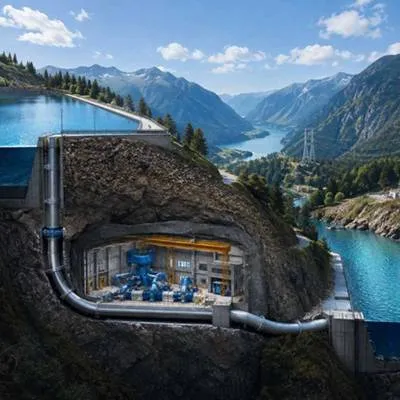
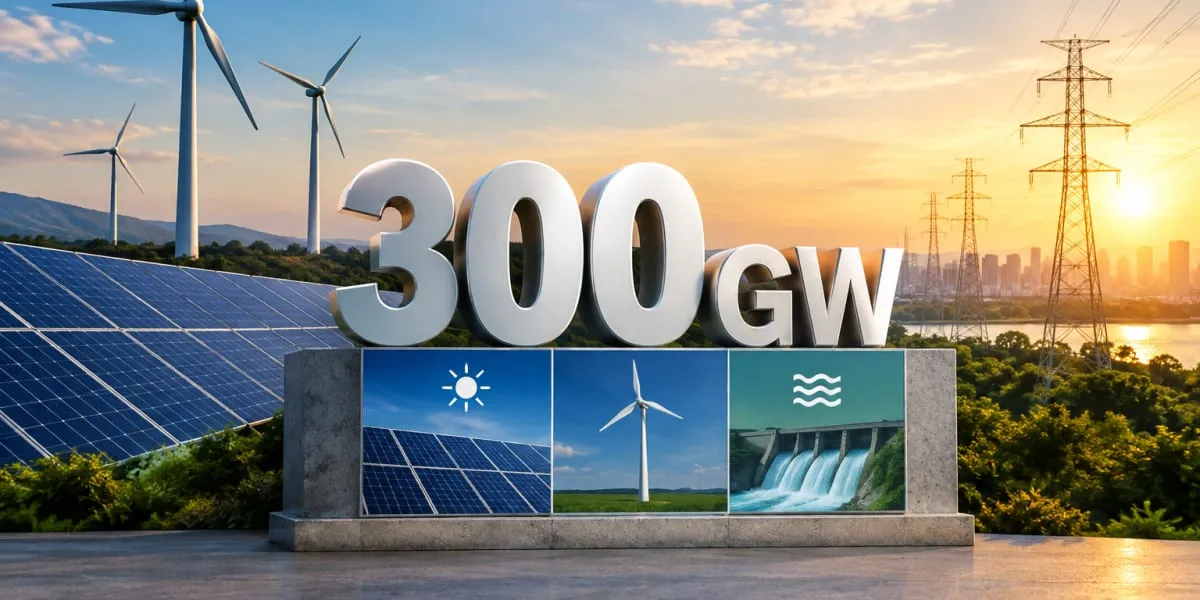
India’s non-fossil energy capacity has crossed 300 GW, marking a significant shift in the power sector as grid management and transmission expansion emerge as key challenges, Power Secretary Pankaj Agarwal said on Thursday. He was speaking on the sidelines of the 2nd Indian Power Sector Conference in New Delhi.

Agarwal said the government had moved a Cabinet note for inter-ministerial consultation on a new power policy. The policy is being framed in response to changing sector requirements and the objectives of Viksit Bharat 2047, replacing the existing policy issued in 2005 when shortages, limited flexibility and restricted access were the primary concerns.

The Power Secretary said the sector now required financially sustainable, self-reliant and technology-driven distribution companies. He also stressed the need to promote open access to improve the competitiveness of Indian industry and encourage a shift towards green power.

Agarwal said fluctuations in the grid were inevitable, but better use of existing transmission infrastructure would be important. He indicated that using about 60 per cent of grid capacity amid such fluctuations could represent a sound strategy, while smart meter chip developers and manufacturers were working on domestically designed products that would be tested and validated before commercial production.

On coal availability, Agarwal said unusual rainfall patterns had affected supplies from producing regions even as electricity demand remained elevated in consuming areas. Coal-based electricity generation demand was more than 14 per cent higher in September, while Coal India, captive mining companies and commercial producers were working to improve supplies. More than 440 coal rakes were being received daily, and the secretary said there was no current logistics constraint. An option to import 654 MW through the power market had also been provided, excluding the 1800-2400 hours period, allowing imports for 18 hours a day. The proposed policy will address flexibility, grid management, transmission expansion, distribution reforms and greater industry participation through open access.

India’s non-fossil energy capacity has crossed 300 GW, marking a significant shift in the power sector as grid management and transmission expansion emerge as key challenges, Power Secretary Pankaj Agarwal said on Thursday. He was speaking on the sidelines of the 2nd Indian Power Sector Conference in New Delhi. Agarwal said the government had moved a Cabinet note for inter-ministerial consultation on a new power policy. The policy is being framed in response to changing sector requirements and the objectives of Viksit Bharat 2047, replacing the existing policy issued in 2005 when shortages, limited flexibility and restricted access were the primary concerns. The Power Secretary said the sector now required financially sustainable, self-reliant and technology-driven distribution companies. He also stressed the need to promote open access to improve the competitiveness of Indian industry and encourage a shift towards green power. Agarwal said fluctuations in the grid were inevitable, but better use of existing transmission infrastructure would be important. He indicated that using about 60 per cent of grid capacity amid such fluctuations could represent a sound strategy, while smart meter chip developers and manufacturers were working on domestically designed products that would be tested and validated before commercial production. On coal availability, Agarwal said unusual rainfall patterns had affected supplies from producing regions even as electricity demand remained elevated in consuming areas. Coal-based electricity generation demand was more than 14 per cent higher in September, while Coal India, captive mining companies and commercial producers were working to improve supplies. More than 440 coal rakes were being received daily, and the secretary said there was no current logistics constraint. An option to import 654 MW through the power market had also been provided, excluding the 1800-2400 hours period, allowing imports for 18 hours a day. The proposed policy will address flexibility, grid management, transmission expansion, distribution reforms and greater industry participation through open access.

Related Stories

Gold Stories

Next Story
Real Estate

Ajyal Holding Acquires 25% Stake in Sterling Ark

Sterling Ark, an independent integrated real estate advisory and project delivery firm, has announced a strategic alliance with Abu Dhabi-headquartered Ajyal Holding. Under the agreement, Ajyal Holding has acquired a 25 per cent stake in Sterling Ark.The alliance is expected to provide Sterling Ark with a broader platform to pursue opportunities and expand its presence across the region. Ajyal Holding operates across real estate, contracting, fit-out, building materials and technology, among other sectors.Sterling Ark provides end-to-end advisory and project delivery capabilities across real e..

Next Story
Infrastructure Urban

YEIDA Allots Land for Five Projects Worth Rs 4.69 bn

A significant step towards converting industrial investment proposals into on-ground projects was taken at the inauguration of the Uttar Pradesh International Trade Show (UPITS) 2026. Union Home and Cooperation Minister Amit Shah presented Letters of Allotment to representatives of five companies investing in the Yamuna Expressway Industrial Development Authority (YEIDA) region.The five projects have been allotted a total of 71,190 sq m of land and involve a proposed investment of Rs 4.69 bn, with the potential to generate 4,625 employment opportunities.C&R Textiles Private Limited has bee..

Next Story
Infrastructure Energy

Hindustan Zinc Restores 1,105 Hectares of Land

Hindustan Zinc Limited has restored 1,105 hectares of land as part of its efforts to integrate ecological restoration with responsible mining. The rehabilitated area, equivalent to more than 1,500 football fields, covers mining and operational landscapes restored through reclamation, plantation, biodiversity enhancement and sustainable land-use practices.The initiatives form part of Hindustan Zinc’s Sustainability Goals 2030 and its broader focus on creating long-term ecological value alongside business growth.Amarendu Prakash, CEO, Hindustan Zinc, said: “The future of mining will increasi..

Advertisement

Subscribe to Our Newsletter

Get daily newsletters around different themes from Construction world.

STAY CONNECTED

Advertisement

SPECIAL OFFER
QR Code