- Home
- Infrastructure Energy
- POWER & RENEWABLE ENERGY
- Inside a Pumped Storage Project: How It Actually Balances the Grid
Inside a Pumped Storage Project: How It Actually Balances the Grid
What happens when the sun sets just as electricity demand starts to rise? Solar generation falls, but homes, factories and businesses still need power. Pumped storage power plants help bridge this gap by storing surplus electricity as gravitational potential energy in elevated water and releasing it when demand increases. As India adds more solar and wind capacity, this ability to shift electricity across hours is becoming increasingly important for grid flexibility.
What is a Pumped Storage Power Plant?
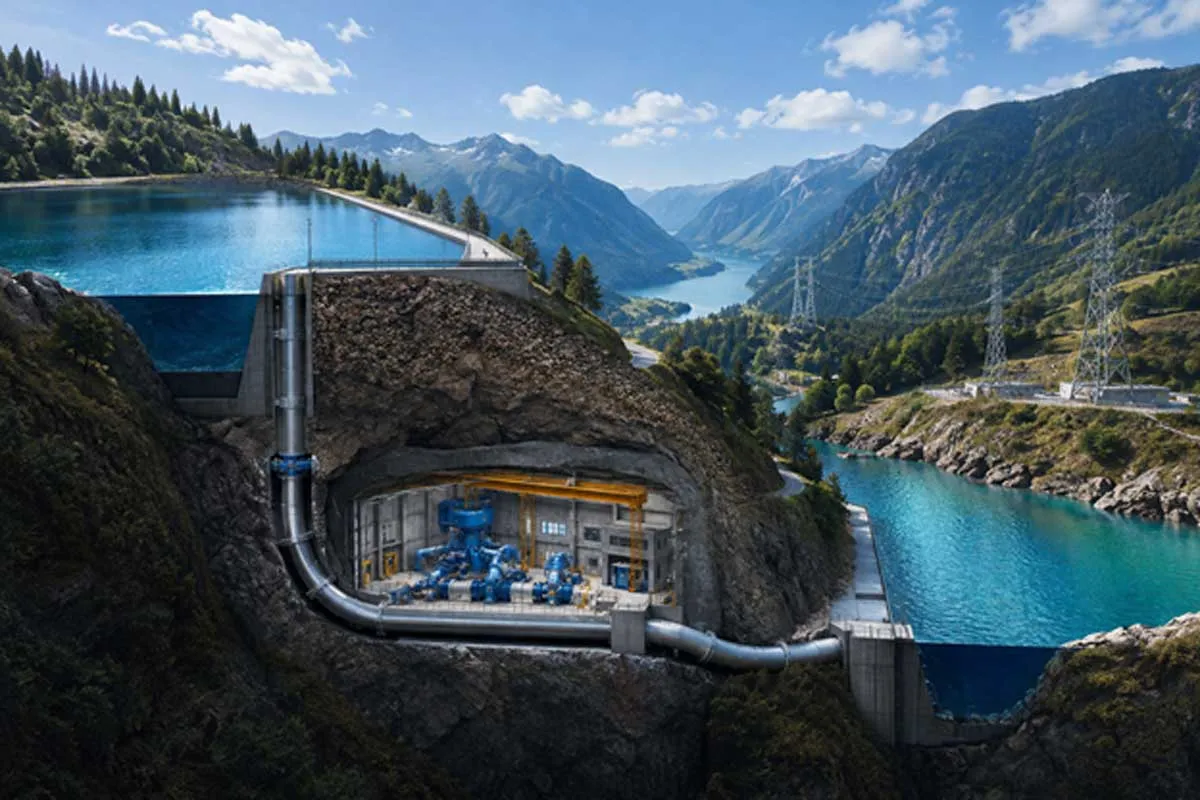
A pumped storage power plant (PSP) is a long-duration energy storage facility with two reservoirs at different elevations. Instead of generating electricity continuously from a natural water flow, it can store electricity and generate it later.
When excess electricity is available, the plant uses that power to pump water from the lower reservoir to the upper reservoir. When electricity demand rises, the stored water flows back through turbines to generate electricity.
The process can be summarised as:
Charging: Electricity → Pump → Water moves uphill → Gravitational potential energy
Generating: Stored water → Turbine → Generator → Electricity
The amount of energy stored depends mainly on the volume of water and the height difference between the two reservoirs.
A simplified relationship is:
Stored energy ≈ ρ × g × h × V
Here,
- ρ represents water density
- g is gravitational acceleration
- h is the height difference between reservoirs
- V is the usable water volume.
How Does Pumped Storage Work?
A pumped storage project operates in two
primary modes.
|
Mode |
What
Happens |
Energy
Conversion |
Grid
Role |
|
Pumping |
Water moves to the upper reservoir |
Electricity
→ Stored potential energy |
Absorbs surplus electricity |
|
Generating |
Water flows through turbines |
Potential
energy → Electricity |
Supplies power during demand |
|
Standby |
Stored water remains available |
Energy remains stored |
Provides reserve capacity |
During pumping, electricity drives motor-pump units that move water uphill. During generation, the water flows downhill through reversible pump-turbines, which drive generators to produce electricity.
The plant therefore acts as an energy-shifting system rather than creating additional energy. Some electricity is lost during the pumping and generation cycle, but the stored power can be delivered when it has greater value to the grid.
What Are the Core Components of a Pumped Storage Project?
A pumped storage project combines civil infrastructure with mechanical and electrical equipment.
- Upper and lower reservoirs: Store the water used during the charging and generation cycles.
- Penstocks and tunnels: Carry water between the reservoirs and powerhouse.
- Reversible pump-turbines: Pump water during charging and generate electricity during discharge.
- Motor-generators: Act as motors while pumping and generators while producing electricity.
- Transformers and switchyards: Connect the generated electricity to the transmission network.
- Control systems: Coordinate pumping, generation and protection functions according to grid requirements.
The design of these components depends on the site's elevation difference, geology, water conditions, required storage duration and transmission connection.
How Does Pumped Storage Balance the Grid?
The value of pumped storage becomes clearer when renewable generation and electricity demand are considered together.
During sunny afternoon hours, solar plants can produce large amounts of electricity. If generation exceeds immediate demand, the surplus can be used to pump water into the upper reservoir. Later, when solar output falls and evening demand increases, the stored water is released through the turbines.
High solar generation → Excess electricity → Pumping → Water stored at elevation → Evening demand → Generation
This process helps shift renewable electricity from one period to another. The IEA identifies pumped-storage hydro, batteries, power plants, demand response and transmission as important sources of flexibility for integrating increasing shares of solar and wind in India.
Pumped storage can also contribute to grid services such as frequency response and operating reserves, depending on the plant's design and operating capability.
Why Is Pumped Storage Important for India?
India's growing renewable generation makes power-system flexibility increasingly important. Solar and wind output can change according to weather and time of day, while electricity demand follows its own pattern.
The IEA has highlighted this mismatch as a key challenge for India's power system. Its analysis identifies storage, including pumped-storage hydro and batteries, as one of several options for integrating higher shares of variable renewable energy.
The Central Electricity Authority (CEA) is also planning for a significant expansion of pumped storage. Its current resources include a roadmap for 100 GW of hydro pumped storage projects by 2035-36, demonstrating the role expected from the technology in India's future power system.
However, pumped storage is not equally suitable everywhere. The right mix of flexibility resources depends on regional generation, demand and grid conditions.
What Are the Benefits of Pumped Storage?
- Long-Duration Energy Storage: Pumped storage can shift large quantities of electricity across several hours, making it suitable for applications where short-duration storage alone may not be sufficient.
- Renewable Energy Integration: Surplus solar and wind generation can be stored and released later, helping reduce the mismatch between renewable output and electricity demand.
- Grid Flexibility: The ability to change between pumping and generation gives the grid another source of operational flexibility. This becomes increasingly useful as variable renewable generation grows.
- Large-Scale Storage: Pumped storage can be developed at utility scale, making it suitable for storing significant amounts of electricity for regional power systems
Batteries can be attractive for some shorter-duration requirements, while pumped storage remains an important option for larger-scale system flexibility. The appropriate choice depends on the duration, location and requirements of each project.
What Determines the Performance of a Pumped Storage Project?
A project's performance depends on several factors:
- Hydraulic head: A greater elevation difference can increase the energy stored for a given volume of water.
- Reservoir capacity: Determines how much water can be stored and how long the plant can generate.
- Turbine capacity: Determines the maximum power output.
- Round-trip efficiency: Shows how much electricity can be recovered after accounting for pumping and generation losses.
- Transmission connectivity: Affects how effectively stored electricity can reach demand centres.
- Site geology and water availability: Influence construction, safety and long-term operation.
This is why pumped storage projects require detailed engineering, hydrological, geological and grid studies before construction.
Conclusion
A pumped storage power plant provides more than a way to store surplus electricity. It allows power generated during periods of high renewable output to be shifted to periods when demand is higher.
For India, this flexibility can become increasingly valuable as solar and wind generation expands. With the CEA's roadmap for 100 GW of hydro pumped storage projects by 2035-36, pumped storage is set to play a larger role in balancing renewable generation, supporting grid operations and improving the reliability of the country's evolving power system.
What happens when the sun sets just as electricity demand starts to rise? Solar generation falls, but homes, factories and businesses still need power. Pumped storage power plants help bridge this gap by storing surplus electricity as gravitational potential energy in elevated water and releasing it when demand increases. As India adds more solar and wind capacity, this ability to shift electricity across hours is becoming increasingly important for grid flexibility.What is a Pumped Storage Power Plant?A pumped storage power plant (PSP) is a long-duration energy storage facility with two reservoirs at different elevations. Instead of generating electricity continuously from a natural water flow, it can store electricity and generate it later.When excess electricity is available, the plant uses that power to pump water from the lower reservoir to the upper reservoir. When electricity demand rises, the stored water flows back through turbines to generate electricity.The process can be summarised as:Charging: Electricity → Pump → Water moves uphill → Gravitational potential energyGenerating: Stored water → Turbine → Generator → ElectricityThe amount of energy stored depends mainly on the volume of water and the height difference between the two reservoirs.A simplified relationship is:Stored energy ≈ ρ × g × h × VHere, ρ represents water densityg is gravitational accelerationh is the height difference between reservoirsV is the usable water volume.How Does Pumped Storage Work? A pumped storage project operates in two primary modes. Mode What Happens Energy Conversion Grid Role Pumping Water moves to the upper reservoir Electricity → Stored potential energy Absorbs surplus electricity Generating Water flows through turbines Potential energy → Electricity Supplies power during demand Standby Stored water remains available Energy remains stored Provides reserve capacity During pumping, electricity drives motor-pump units that move water uphill. During generation, the water flows downhill through reversible pump-turbines, which drive generators to produce electricity. The plant therefore acts as an energy-shifting system rather than creating additional energy. Some electricity is lost during the pumping and generation cycle, but the stored power can be delivered when it has greater value to the grid.What Are the Core Components of a Pumped Storage Project?A pumped storage project combines civil infrastructure with mechanical and electrical equipment.Upper and lower reservoirs: Store the water used during the charging and generation cycles.Penstocks and tunnels: Carry water between the reservoirs and powerhouse.Reversible pump-turbines: Pump water during charging and generate electricity during discharge.Motor-generators: Act as motors while pumping and generators while producing electricity.Transformers and switchyards: Connect the generated electricity to the transmission network.Control systems: Coordinate pumping, generation and protection functions according to grid requirements.The design of these components depends on the site's elevation difference, geology, water conditions, required storage duration and transmission connection.How Does Pumped Storage Balance the Grid?The value of pumped storage becomes clearer when renewable generation and electricity demand are considered together.During sunny afternoon hours, solar plants can produce large amounts of electricity. If generation exceeds immediate demand, the surplus can be used to pump water into the upper reservoir. Later, when solar output falls and evening demand increases, the stored water is released through the turbines.High solar generation → Excess electricity → Pumping → Water stored at elevation → Evening demand → GenerationThis process helps shift renewable electricity from one period to another. The IEA identifies pumped-storage hydro, batteries, power plants, demand response and transmission as important sources of flexibility for integrating increasing shares of solar and wind in India.Pumped storage can also contribute to grid services such as frequency response and operating reserves, depending on the plant's design and operating capability. Why Is Pumped Storage Important for India?India's growing renewable generation makes power-system flexibility increasingly important. Solar and wind output can change according to weather and time of day, while electricity demand follows its own pattern.The IEA has highlighted this mismatch as a key challenge for India's power system. Its analysis identifies storage, including pumped-storage hydro and batteries, as one of several options for integrating higher shares of variable renewable energy. The Central Electricity Authority (CEA) is also planning for a significant expansion of pumped storage. Its current resources include a roadmap for 100 GW of hydro pumped storage projects by 2035-36, demonstrating the role expected from the technology in India's future power system. However, pumped storage is not equally suitable everywhere. The right mix of flexibility resources depends on regional generation, demand and grid conditions. What Are the Benefits of Pumped Storage?Long-Duration Energy Storage: Pumped storage can shift large quantities of electricity across several hours, making it suitable for applications where short-duration storage alone may not be sufficient. Renewable Energy Integration: Surplus solar and wind generation can be stored and released later, helping reduce the mismatch between renewable output and electricity demand. Grid Flexibility: The ability to change between pumping and generation gives the grid another source of operational flexibility. This becomes increasingly useful as variable renewable generation grows. Large-Scale Storage: Pumped storage can be developed at utility scale, making it suitable for storing significant amounts of electricity for regional power systemsBatteries can be attractive for some shorter-duration requirements, while pumped storage remains an important option for larger-scale system flexibility. The appropriate choice depends on the duration, location and requirements of each project. What Determines the Performance of a Pumped Storage Project?A project's performance depends on several factors:Hydraulic head: A greater elevation difference can increase the energy stored for a given volume of water.Reservoir capacity: Determines how much water can be stored and how long the plant can generate.Turbine capacity: Determines the maximum power output.Round-trip efficiency: Shows how much electricity can be recovered after accounting for pumping and generation losses.Transmission connectivity: Affects how effectively stored electricity can reach demand centres.Site geology and water availability: Influence construction, safety and long-term operation.This is why pumped storage projects require detailed engineering, hydrological, geological and grid studies before construction.ConclusionA pumped storage power plant provides more than a way to store surplus electricity. It allows power generated during periods of high renewable output to be shifted to periods when demand is higher.For India, this flexibility can become increasingly valuable as solar and wind generation expands. With the CEA's roadmap for 100 GW of hydro pumped storage projects by 2035-36, pumped storage is set to play a larger role in balancing renewable generation, supporting grid operations and improving the reliability of the country's evolving power system.
Related Stories
Gold Stories
Aeron Systems Raises Rs 450 Million in Pre-Series B Funding
Aeron Systems, a Pune-based deep-tech company developing advanced navigation, weather sensing and intelligent monitoring solutions, has raised Rs 450 million in its Pre-Series B funding round. The round was jointly led by Riverwalk Holdings and MGF-Kavachh (MountTech Growth Fund).The investment will support Aeron Systems in scaling manufacturing capabilities for advanced inertial navigation systems, accelerating product innovation and strengthening its global market presence. The funding also highlights growing investor interest in India’s indigenous aerospace and defence technology ecosyste..
Related Articles
Latest Updates
Recommended for you
Advertisement
Subscribe to Our Newsletter
Get daily newsletters around different themes from Construction world.
subscribe to the newsletter
Don't miss out on valuable insights and opportunities
to connect with like minded professionals