Jharkhand Researchers Develop Eco-Friendly Solar Cell
POWER & RENEWABLE ENERGY

Jharkhand Researchers Develop Eco-Friendly Solar Cell

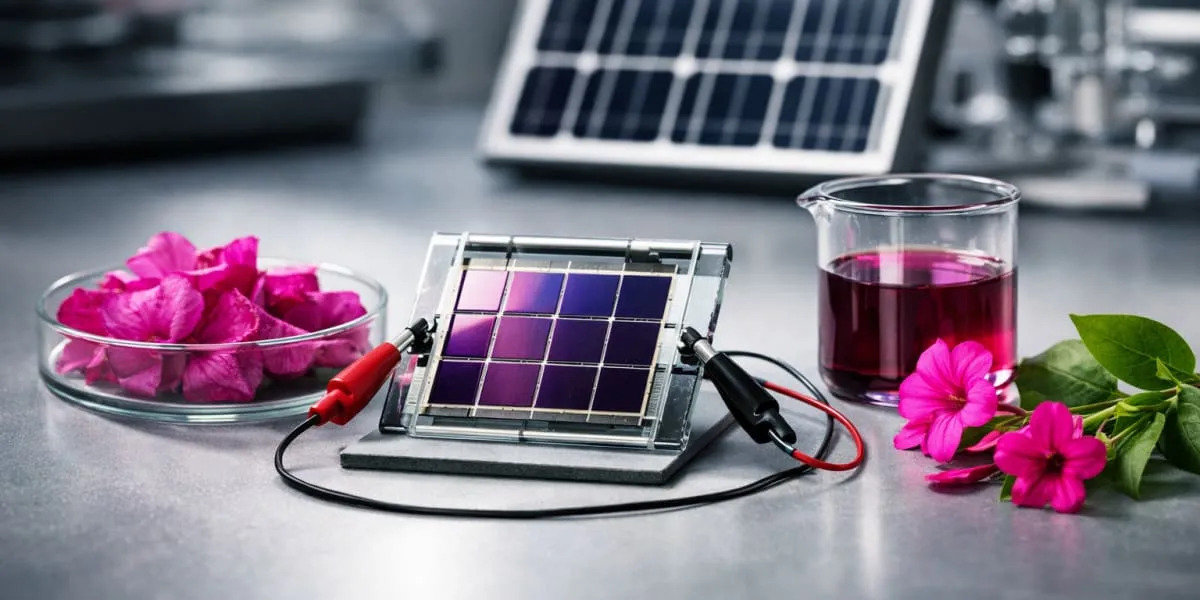
A team from the Department of Energy Engineering at the Central University of Jharkhand (CUJ) has developed an eco-friendly solar cell that uses a plant-based natural dye extracted from the petals of Mirabilis jalapa (commonly known as Gulabbas or Four O'Clock Flower). The researchers described the work as part of ongoing laboratory studies to explore sustainable alternatives to conventional photovoltaics. The device builds on dye-sensitised solar cell concepts adapted for locally available botanical materials.

The lead researcher said the developed solar cell had achieved a highest power conversion efficiency of 0.61 per cent and demonstrated operational stability up to 250 hours. The result represents a proof of concept rather than a commercial product and highlights the potential of natural pigments for low-cost, low-impact energy harvesting. The team emphasised that performance optimisation and extended endurance testing remain priorities.

The dye was obtained from Gulabbas petals using standard extraction methods and incorporated into the photoactive layer to sensitise the cell to visible light. The research note explained basic characterisation of the pigment and device behaviour under laboratory illumination conditions, reporting reproducible but modest output levels. Attention was paid to material selection and simple fabrication techniques to keep processing environmentally benign.

Researchers at CUJ indicated ongoing work to improve efficiency and to study long-term stability under varied temperature and light regimes. The team intends to refine dye extraction, optimise interface layers and document performance over extended durations to assess practical viability. The team noted that collaboration with departmental colleagues and students supported the laboratory work. The project is presented as a contribution to sustainable materials research and to training students in renewable energy experimentation.

A team from the Department of Energy Engineering at the Central University of Jharkhand (CUJ) has developed an eco-friendly solar cell that uses a plant-based natural dye extracted from the petals of Mirabilis jalapa (commonly known as Gulabbas or Four O'Clock Flower). The researchers described the work as part of ongoing laboratory studies to explore sustainable alternatives to conventional photovoltaics. The device builds on dye-sensitised solar cell concepts adapted for locally available botanical materials. The lead researcher said the developed solar cell had achieved a highest power conversion efficiency of 0.61 per cent and demonstrated operational stability up to 250 hours. The result represents a proof of concept rather than a commercial product and highlights the potential of natural pigments for low-cost, low-impact energy harvesting. The team emphasised that performance optimisation and extended endurance testing remain priorities. The dye was obtained from Gulabbas petals using standard extraction methods and incorporated into the photoactive layer to sensitise the cell to visible light. The research note explained basic characterisation of the pigment and device behaviour under laboratory illumination conditions, reporting reproducible but modest output levels. Attention was paid to material selection and simple fabrication techniques to keep processing environmentally benign. Researchers at CUJ indicated ongoing work to improve efficiency and to study long-term stability under varied temperature and light regimes. The team intends to refine dye extraction, optimise interface layers and document performance over extended durations to assess practical viability. The team noted that collaboration with departmental colleagues and students supported the laboratory work. The project is presented as a contribution to sustainable materials research and to training students in renewable energy experimentation.

Next Story
Infrastructure Energy

NSW Launches 2.5 GW Renewable Tender And 12 GWh Storage

New South Wales has opened a pair of record tenders seeking two point five gigawatts (GW) of new renewable generation and 12 gigawatt?hours (GWh) of long?duration storage to accelerate its clean energy transition. The generation auction, Tender 8, is the largest launched under the NSW Electricity Infrastructure Roadmap and is being managed by independent consumer trustee AusEnergy Services Limited (ASL). The storage contest, Tender 9, seeks up to 12 GWh of additional storage and follows a decision to unlock an extra 50 per cent of capacity above baseline planning targets. Officials indicated t..

Advertisement

Subscribe to Our Newsletter

Get daily newsletters around different themes from Construction world.

STAY CONNECTED

Advertisement

Advertisement

Advertisement

-->