+
Karnataka Accelerates Solar Rooftop Installation on Government Buildings
POWER & RENEWABLE ENERGY

Karnataka Accelerates Solar Rooftop Installation on Government Buildings

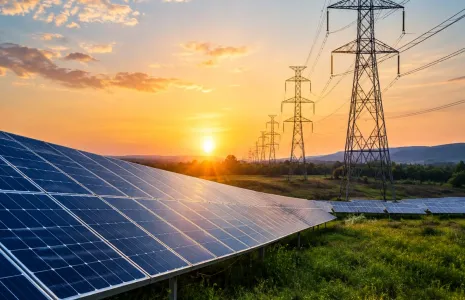
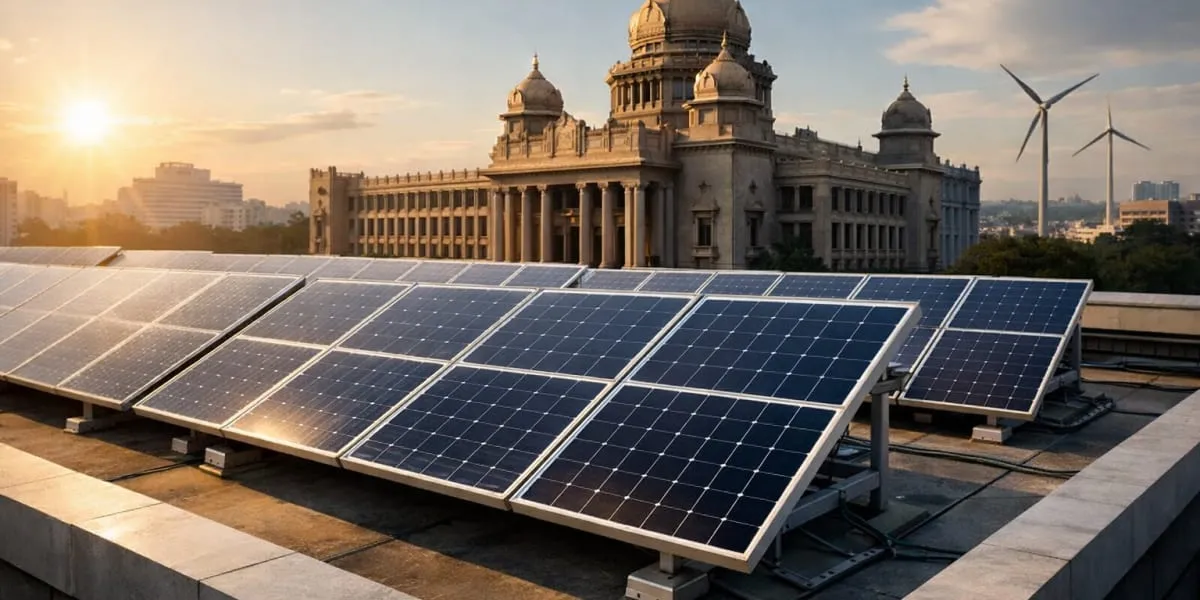
The Karnataka government will accelerate the installation of Solar Rooftop Photovoltaic (SRTPV) systems on government buildings under the PM Surya Ghar Muft Bijli Yojana, the state energy department said on Monday. The move is intended to expand on existing rooftop capacity and support the state's renewable energy objectives. Implementation will align with central guidelines and leverage existing state energy resources to accelerate deployment.

An internal assessment indicated potential for SRTPV installation on close to 59,000 government buildings across the state, but only 2,624 buildings have such systems installed to date, according to a recent departmental report. The contrast underlines the scale of the planned rollout and frames the department's accelerated timeline. Assessments will evaluate structural suitability and potential for net metering integration.

Energy Minister K J George said that solarisation of government buildings will reduce dependence on conventional power and further promote the use of renewable energy, and officials said the programme will target reductions in carbon emissions and improvements in energy sustainability. He said the initiative will contribute to greater energy security for government facilities. Officials added that the programme will aim to reduce electricity bills for public institutions, ease peak demand pressure on the state grid and create opportunities for local vendors and technicians.

The energy department will prioritise public buildings with high electricity demand, undertake rooftop assessments and coordinate with implementing agencies under the central scheme to expedite procurement and installation. Officials indicated that standardised contracts and a project management framework will be used to streamline approvals and commissioning. Financing will draw on central scheme subsidies, budgetary allocations and partnerships with private developers to expedite rollouts.

Implementation will require technical surveys to assess structural and electrical suitability and establishing operations and maintenance arrangements to ensure long term performance. The department said efforts will include capacity building for local teams and monitoring of generation to capture savings and inform broader state policy. The department will establish monitoring dashboards and periodic audits to measure generation, capture savings and inform policy adjustments.

The Karnataka government will accelerate the installation of Solar Rooftop Photovoltaic (SRTPV) systems on government buildings under the PM Surya Ghar Muft Bijli Yojana, the state energy department said on Monday. The move is intended to expand on existing rooftop capacity and support the state's renewable energy objectives. Implementation will align with central guidelines and leverage existing state energy resources to accelerate deployment. An internal assessment indicated potential for SRTPV installation on close to 59,000 government buildings across the state, but only 2,624 buildings have such systems installed to date, according to a recent departmental report. The contrast underlines the scale of the planned rollout and frames the department's accelerated timeline. Assessments will evaluate structural suitability and potential for net metering integration. Energy Minister K J George said that solarisation of government buildings will reduce dependence on conventional power and further promote the use of renewable energy, and officials said the programme will target reductions in carbon emissions and improvements in energy sustainability. He said the initiative will contribute to greater energy security for government facilities. Officials added that the programme will aim to reduce electricity bills for public institutions, ease peak demand pressure on the state grid and create opportunities for local vendors and technicians. The energy department will prioritise public buildings with high electricity demand, undertake rooftop assessments and coordinate with implementing agencies under the central scheme to expedite procurement and installation. Officials indicated that standardised contracts and a project management framework will be used to streamline approvals and commissioning. Financing will draw on central scheme subsidies, budgetary allocations and partnerships with private developers to expedite rollouts. Implementation will require technical surveys to assess structural and electrical suitability and establishing operations and maintenance arrangements to ensure long term performance. The department said efforts will include capacity building for local teams and monitoring of generation to capture savings and inform broader state policy. The department will establish monitoring dashboards and periodic audits to measure generation, capture savings and inform policy adjustments.

Related Stories

Gold Stories

Next Story
Infrastructure Energy

Inside a Pumped Storage Project: How It Actually Balances the Grid

What happens when the sun sets just as electricity demand starts to rise? Solar generation falls, but homes, factories and businesses still need power. Pumped storage power plants help bridge this gap by storing surplus electricity as gravitational potential energy in elevated water and releasing it when demand increases. As India adds more solar and wind capacity, this ability to shift electricity across hours is becoming increasingly important for grid flexibility.What is a Pumped Storage Power Plant?A pumped storage power plant (PSP) is a long-duration energy storage facility with two reser..

Next Story
Technology

LTTS launches FARM to accelerate deep-tech startups

L&T Technology Services (LTTS) has launched LTTS FARM, a startup engagement platform aimed at accelerating the commercialisation of deep-tech innovations through Engineering Intelligence-led collaboration, co-innovation and market access.Built on the theme of “Collaboration First, Commercialisation Next”, the platform targets startups with Technology Readiness Level (TRL) 4+ solutions that have demonstrated technical feasibility and are ready for industry adoption. LTTS FARM will support startups aligned with LTTS’ key technology focus areas, including Software Defined Mobility, Plan..

Next Story
Infrastructure Energy

REC Wins Top Honour for Hindi Policy Implementation

EC Limited has received the First Prize for outstanding implementation of the Official Language Policy for 2025-26 at the meeting of the Hindi Salahkar Samiti of the Ministry of Power, Government of India.The award was presented to REC by Shri Manohar Lal, Union Minister of Power and Housing and Urban Affairs. Shri Shripad Yesso Naik, Minister of State for Power and New and Renewable Energy; Shri Dinesh Sharma, Rajya Sabha MP; Shri Suresh Kumar Kashyap, Lok Sabha MP; and Shri Pankaj Agrawal, Secretary, Ministry of Power, were also present. Shri Jitendra Shrivastava, IAS, CMD, REC, received the..

Advertisement

Subscribe to Our Newsletter

Get daily newsletters around different themes from Construction world.

STAY CONNECTED

Advertisement

SPECIAL OFFER
QR Code